

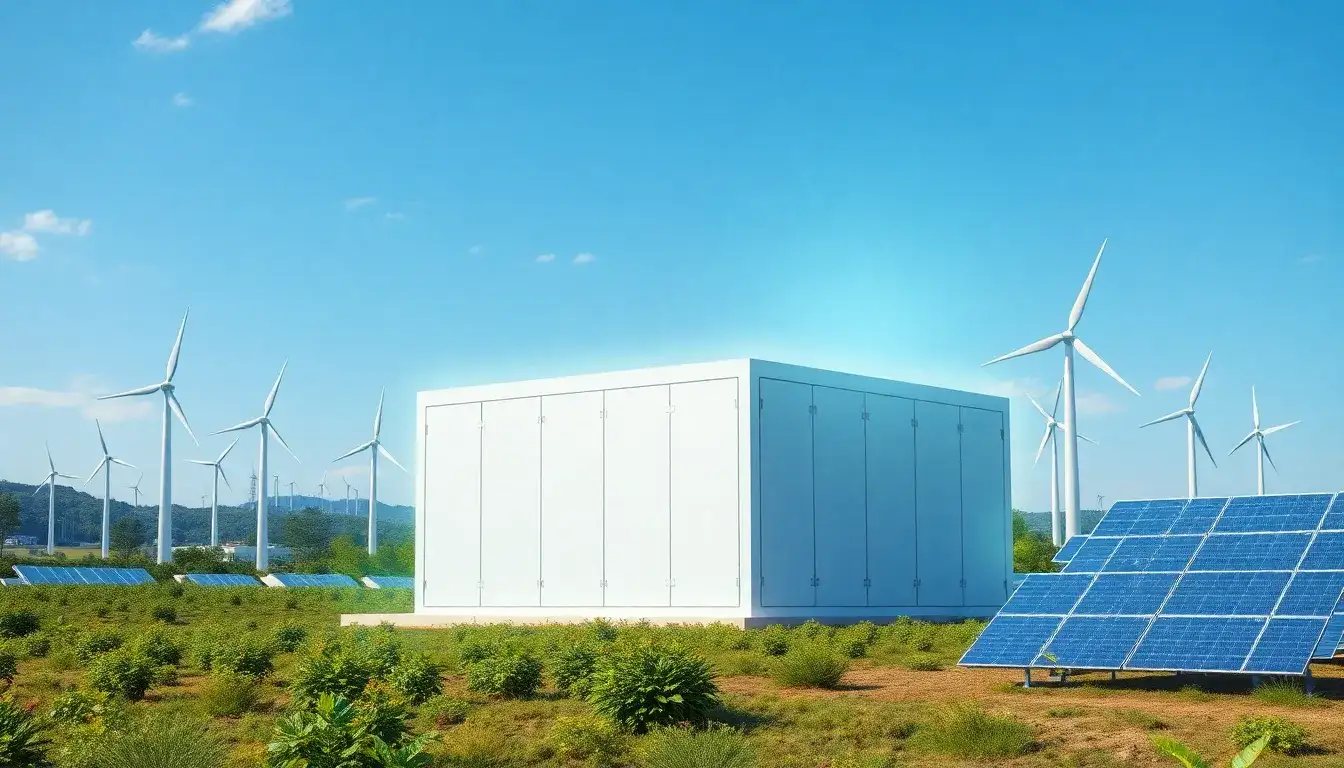
Utility-scale energy storage helps reduce greenhouse gas emissions primarily by enabling greater integration of renewable energy sources and reducing reliance on fossil fuel power plants, especially coal and natural gas peaker plants. Here is how it works in detail:
Enabling Renewables Integration and Grid Flexibility
- Large-scale energy storage systems store excess electricity generated by variable renewable energy sources like wind and solar when generation exceeds demand. They then release this stored energy when demand is higher or renewables aren’t producing, smoothing supply fluctuations.
- This capability reduces the need to rely on fossil fuel “peaker” plants—plants that are typically less efficient and more polluting, used only during peak demand periods. By offsetting these plants, storage cuts emissions associated with ramping up fossil fuel generators.
- Storage also lowers the curtailment (wasting) of renewable energy when generation exceeds immediate demand or grid capacity, thus maximizing clean energy use and further reducing emissions.
Replacing Polluting Power Plants and Improving Energy Efficiency
- Energy storage provides a cleaner alternative to building new coal power plants by supplying reliable electricity without the direct emissions from coal combustion.
- Storage allows for better utilization of baseload generation (continuous power plants) by avoiding cycling them on and off, which is less efficient and produces more emissions.
Considerations and Challenges
- While energy storage facilitates decarbonization, some recent analysis shows that standalone utility-scale batteries have, in some cases, increased emissions because they have encouraged the grid to rely more on coal instead of natural gas, which emits less CO2. This suggests that storage must be carefully integrated with clean energy policies to avoid unintended emissions increases.
- The overall climate benefit depends on the source of electricity used to charge the batteries; charging from fossil fuels can reduce or negate emissions savings.
Summary Table
| Benefits of Utility-Scale Energy Storage | Potential Challenges / Caveats |
|---|---|
| Integrates variable renewables better | Can inadvertently lead to increased coal use if grid is not decarbonized |
| Reduces reliance on coal and gas peaker plants | Emissions depend on charging source |
| Avoids renewable energy curtailment | Requires coordination with grid and market policies |
| Provides a cleaner alternative to new coal plants | Some standalone batteries have caused emissions rise |
In conclusion, utility-scale energy storage is a key technology for reducing greenhouse gas emissions by enabling a cleaner, more flexible electricity grid that relies less on polluting fossil fuels. However, maximizing its climate benefits requires careful integration with renewable generation and supportive policies to prevent increased coal utilization.
Original article by NenPower, If reposted, please credit the source: https://nenpower.com/blog/how-does-utility-scale-energy-storage-help-in-reducing-greenhouse-gas-emissions/

