

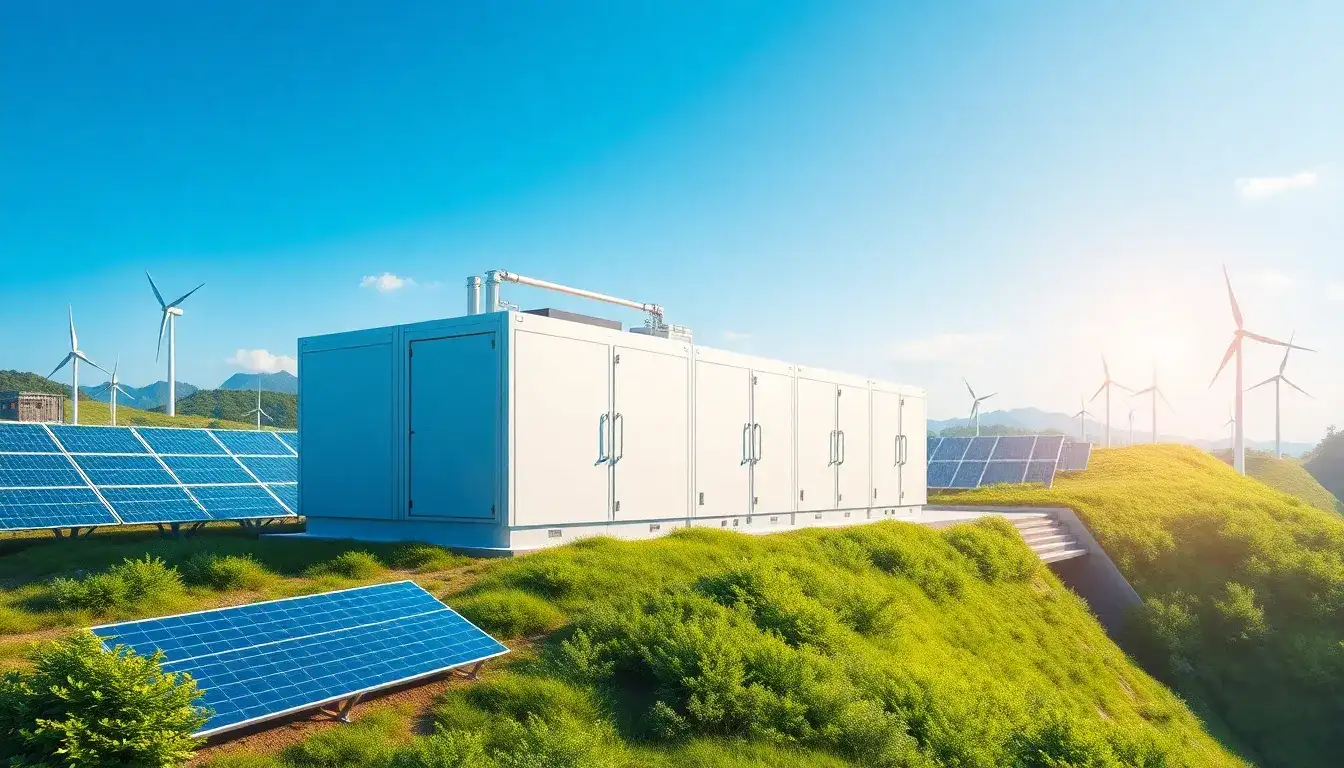
Utility-scale energy storage generally exhibits significantly lower greenhouse gas emissions compared to traditional fossil fuel power plants, especially coal and natural gas plants, due to differing operational and life-cycle characteristics.
Emissions Comparison
Utility-Scale Energy Storage:
- Life-cycle emissions depend on technology type:
- Pumped Hydro Storage (PHS) has the lowest emissions, primarily due to long-lived infrastructure and no direct fuel combustion, resulting in near-zero fuel-related emissions and low construction and operation emissions (~6 kg CO2e/MWh).
- Compressed Air Energy Storage (CAES) has higher emissions among storage types, mainly due to natural gas combustion during operation (~288 kg CO2e/MWh fuel related).
- Battery Energy Storage Systems (BESS) have relatively moderate construction-related emissions (33-40 kg CO2e/MWh) due to energy-intensive manufacturing but no fuel combustion emissions.
- Emissions reflect full life cycle including construction, operation, and decommissioning phases.
- Energy storage helps integrate renewable energy by storing excess generation and reducing reliance on fossil fuel “peaker” plants, indirectly contributing to emission reductions on the grid scale.
Traditional Fossil Fuel Power Plants:
- Coal plants typically emit several hundred to over 1,000 kg CO2e/MWh during operation due to coal combustion.
- Natural gas plants emit roughly 400-600 kg CO2e/MWh depending on efficiency.
- These plants have continuous emissions tied directly to fuel combustion.
Key Benefits of Utility-Scale Energy Storage
- Enables increased use of variable renewable energy sources (e.g., wind, solar), which have zero operational emissions.
- Reduces need for fossil fuel “peaker” plants that run only during high demand but have high emissions.
- Provides grid balancing services that avoid cycling baseload fossil plants, further lowering emissions.
- Over full life cycles, energy storage technologies—especially PHS—offer a low-carbon alternative to fossil generation.
Summary Table
| Technology | Fuel-Related Emissions (kg CO2e/MWh) | Construction & O&M Emissions (kg CO2e/MWh) | Total Life-Cycle Emissions | Notes |
|---|---|---|---|---|
| Pumped Hydro Storage (PHS) | 0 | ~6 | Very low | Long life, minimal operation emissions |
| Compressed Air (CAES) | 288 | 4 | Moderate-high | Uses natural gas combustion |
| Battery Energy Storage (BESS) | 0 | 33-40 | Moderate | Manufacturing energy intensive |
| Coal Power Plant | 800-1100+ | – | High | Direct fuel combustion emissions |
| Natural Gas Plant | 400-600 | – | High | Direct fuel combustion emissions |
In conclusion, utility-scale energy storage systems, particularly pumped hydro, greatly reduce greenhouse gas emissions relative to traditional fossil fuel power plants by avoiding direct fuel combustion and enabling greater renewable energy use. Battery systems have moderate embedded emissions but still outperform fossil plants during operation. Energy storage is crucial for grid decarbonization and lowering overall power sector emissions.
Original article by NenPower, If reposted, please credit the source: https://nenpower.com/blog/how-does-utility-scale-energy-storage-compare-to-traditional-power-plants-in-terms-of-emissions/

