

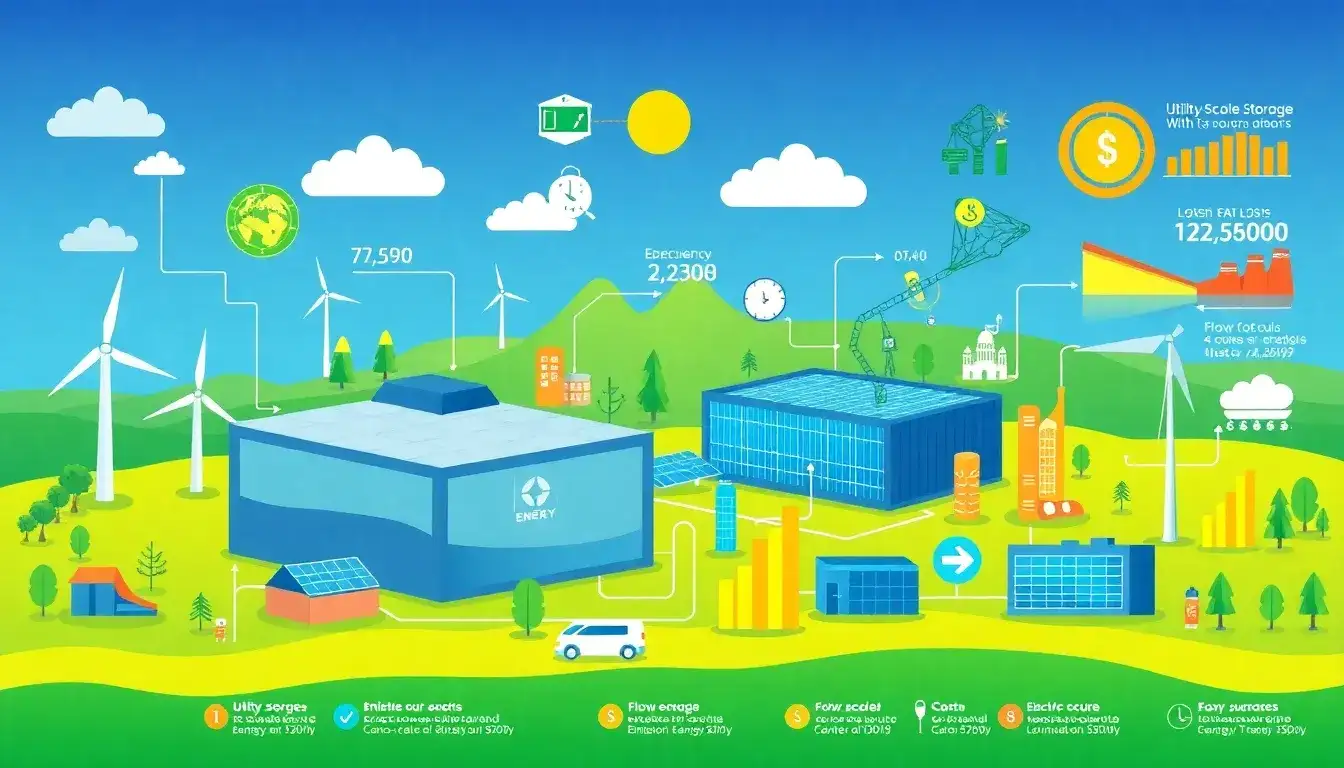
Utility-scale energy storage is a highly impactful emission-reduction strategy that complements and enhances the deployment of renewable energy, offering several advantages compared to other approaches.
Key Advantages of Utility-Scale Energy Storage for Emission Reduction
- Enables Greater Renewable Energy Integration: Storage systems help manage the variability and intermittency of renewable sources like solar and wind by storing excess energy when production is high and releasing it when demand rises or renewable output drops. This smoothing effect allows for higher penetration of clean energy on the grid, reducing reliance on fossil-fueled “peaker” plants that typically emit more greenhouse gases.
- Reduces Emissions from Fossil Fuel Peaker Plants: By providing energy quickly and on demand (within milliseconds), storage can replace or reduce the operation of fast-ramping but highly polluting peaker power plants, which are generally used to meet peak electricity demand. This directly cuts emissions associated with peak power generation.
- Supports Grid Stability and Resilience: Storage systems minimize blackouts and brownouts by balancing supply and demand in real time, improving overall grid reliability. This grid stability encourages broader adoption of renewables, indirectly supporting emission cuts.
- Cost-Effectiveness and Economic Benefits: Utility-scale storage helps reduce electricity costs by storing energy when prices are low and discharging when prices spike, avoiding expensive fossil fuel generation. It also mitigates the risk of costly outages. Additionally, expanding storage technology spurs job creation in construction, installation, and maintenance.
Comparison to Other Emission-Reduction Strategies
| Feature | Utility-Scale Energy Storage | Other Strategies (e.g., direct fossil fuel replacement, efficiency improvements) |
|---|---|---|
| Enables higher renewable use | Directly supports variable renewables and storage of excess clean energy | May involve adding renewables without sufficient storage, limiting penetration |
| Emission reduction mechanism | Replaces peaker plants and smooths renewable output, reducing fossil fuel use | Often replaces fossil generation directly or improves efficiency to reduce consumption |
| Grid reliability impact | Enhances grid stability and resilience | Variable; efficiency might reduce demand, but some strategies don’t aid grid stability |
| Economic impact | Reduces costs, mitigates blackout risks, creates jobs | Varies widely depending on strategy, often capital intensive for infrastructure upgrades |
| Flexibility and responsiveness | Reaction times in milliseconds, unmatched flexibility | Slower to adapt, less flexible in real-time grid balancing |
Summary
Utility-scale energy storage stands out as a critical enabler for clean energy transitions by integrating renewables more effectively and reducing emissions from peaker plants. Its ability to stabilize the grid, reduce costs, and provide fast, flexible power delivery makes it a uniquely powerful emission-reduction tool, synergizing with other strategies like renewable energy deployment and efficiency improvements to accelerate decarbonization.
Original article by NenPower, If reposted, please credit the source: https://nenpower.com/blog/how-does-utility-scale-energy-storage-compare-to-other-emission-reduction-strategies/

