

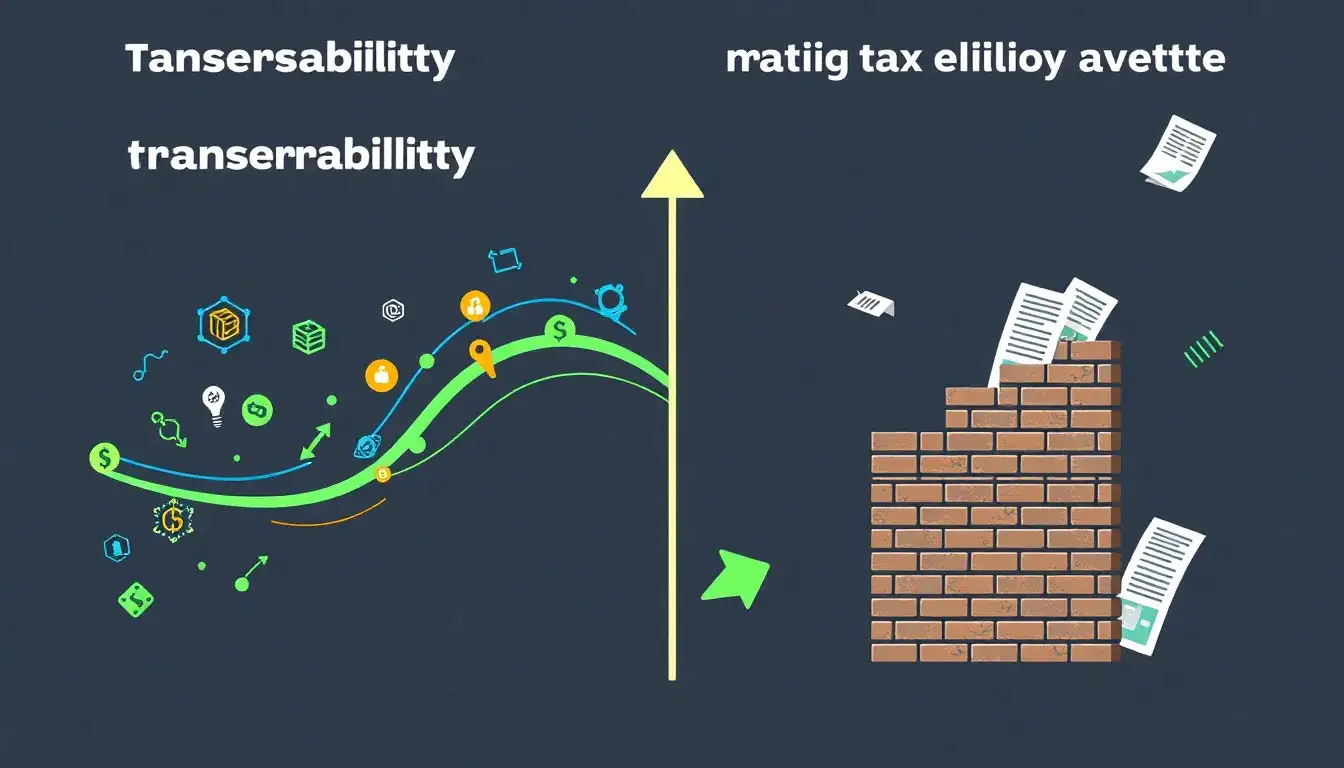
Transferability and Traditional Tax Equity Investments
Transferability and traditional tax equity investments are two different approaches to monetizing energy tax credits. Here’s a comparison based on several key factors:
Overview of Each Approach
- Transferability: This approach was introduced by the Inflation Reduction Act (IRA) to allow the direct transfer of certain tax credits to third parties for cash. It simplifies the process by eliminating the need for complex equity structures, making it more accessible for smaller projects and new entrants.
- Traditional Tax Equity Investments: These involve partnerships where investors provide capital to projects in exchange for tax benefits such as credits and depreciation. This structure has been crucial for large-scale renewable energy projects, offering a stable return to investors.
Key Comparison Points
1. Complexity and Accessibility
| Feature | Transferability | Tax Equity |
|---|---|---|
| Complexity | More streamlined | Complex Structure |
| Accessibility | Lowers barriers, open marketplace | Typically large-scale projects, limited investor pool |
Transferability offers a simpler transaction process, allowing more developers and smaller projects to access funding, whereas tax equity investments involve complex structures often restricted to larger-scale projects.
2. Monetization Scope
| Feature | Transferability | Tax Equity |
|---|---|---|
| Monetization Scope | Only tax credits are monetized | Both tax credits and depreciation benefits are utilized |
Transferability only allows for the monetization of tax credits, while tax equity involves both tax credits and depreciation benefits, providing a broader financial advantage.
3. Risk and Stability
| Feature | Transferability | Tax Equity |
|---|---|---|
| Risk and Stability | Less comprehensive risk management | Offers more loan-like stability with predictable returns |
Tax equity investments offer more stability due to their predictable returns and comprehensive risk management, whereas transferability is more focused on immediate tax credit sales without the same level of risk mitigation.
4. Market Expansion and Flexibility
| Feature | Transferability | Tax Equity |
|---|---|---|
| Market Expansion | Attracts new investors and allows small projects to participate | Primarily serves large projects and established investors |
| Flexibility | Allows for direct transfers without pre-existing equity investments | Typically requires an initial equity investment |
Transferability allows for greater flexibility and market expansion by enabling direct transfers and attracting new investors, while tax equity investments are more structured and tend to favor established players.
In summary, while transferability provides a more accessible and flexible way for developers to monetize tax credits, traditional tax equity investments offer a comprehensive approach that includes both tax credits and depreciation benefits, providing more stability and value for larger projects.
Original article by NenPower, If reposted, please credit the source: https://nenpower.com/blog/how-does-transferability-compare-to-traditional-tax-equity-investments/

