

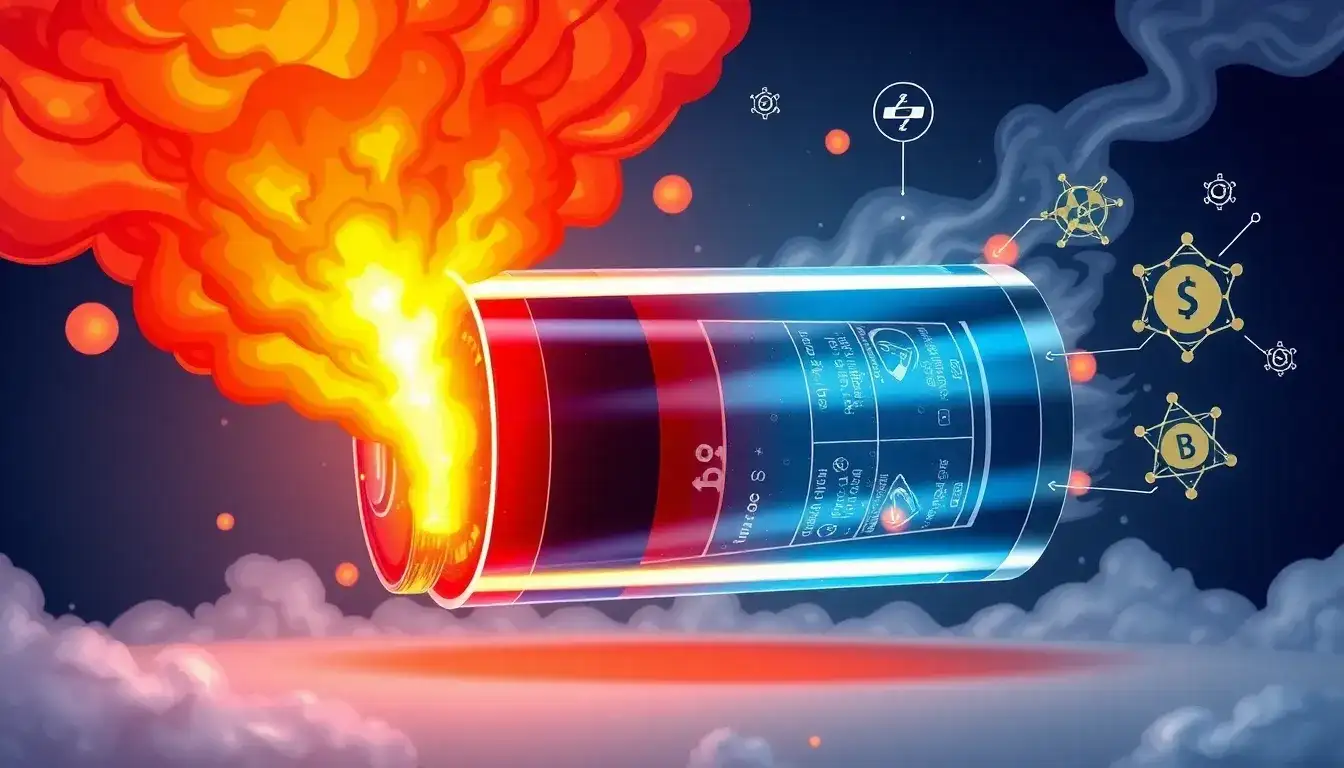
Thermal runaway in lithium-ion batteries occurs when a battery cell experiences an uncontrollable increase in temperature, leading to a chain reaction of chemical reactions that produce more heat. This process can result in the battery overheating, venting violently, and potentially igniting. Several factors can trigger thermal runaway:
Causes of Thermal Runaway
- Internal Short Circuits: These can be caused by physical damage to the battery or poor quality, compromising the separator between the cathode and anode, allowing them to come into contact and cause a short circuit.
- External Short Circuits: These can occur when a battery is improperly connected or damaged externally, leading to an unintended flow of electricity.
- Overcharging: Overcharging beyond the recommended voltage limit can damage the battery and trigger thermal runaway. This is because overcharging can force chemical reactions that generate excessive heat.
- Rapid Charging: Charging a battery too quickly can also cause excessive heat buildup due to high electrical currents.
- Temperature Extremes: Operating batteries in environments that are too hot or too cold can stress them. High temperatures can accelerate chemical reactions, while low temperatures can slow down reactions, both potentially leading to reduced battery performance and increased risk of thermal runaway.
Process of Thermal Runaway
The process involves the following stages:
- Initial Heating: A battery cell begins to heat up due to one of the causes mentioned above.
- Exothermic Reactions: As the temperature rises, exothermic reactions are triggered within the battery, releasing more heat.
- Rapid Temperature Increase: The heat generated by these reactions cannot be dissipated quickly enough, causing the temperature to rise rapidly.
- Chain Reaction: This increased heat triggers further exothermic reactions, creating a self-sustaining cycle of heat generation.
- Ignition: Eventually, if not contained, the rising temperature and pressure can lead to the release of flammable gases and potentially ignite, leading to a fire.
Preventing thermal runaway involves proper battery management systems, storing batteries in safe temperatures, and avoiding overcharging and rapid charging practices.
Original article by NenPower, If reposted, please credit the source: https://nenpower.com/blog/how-does-thermal-runaway-occur-in-lithium-ion-batteries/

