

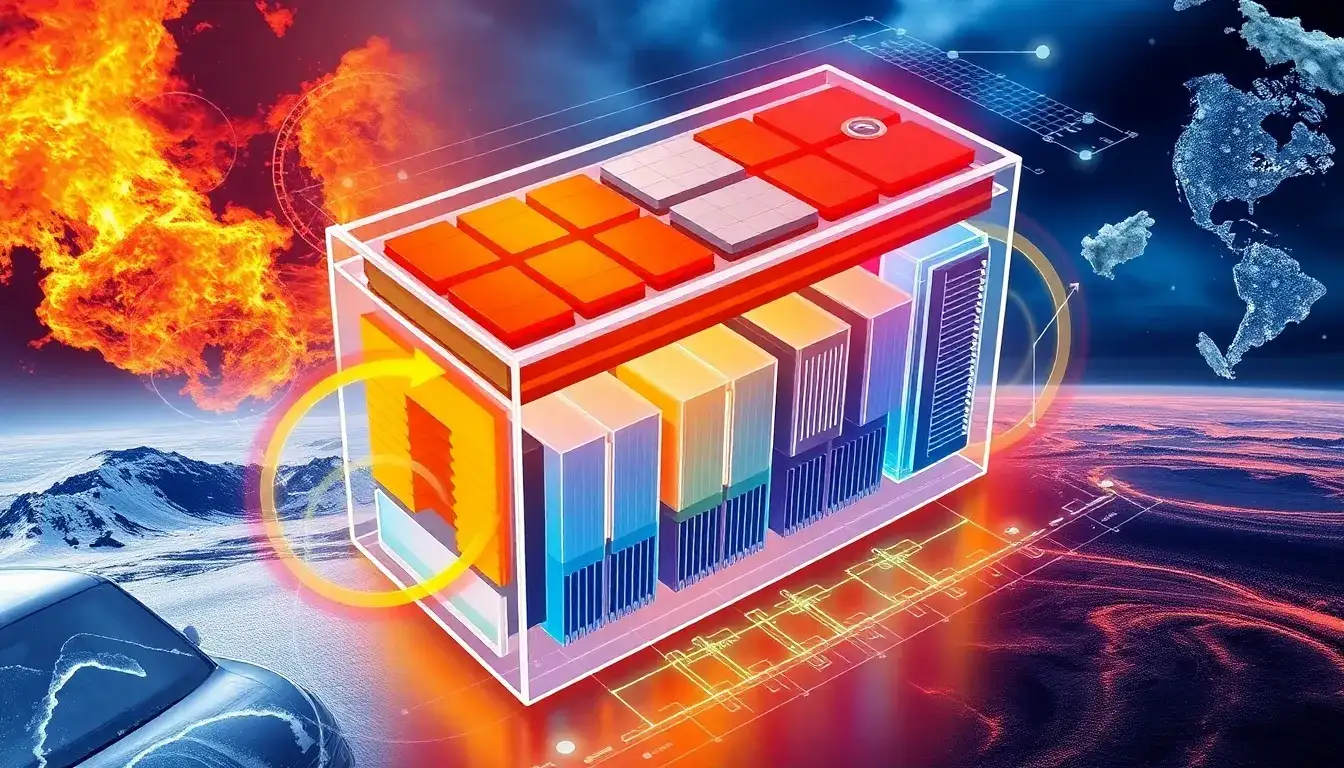
Impact of Temperatures on Battery Lifespan
- High Temperatures: Elevated temperatures can cause permanent damage to battery cells, reducing the battery’s lifespan and potentially leading to safety issues like fires. High temperatures accelerate chemical reactions within the battery, leading to faster degradation.
- Low Temperatures: While not as harmful as high temperatures, low temperatures can affect charging efficiency and may cause issues such as lithium plating, where metallic lithium deposits on the anode, compromising safety and performance.
Techniques in Thermal Management
- Active Cooling: Uses liquid or air to remove excess heat, ensuring that batteries operate within an optimal temperature range. Liquid cooling is more efficient but also more complex.
- Active Heating: Uses electric heaters or heat pumps to warm batteries in cold conditions, ensuring efficient operation.
- Passive Cooling: Relies on natural heat conduction and airflow, suitable for milder climates and less demanding applications.
Benefits of Proper Thermal Management
- Extended Lifespan: Maintaining the ideal temperature range reduces aging and extends battery life.
- Optimized Charging: Proper thermal conditions ensure efficient charging and prevent issues like lithium plating.
- Enhanced Performance: Uniform temperature across the battery pack ensures consistent performance and efficiency, contributing to longer overall vehicle lifespan.
By effectively managing temperature, EV manufacturers can significantly enhance the lifespan and performance of their batteries, leading to more efficient and reliable electric vehicles.
Original article by NenPower, If reposted, please credit the source: https://nenpower.com/blog/how-does-thermal-management-impact-the-lifespan-of-ev-batteries/

