

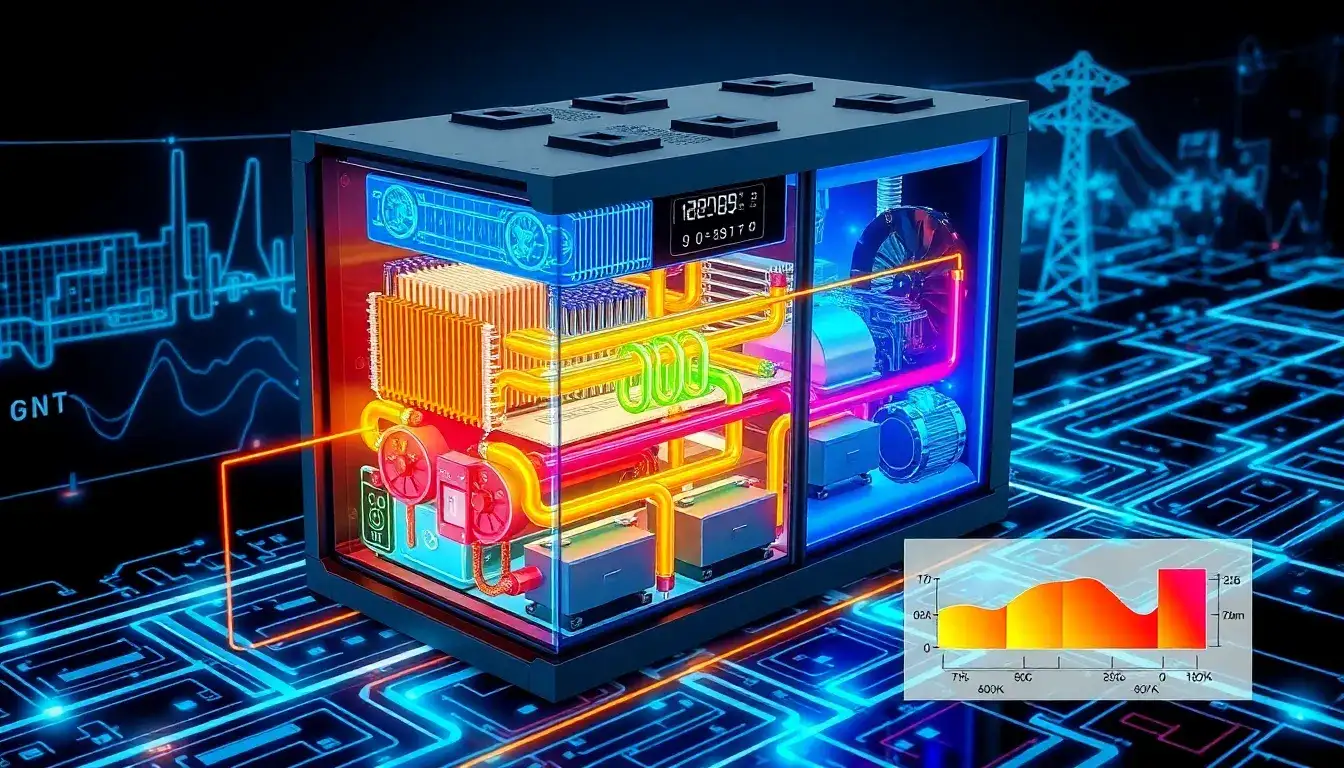
Thermal management plays a critical role in the efficiency and reliability of battery energy storage systems (BESS) during frequency regulation by maintaining optimal operating conditions. Here’s how it impacts performance:
1. Stability During High-Power Output
BESS must respond rapidly to frequency deviations, often requiring high charge/discharge rates. Effective thermal management prevents overheating, which can degrade battery components and reduce efficiency. For example, liquid cooling systems maintain stable temperatures even under extreme conditions, ensuring consistent power delivery during frequency regulation events.
2. Longevity and Cycle Life
Excessive heat accelerates battery aging, reducing capacity over time. Advanced thermal management systems mitigate temperature fluctuations, preserving battery health. The BMS monitors parameters like voltage and temperature, while predictive algorithms identify aging trends, allowing proactive maintenance to sustain efficiency.
3. Safety and Reliability
Thermal runaway is a primary risk in high-demand scenarios. Integrated cooling and fire suppression systems prevent catastrophic failures, ensuring uninterrupted operation during grid balancing. This reliability is critical for sub-second frequency response, where any delay or shutdown could destabilize the grid.
4. Efficiency Optimization
Temperature extremes impair electrochemical efficiency. By regulating heat dissipation, thermal systems minimize energy losses during charge/discharge cycles, directly enhancing the BESS’s frequency regulation capacity. For instance, the Renon 500MWh system uses liquid cooling to maintain efficiency even in high-temperature environments.
Comparative Impact
| Aspect | Without Thermal Management | With Advanced Thermal Management |
|---|---|---|
| Response Speed | Reduced due to overheating | Maintains rapid response |
| Battery Lifespan | Shortened by thermal stress | Extended via temperature control |
| Safety | Risk of thermal runaway | Mitigated by cooling and redundancy |
In summary, thermal management ensures that BESS operates efficiently during frequency regulation by balancing performance, durability, and safety.
Original article by NenPower, If reposted, please credit the source: https://nenpower.com/blog/how-does-thermal-management-impact-the-efficiency-of-frequency-regulation-in-bess/

