

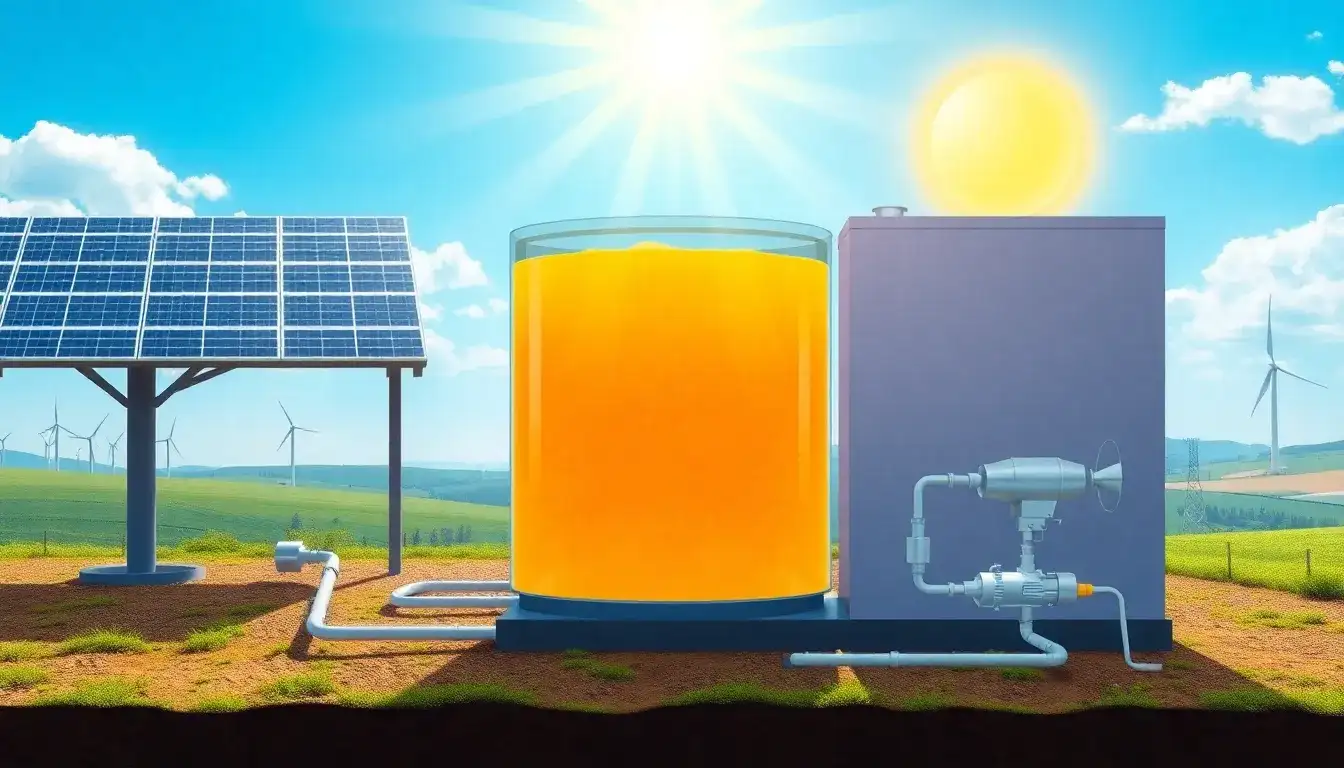
Thermal energy storage (TES) in solar-plus-storage systems, especially in concentrating solar power (CSP) plants, works by capturing solar heat during the day and storing it in a medium that retains the thermal energy for later use, enabling electricity generation even when the sun is not shining.
How Thermal Energy Storage Works in Solar-Plus-Storage Systems
1. Solar Heat Collection
- Solar energy is concentrated using mirrors or lenses to focus sunlight onto a receiver.
- This receiver heats a fluid or solid medium to high temperatures (often several hundred degrees Celsius).
2. Storage Medium
- The heated medium stores thermal energy for later use.
- Common storage media include molten salts (e.g., a mixture of sodium nitrate and potassium nitrate), heat transfer fluids (such as mineral oil or synthetic oils), or solid materials like silica sand or ceramics.
- Molten salts are widely used because they can maintain high temperatures (~565°C), have good thermal stability, and lose minimal heat (~1°C per day), allowing storage from hours up to several days or months with top-up.
3. Thermal Energy Storage Systems
- Typically, TES systems use either:
- Two-tank systems (direct or indirect): One tank stores hot fluid, another stores cold fluid. The fluid is cycled between solar collectors and storage tanks. In direct systems, the same fluid is used for heat collection and storage; in indirect systems, different fluids are used for heat transfer and storage, separated by heat exchangers.
- Single-tank thermocline systems: Use a solid medium inside one tank, with a temperature gradient (thermocline) separating hot and cold regions. Heated fluid flows through this medium to store or extract heat.
4. Energy Extraction and Use
- When electricity is needed, the stored thermal energy is extracted by circulating the hot fluid or medium through a heat exchanger.
- This heat is used to generate steam, which drives a turbine and generates electricity, similar to conventional thermal power plants (coal, gas, nuclear).
- After heat extraction, the cooler fluid is returned to the cold tank or solar receiver for reheating and reuse, forming a continuous cycle.
Benefits and Characteristics
- TES allows CSP plants to be dispatchable, meaning they can deliver electricity on demand, regardless of sunlight availability.
- It addresses solar intermittency, smoothing supply over evening peaks or cloudy periods.
- TES is less complex and often cheaper than electrical storage for long durations.
- With proper insulation and materials, thermal energy can be stored for extended periods (hours to months) without significant loss.
- Ongoing research aims to improve TES efficiency by increasing operating temperatures and exploring new storage media and heat transfer fluids to reduce costs and increase power output.
Summary Table of Key TES Components in Solar-Plus-Storage
| Component | Description | Common Examples |
|---|---|---|
| Solar Heat Collector | Concentrates sunlight to heat a fluid or medium | Mirror fields focusing on receiver |
| Heat Transfer Fluid (HTF) | Fluid carrying heat from collector to storage and power block | Molten salts, mineral oil, synthetic oils |
| Thermal Energy Storage (TES) Medium | Medium storing heat for later use | Molten salts, silica sand, ceramics |
| Storage System Type | Method of thermal storage | Two-tank direct/indirect, single-tank thermocline |
| Energy Conversion | Extraction of stored heat to produce electricity | Steam generation through heat exchangers and turbines |
In conclusion, thermal energy storage in solar-plus-storage systems operates by capturing solar heat in fluids or solids, storing it at high temperature in insulated tanks, and later converting this stored heat to electricity upon demand. This technology extends solar power availability beyond daylight hours, improving grid reliability and enabling greater penetration of renewable energy.
Original article by NenPower, If reposted, please credit the source: https://nenpower.com/blog/how-does-thermal-energy-storage-work-in-solar-plus-storage-systems/

