

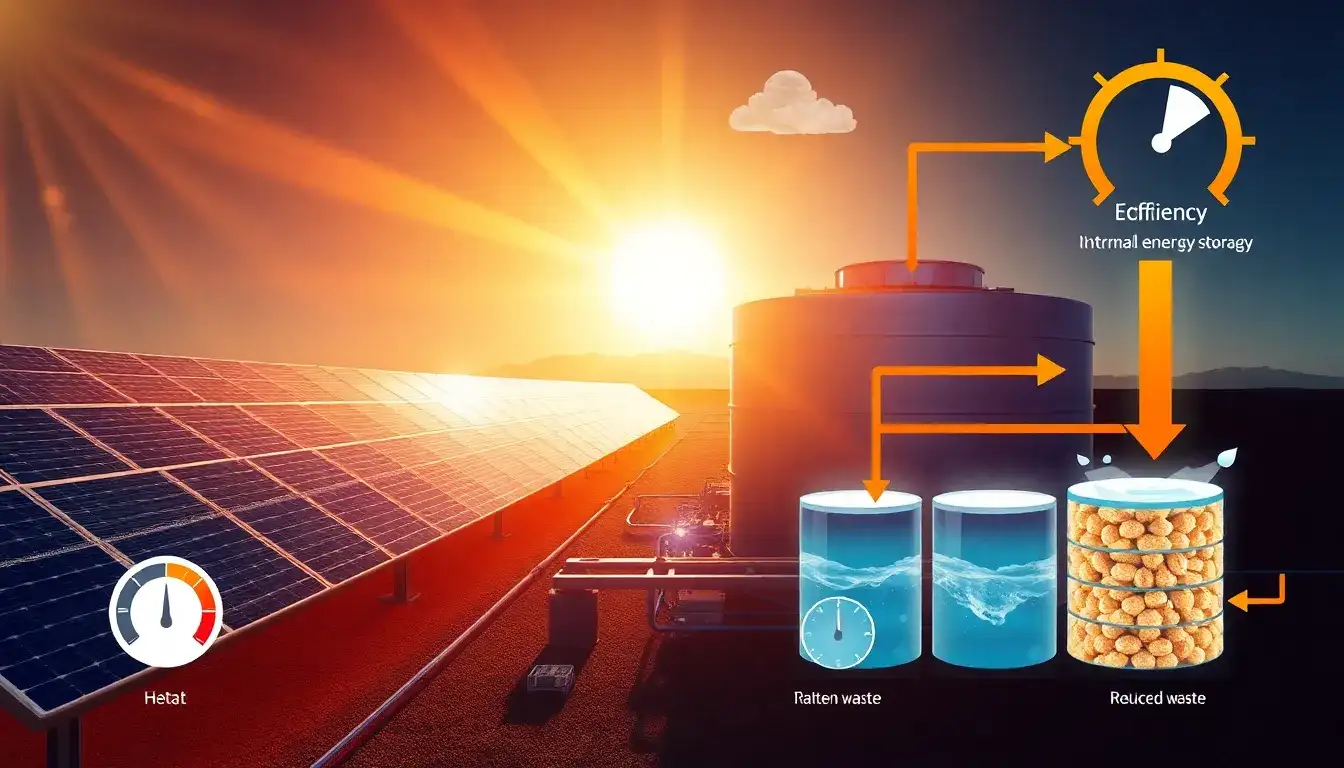
Thermal Energy Storage (TES) significantly improves the efficiency of solar systems, particularly in concentrated solar power (CSP) systems, by allowing the storage of thermal energy generated during the day for use when sunlight is not available. Here are key ways TES enhances solar system efficiency:
Improvements in Efficiency
- Dispatchability: TES enables CSP systems to operate as dispatchable power sources, providing electricity when needed, not just when the sun is shining. This feature is crucial for integrating solar power into the grid effectively.
- Reduced Variability: By storing thermal energy, TES systems can smooth out the variability in solar input, ensuring a more consistent electricity output. This stability is essential for maintaining grid reliability.
- Efficient Thermal Storage: TES technologies, such as those using molten salts or advanced materials like graphite, allow for efficient thermal energy storage with high efficiencies reaching up to 90%. These efficiencies enable the storage of heat at high temperatures, which can be converted back into electricity or used in industrial processes when needed.
- Cost Reduction: Advanced TES technologies, such as using waste materials or developing systems with high thermal stability like sand-based storage, can reduce costs and improve the economic viability of solar power.
Technologies Supporting Efficiency
- Radial Flow Packed-Bed Storage: KTH researchers have developed a radial flow packed-bed design that achieves over 90% thermal efficiency by using materials like pebbles or slags. This design reduces pressure drops and enhances reliability compared to axial flow systems.
- Sand-Based Storage: NREL has developed a long-duration thermal energy storage system using sand, which offers high thermal stability and efficiency exceeding 95%, making it suitable for storing heat for multiple days.
- Graphite-Based Systems: Graphite is used in high-efficiency TES systems for CSP plants, allowing storage at temperatures above 800°C, which is beyond the capabilities of traditional molten salt systems.
In summary, thermal energy storage enhances the efficiency of solar systems by providing dispatchability, reducing output variability, and leveraging advanced storage technologies to achieve high thermal efficiencies. This makes solar power more viable as a reliable source of renewable energy.
Original article by NenPower, If reposted, please credit the source: https://nenpower.com/blog/how-does-thermal-energy-storage-improve-the-efficiency-of-solar-systems/

