

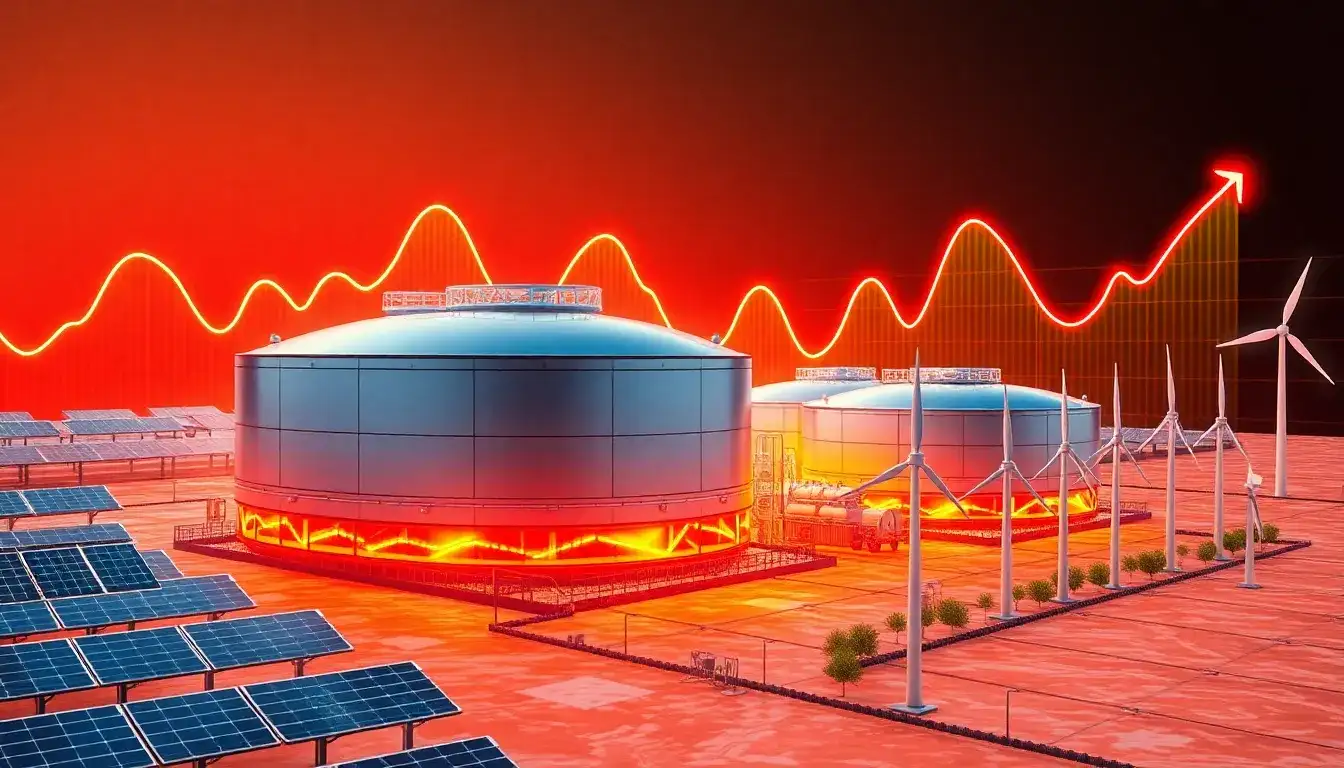
Advantages of Thermal Energy Storage
- Stabilizing Supply and Demand: Thermal energy storage systems can absorb energy during periods of low demand or high supply, such as when renewable energy production is high, and release it when demand peaks or supply is low. This helps stabilize the balance between supply and demand, reducing price fluctuations.
- Capitalizing on Price Volatility: By storing energy during periods of low electricity prices (e.g., during peak renewable energy production) and releasing it when prices are high, thermal energy storage can help operators profit from energy price arbitrage. This strategy can be particularly beneficial when coupled with technologies like nuclear reactors, enhancing their economic viability.
- Increasing Flexibility: Thermal energy storage systems can provide flexibility to energy supply networks, particularly when integrated with inflexible sources like nuclear power. This flexibility allows for better management of grid dynamics, which are increasingly complex due to the integration of intermittent renewable energy sources.
- Cost-Effectiveness: Sensible thermal storage is noted as one of the most cost-effective methods for thermal energy storage. This cost-effectiveness is crucial in managing price volatility, as it allows for efficient energy storage and release without high operational costs.
- Reducing Grid Congestion: By absorbing excess energy during times of oversupply and releasing it during peak demand, thermal energy storage can reduce grid congestion, which is a major contributor to price volatility in energy markets.
Overall, thermal energy storage systems offer a practical solution for mitigating the effects of energy price volatility by providing a buffer against supply-demand imbalances and allowing operators to capitalize on price fluctuations effectively.
Original article by NenPower, If reposted, please credit the source: https://nenpower.com/blog/how-does-thermal-energy-storage-help-in-managing-energy-price-volatility/

