

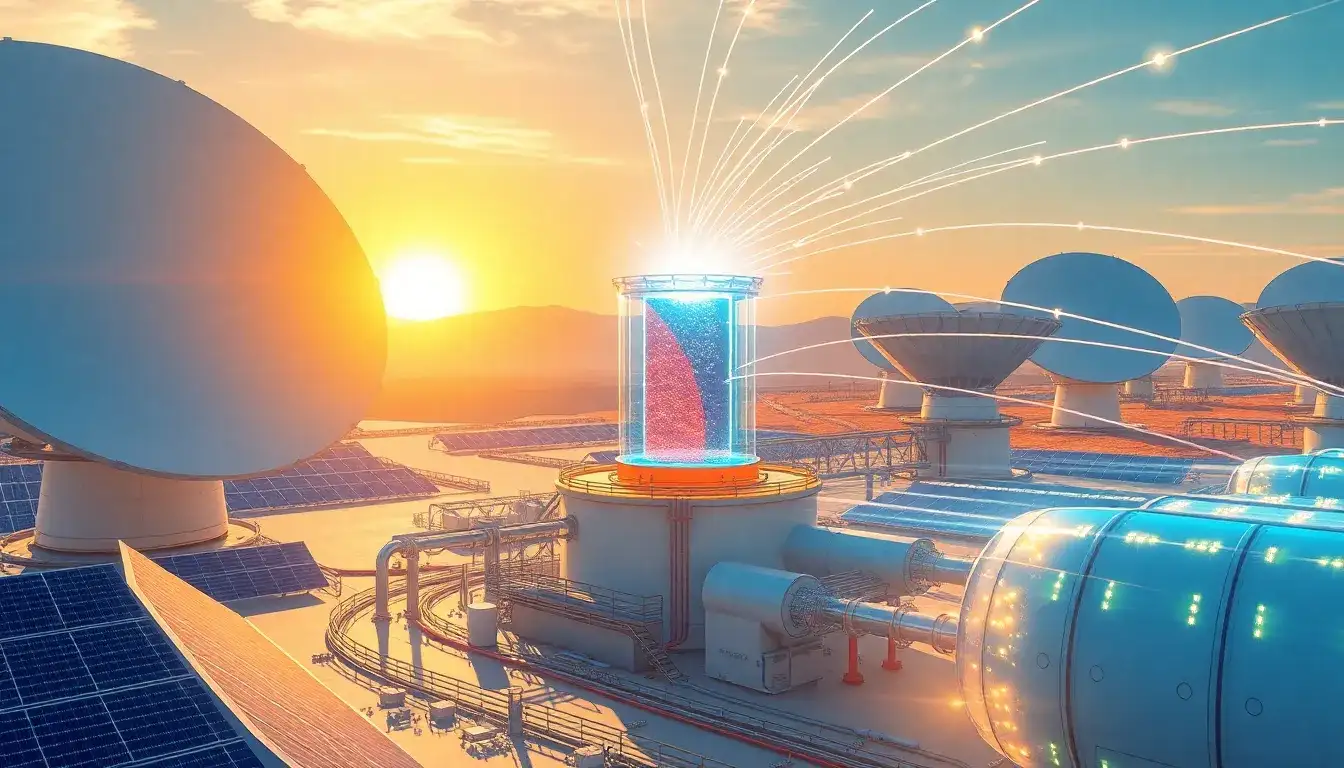
Thermal Energy Storage (TES) and Concentrating Solar Power (CSP)
Thermal energy storage (TES) significantly enhances the efficiency and operational flexibility of concentrating solar power (CSP) plants by allowing heat captured from sunlight to be stored and used to generate electricity even when the sun is not shining. Here’s how TES improves CSP plant efficiency and overall performance:
Key Ways TES Enhances CSP Efficiency
- Enables Electricity Generation Beyond Sunlight Hours: TES allows CSP plants to store thermal energy collected during sunny periods and use it to produce electricity after sunset or during cloudy conditions. This overcomes the limitation of intermittent solar resource and reduces curtailment of energy production.
- Shifts Power Generation to Peak Demand Periods: By storing heat and dispatching electricity when prices are highest, TES improves the economic value of CSP plants. This load-shifting capability means the plants are not limited to producing power only during daylight hours but can respond dynamically to grid demands.
- Increases Overall Thermal-to-Electric Conversion Efficiency: TES facilitates operating at higher temperatures and larger temperature differentials across the turbine. For example, increasing the maximum operating temperature and the temperature drop across the turbine improves the power cycle efficiency, thereby increasing energy output per unit of solar input.
- Reduces Capital Costs by Enhancing Energy Density: TES systems, such as two-tank molten salt storage configurations, can increase thermal energy density either by raising maximum operating temperatures or using storage materials with higher heat capacity. Higher energy density means a smaller storage footprint and lower capital costs relative to stored energy delivered.
- Provides Grid Reliability and Ancillary Services: Because CSP plants with TES can be dispatched on demand, they can replace or supplement conventional power plants, providing firm capacity and grid services such as spinning reserves, which enhance grid stability and reliability.
Typical TES Technologies in CSP
- Sensible heat storage using molten salts is the dominant method. Molten salts have high heat capacity and can operate efficiently at high temperatures, making them ideal for storing thermal energy.
- Common TES configurations include two-tank direct and indirect systems and single-tank thermocline systems, each designed to optimize heat retention and efficiency.
Summary of Efficiency Impact
CSP plants with TES can achieve improved energy conversion efficiency by utilizing stored heat to operate turbines at optimal temperatures and to generate electricity continuously rather than intermittently. This results in net annual solar-to-electric efficiencies higher than those achievable without storage, which typically range from 7-20% depending on system design and operation.
Overall, thermal energy storage transforms CSP plants from variable, intermittent power sources into flexible, dispatchable power generators, maximizing the capture and use of solar thermal energy while improving economic returns and grid integration.
This comprehensive integration of thermal storage fundamentally enhances concentrating solar power’s ability to provide clean, reliable, and cost-effective electricity.
Original article by NenPower, If reposted, please credit the source: https://nenpower.com/blog/how-does-thermal-energy-storage-enhance-the-efficiency-of-concentrating-solar-power-plants/

