

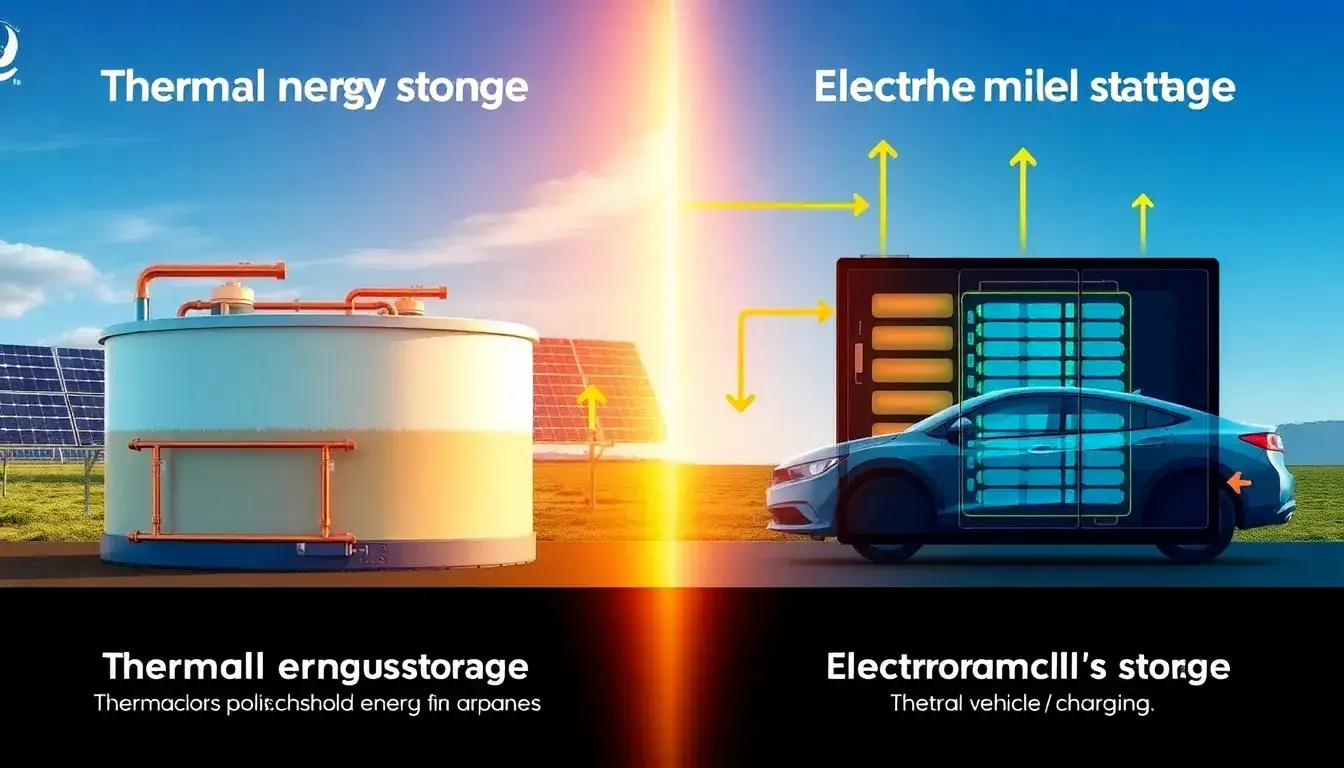
Thermal Energy Storage (TES)
Key Concepts and Applications:
- Principle: TES stores energy in the form of heat or cold, utilizing media such as water, ice, or phase-change materials to capture and release thermal energy.
- Applications:
- District Heating and Cooling: TES is used in district heating systems to store heat for later use, optimizing energy distribution and reducing peak demand.
- Industrial Processes: TES helps in waste heat recovery and enhances process efficiency by storing and utilizing waste heat from industrial operations.
- Building Heating/Cooling: TES is used in buildings for space heating and cooling, leveraging materials like concrete to store thermal energy.
- Renewable Energy Integration: TES integrates well with renewable energy sources by storing excess heat generated from solar or wind power for later use.
- Types:
- Sensible Heat Storage: Stores energy by changing the temperature of a material.
- Latent Heat Storage: Uses phase-change materials to store energy during melting or freezing.
- Thermochemical Storage: Involves chemical reactions for energy storage.
Electrochemical Storage
Key Concepts and Applications:
- Principle: Electrochemical storage, primarily through batteries, converts electrical energy into chemical energy and back into electrical energy when needed.
- Applications:
- Grid-Scale Energy Storage: Batteries like lithium-ion are widely used for stabilizing the grid by smoothing out the variability of renewable electricity sources.
- Electric Vehicles: Essential for powering electric vehicles by providing the energy needed for propulsion.
- Portable Electronics: From smartphones to laptops, batteries are crucial for mobile devices.
- Building-Scale Energy Storage: Allows buildings to store excess energy generated by solar panels or the grid and use it during periods of high demand or power outages.
- Types:
- Lithium-Ion Batteries: Most commonly used due to their high energy density and long lifespan.
- Lead-Acid Batteries: Older technology still used in vehicles and some energy storage applications.
- Flow Batteries: Suitable for long-duration energy storage due to their scalability and low cost per kWh stored.
Comparison Summary
| Aspect | Thermal Energy Storage (TES) | Electrochemical Storage (Batteries) |
|---|---|---|
| Storage Principle | Stores energy as heat or cold using different materials like water or molten salt. | Converts electrical energy into chemical energy and back into electrical energy. |
| Applications | Primarily used in heating, cooling, district heating, and industrial processes. | Grid stabilization, electric vehicles, portable electronics, and building-scale storage. |
| Types | Sensible, Latent, Thermochemical | Lithium-ion, Lead-acid, Flow batteries |
| Integration with Renewables | Facilitates the integration of renewable energy by storing excess heat for later use. | Directly supports grid stability by storing excess electrical energy for later use. |
Both technologies play critical roles in the energy transition but serve different purposes based on the nature of the energy being stored and the applications they are suited for.
Original article by NenPower, If reposted, please credit the source: https://nenpower.com/blog/how-does-thermal-energy-storage-differ-from-electrochemical-storage-in-terms-of-application/

