

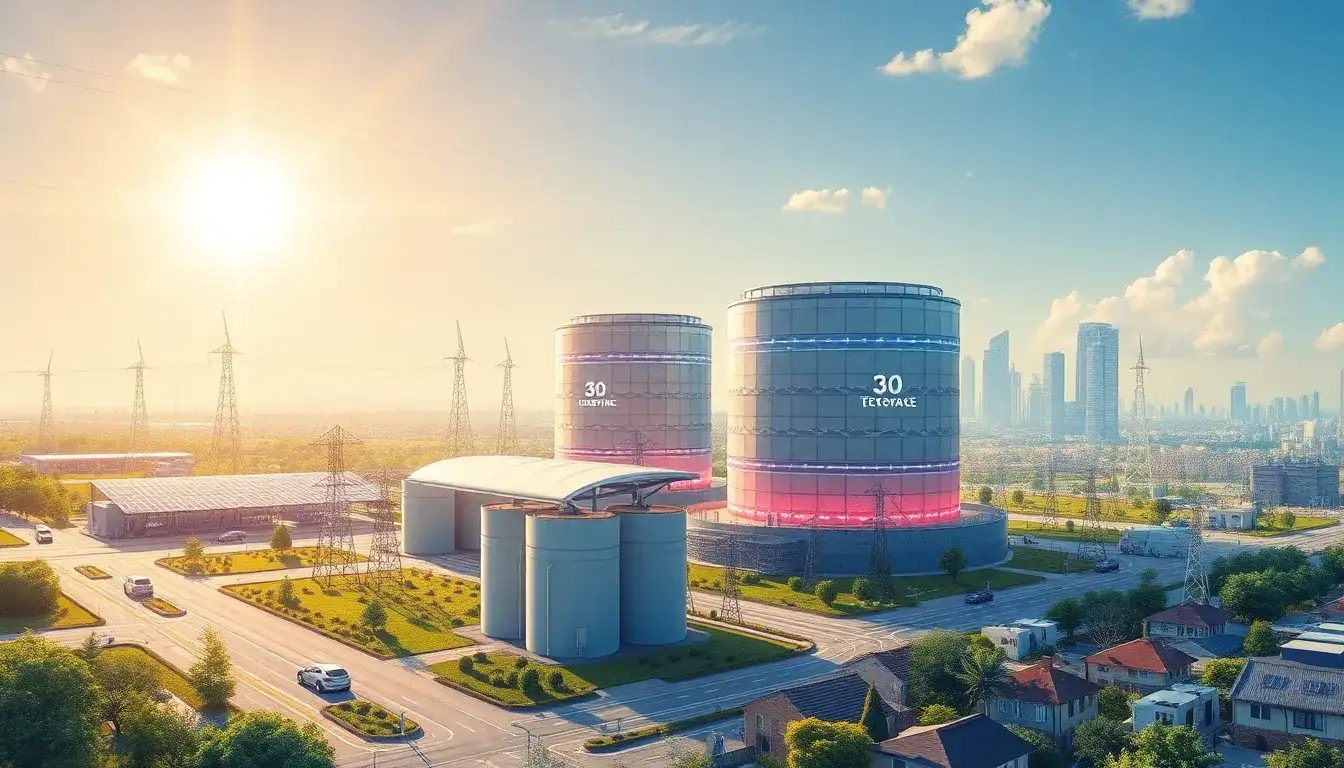
Thermal energy storage (TES) contributes significantly to grid flexibility and stability by acting as a versatile energy reservoir that can store excess energy as heat and release it when needed. This capability helps balance supply and demand, particularly as renewable energy sources like solar and wind, which are variable and intermittent, become more prevalent on the grid.
Contributions of Thermal Energy Storage to Grid Flexibility and Stability
1. Energy Shifting and Load Balancing
TES allows excess electrical energy—often generated during periods of low demand or high renewable output—to be converted into thermal energy and stored for later use. This energy can be discharged as heat or reconverted to electricity, thereby shifting energy use from peak to off-peak periods and smoothing out daily and seasonal variations in supply and demand. By doing so, TES helps reduce grid stress during peak demand and prevents waste of renewable energy generation.
2. Rapid Response and Frequency Regulation
Electrical Thermal Energy Storage (ETES) systems provide rapid response times, making them highly effective for frequency regulation services. Unlike conventional power plants that take time to ramp up or down, TES can immediately absorb or release energy, stabilizing grid frequency and enhancing overall resilience and reliability.
3. High Efficiency and Long Operational Life
TES systems offer high round-trip efficiency, minimizing energy losses during storage. Moreover, TES systems can operate continuously for long periods (25-50 years) without significant degradation, unlike battery storage solutions, which tend to degrade over time. This longevity supports sustained grid reliability and reduces the need for frequent replacements or upgrades.
4. Scalability and Flexibility
TES is highly scalable and adaptable, making it suitable for integration at various scales—from utility-level grid balancing to industrial process heat applications. This flexibility allows TES to be strategically deployed in different locations to optimize grid operations and respond to regional variations in energy supply and demand.
5. Enabling Renewable Energy Integration and Security of Supply
By storing excess renewable energy that would otherwise be curtailed, TES supports higher penetration of renewables in the energy mix. This reduces reliance on fossil fuels and increases the security and resilience of the power supply. TES acts as a buffering system, ensuring reliable power availability even during renewable intermittency or peak demand times.
6. Supporting Grid Modernization and Decarbonization Goals
TES, as an energy storage technology, plays a pivotal role in modernizing power grids to meet the demands of increased electrification, decarbonization, and digitalization. It helps optimize the use of existing infrastructure, reduces the need for expensive peak-load generation, and lowers overall energy costs for consumers. TES contributes to a more resilient, sustainable, and efficient energy system critical to achieving net-zero emissions targets.
7. Providing Clean Industrial Heat
Beyond electricity grid services, TES can discharge stored thermal energy directly as clean process heat, replacing fossil fuel boilers in industries. This dual role not only aids grid balancing but also facilitates carbon reduction in industrial sectors, making TES a “win-win” solution for both grid stability and industrial decarbonization.
In summary, thermal energy storage enhances grid flexibility and stability by enabling rapid, efficient energy shifting; supporting frequency regulation; integrating and maximizing renewable energy utilization; and providing long-lasting, scalable solutions that align with grid modernization and decarbonization initiatives. Its ability to deliver both electrical and thermal energy services uniquely positions TES as a critical technology for a resilient, stable, and low-carbon energy future.
Original article by NenPower, If reposted, please credit the source: https://nenpower.com/blog/how-does-thermal-energy-storage-contribute-to-grid-flexibility-and-stability/

