

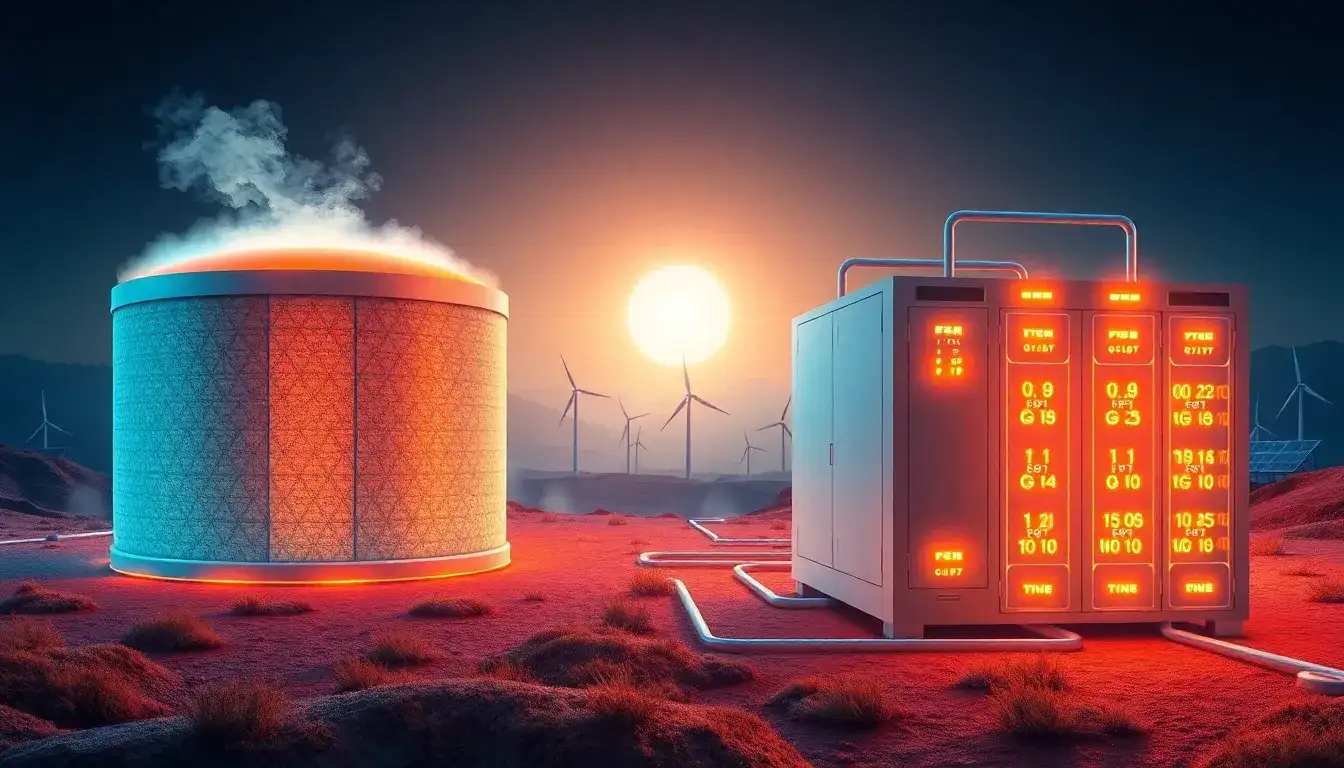
Thermal energy storage (TES) complements lithium-ion batteries by addressing different temporal and functional aspects of energy storage, thereby enhancing overall grid stability, renewable energy integration, and cost efficiency.
How Thermal Energy Storage Complements Lithium-Ion Batteries
1. Long-Duration vs. Short-Duration Storage
- Lithium-ion batteries excel at short-duration energy storage with fast charge and discharge capabilities, making them ideal for rapid response applications such as peak shaving, frequency regulation, and managing short-term fluctuations in energy supply and demand.
- Thermal energy storage, a form of Long Duration Energy Storage (LDES), stores energy as heat or cold for extended periods, often hours to days, and can release it as electricity or thermal energy when needed. This makes TES well-suited for bridging longer gaps in renewable generation or demand cycles that lithium-ion batteries alone cannot economically cover.
2. Grid Balancing and Renewable Integration
- TES can store excess renewable energy generated during off-peak or high-production periods (e.g., sunny or windy times) in thermal form, then convert it back to electricity or provide thermal energy during peak demand periods, thereby reducing reliance on fossil-fuel peaking plants.
- Lithium-ion BESS provide rapid-response grid services, while TES enables shifting large amounts of energy over longer timescales. Together, they create a synergistic effect that stabilizes the grid more effectively, facilitates higher penetration of intermittent renewables, and supports energy market arbitrage strategies.
3. Cost and Resource Optimization
- Lithium-ion batteries have higher costs and limited lifespans that affect their economic viability for extended-duration storage.
- Thermal energy storage systems often use inexpensive and abundant materials (such as molten salts, sand, or ice) with potentially lower costs per stored energy unit, making TES more cost-effective for long-term storage needs.
- Combining TES with lithium-ion batteries allows the grid to optimize storage technology use by leveraging lithium-ion’s rapid response for short bursts and TES’s economical, long-term capacity for sustained energy supply.
4. Industrial and Heat Applications
- TES is particularly valuable for industrial sectors where energy needs include substantial heat demands (e.g., pulp and paper, chemicals, petroleum refining). Lithium-ion batteries cannot provide thermal energy directly.
- By integrating TES, industries can decarbonize heat generation and improve energy efficiency, complementing lithium-ion batteries’ electrical storage roles.
5. Enhanced Reliability and Resilience
- TES systems, such as molten salt or ice storage, can provide backup power or heat during extended outages or periods of low renewable generation.
- Lithium-ion batteries provide quick backup and frequency regulation, while TES offers longer-duration resilience, creating a layered approach to energy security.
Summary Table
| Aspect | Lithium-Ion Batteries | Thermal Energy Storage | Complementarity |
|---|---|---|---|
| Storage Duration | Short-term (minutes to hours) | Long-term (hours to days) | TES covers longer-duration gaps lithium can’t |
| Energy Form | Electrical (chemical energy) | Thermal (heat or cold) | TES adds thermal flexibility and heat supply |
| Response Time | Fast (milliseconds to seconds) | Slower (minutes to hours) | Li-ion for rapid response, TES for sustained |
| Cost | Higher upfront and lifecycle costs | Generally lower cost materials | TES reduces overall storage costs |
| Application Focus | Grid frequency regulation, peak shaving | Grid balancing, industrial heat, long-term backup | TES supports heat demand, lithium-ion manages power |
| Material & Environmental | Uses critical minerals, flammable electrolytes | Uses abundant, non-toxic materials | TES provides safer, sustainable options |
In essence, thermal energy storage complements lithium-ion batteries by providing a longer-duration, cost-effective, and thermal-focused storage solution. Together, they form a synergistic duo that enhances renewable energy use, grid stability, industrial decarbonization, and energy market participation.
Original article by NenPower, If reposted, please credit the source: https://nenpower.com/blog/how-does-thermal-energy-storage-complement-lithium-ion-batteries/

