

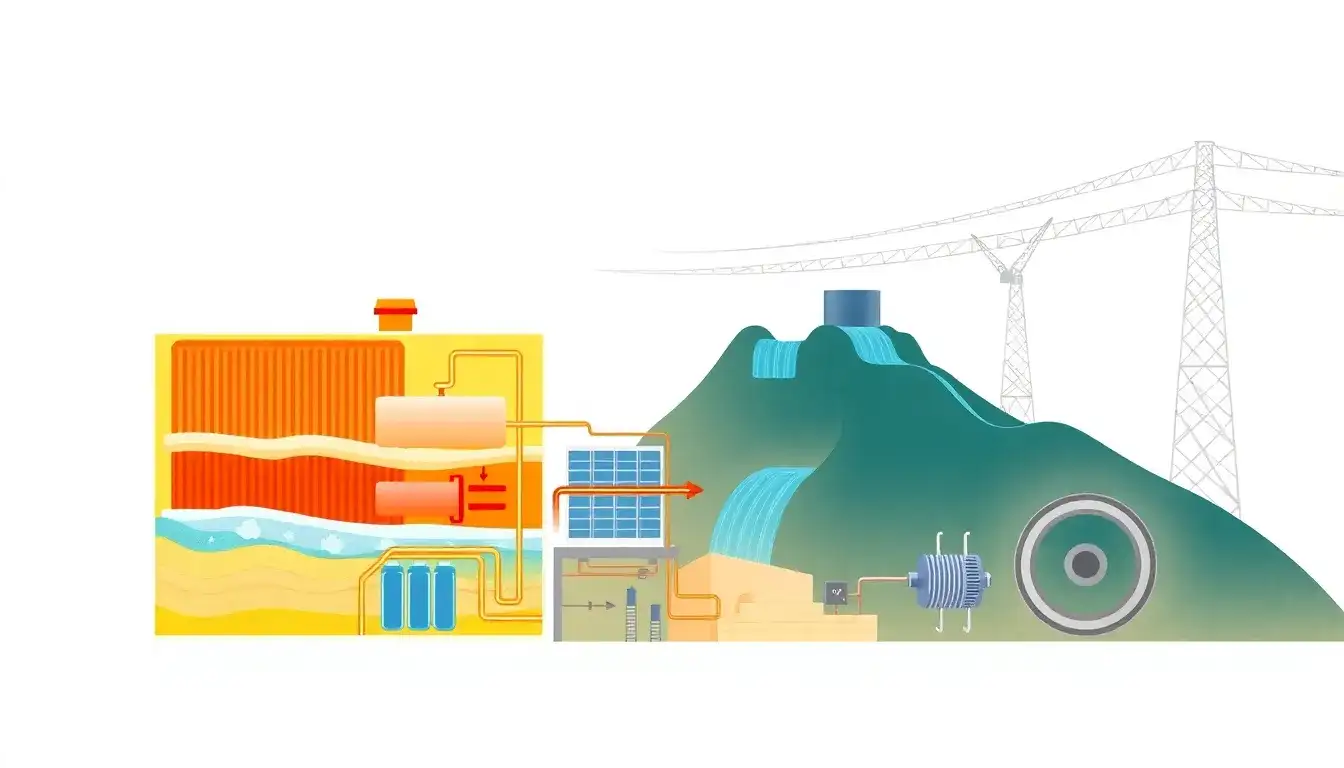
Efficiency Comparison of Thermal Energy Storage vs. Other Storage Technologies
| Storage Type | Efficiency Range | Notes |
|---|---|---|
| Thermal Energy Storage | 50% to >90% | Sensible heat TES typically 50–70% efficient; advanced systems (e.g., molten salts, packed-bed) exceed 90% efficiency; phase change materials (PCM) and thermo-chemical storage (TCS) offer higher efficiencies up to nearly 100% with appropriate applications. |
| Lithium-ion Batteries | 80% to 90% | High round-trip efficiencies, suitable for short to medium duration electrical energy storage. |
| Pumped Hydro Storage | 70% to 85% | Well-established bulk energy storage technology with good efficiency but limited by geography. |
Details and Context
- Thermal Storage Efficiency:
- Traditional TES systems, like sensible heat storage in materials (water, rocks, molten salts), typically achieve 50–70% efficiency converting thermal energy back to electricity.
- Some advanced TES designs, such as the radial flow packed-bed storage developed by KTH, reach over 90% thermal efficiency by reducing thermal losses and optimizing heat transfer.
- Phase change materials (PCM) and thermo-chemical storage systems can further improve efficiency up to nearly 100%, especially for applications requiring stable and targeted discharge temperatures.
- The ThermalBattery™ by EnergyNest claims efficiency over 98%, demonstrating how material innovations and design can greatly increase TES efficiency compared to conventional systems.
- Comparison with Electrochemical Storage:
- Lithium-ion batteries typically have higher round-trip efficiencies (80–90%) than most thermal storage systems, making them preferable for applications requiring quick and efficient electricity discharge.
- However, TES technologies shine in long-duration storage scenarios where heat is either the end-use energy form or can be converted to electricity with acceptable efficiency losses.
- TES systems often have advantages in cost, scalability, durability, and the ability to store energy over longer periods without significant degradation or maintenance needs.
- Use Cases Influence Perceived Efficiency:
- TES is often better suited for applications where stored thermal energy is used directly (e.g., industrial processes, heating) rather than converted back to electricity, which means practical efficiency can be higher than electrical conversion efficiencies suggest.
- Batteries excel in scenarios requiring rapid, flexible electrical energy storage and release, with higher efficiencies but typically at higher cost and shorter lifespans compared to some TES options.
Summary
Thermal energy storage systems generally have lower conversion efficiency to electricity (50–70%) compared to lithium-ion batteries (80–90%) and pumped hydro (70–85%) for typical technologies. However, advanced TES designs and materials can reach efficiencies exceeding 90% and even approach 98–100% in specialized systems, especially when considering heat storage for direct thermal use. This makes TES highly competitive and advantageous for long-duration, cost-effective energy storage, particularly in industrial and renewable energy integration contexts.
Original article by NenPower, If reposted, please credit the source: https://nenpower.com/blog/how-does-thermal-energy-storage-compare-to-other-forms-of-energy-storage-in-terms-of-efficiency/

