

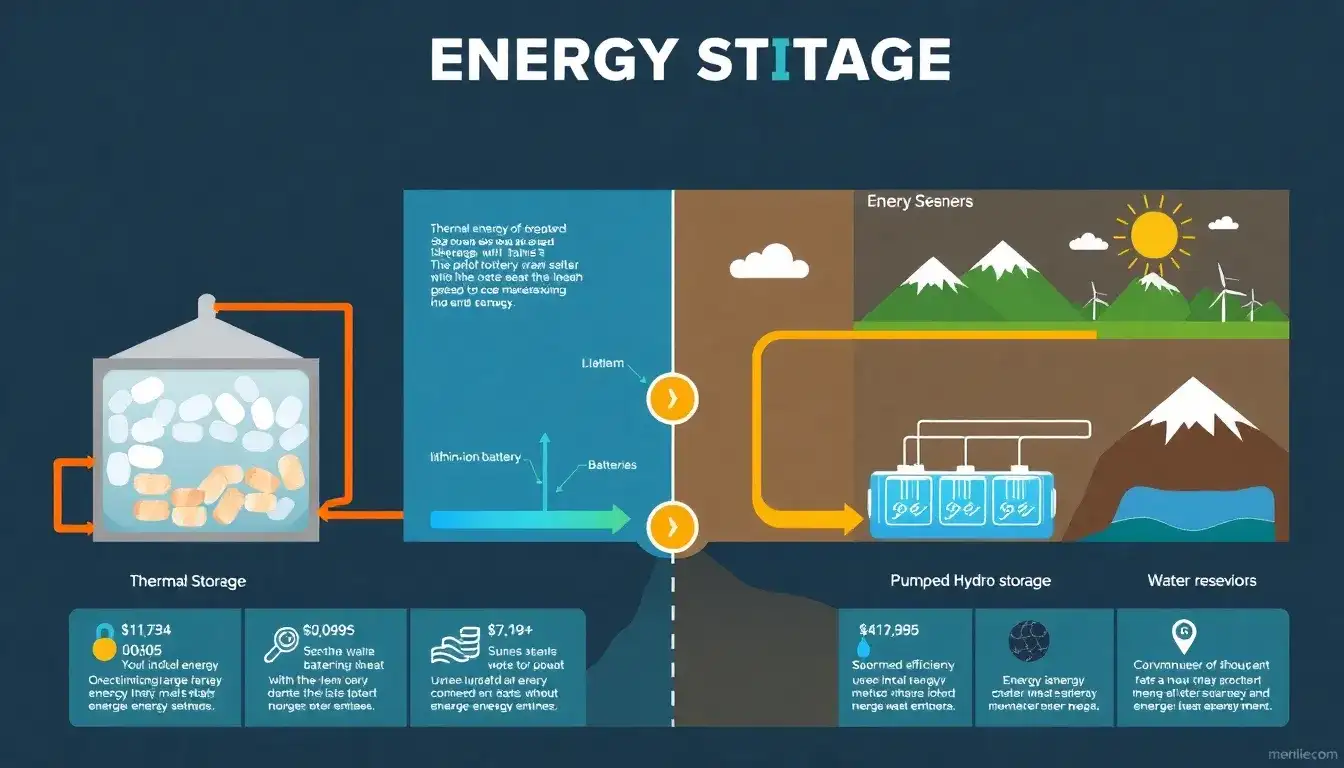
Thermal energy storage (TES) compares favorably to other energy storage methods, such as electrochemical systems like lithium-ion batteries, in several key areas. Here is a comparison of the two technologies:
Advantages of Thermal Energy Storage
- Long-Duration Storage: TES systems can store energy for extended periods, often hours to days, making them suitable for applications requiring prolonged energy supply.
- Cost-Effectiveness: Thermal energy storage uses inexpensive media like molten salts, concrete, or phase change materials, which are often readily available and recyclable.
- Environmental Impact: TES systems typically have a lower environmental impact compared to lithium-ion batteries, as they do not rely on rare earth minerals and are easier to recycle.
- Flexibility and Versatility: Thermal energy storage can be used in a variety of applications, including capturing waste heat from industrial processes and integrating with renewable energy systems.
- Low Maintenance: TES systems require minimal maintenance, reducing operational costs compared to other energy storage technologies.
Advantages of Electrochemical Energy Storage (Lithium-Ion Batteries)
- High Energy Density: Lithium-ion batteries offer high energy density, making them ideal for portable electronics and electric vehicles.
- Efficiency and Self-Discharge: They have high charging and discharging efficiencies and a low self-discharge rate, which minimizes energy loss over time.
- Mobility: Their compact size and lightweight nature make them extremely suitable for mobile applications.
Comparison of Key Characteristics
| Characteristics | Thermal Energy Storage | Electrochemical (Lithium-Ion Batteries) |
|---|---|---|
| Storage Duration | Hours to days, even weeks or months | Hours, with limited long-duration storage capabilities |
| Cost | Generally cost-effective and scalable | Higher upfront costs, though improving over time |
| Environmental Impact | Lower environmental impact due to recyclable materials | Higher environmental concerns due to mining and recycling challenges |
| Energy Density | Generally lower energy density compared to lithium-ion | High energy density, making them suitable for portable applications |
| Applications | Industrial processes, waste heat recovery, high-temperature storage | Mobile electronics, electric vehicles, renewable grid stabilization |
In summary, while lithium-ion batteries excel in mobility and high energy density, thermal energy storage offers advantages in long-duration storage, cost-effectiveness, environmental friendliness, and versatility in industrial applications.
Original article by NenPower, If reposted, please credit the source: https://nenpower.com/blog/how-does-thermal-energy-storage-compare-to-other-energy-storage-methods/

