

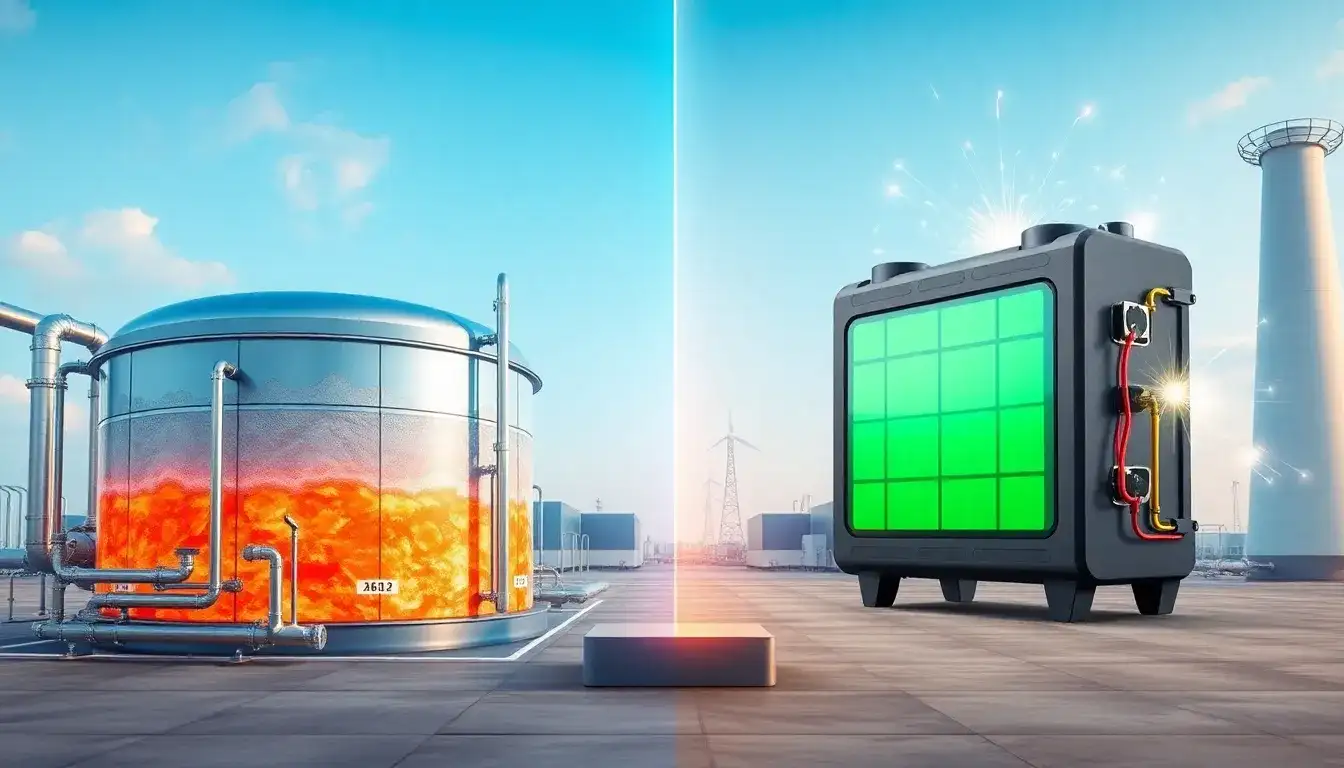
Thermal energy storage (TES) and lithium-ion batteries are both used for energy storage, but they operate differently and have distinct efficiency profiles. Here’s a comparison based on energy efficiency:
Thermal Energy Storage (TES)
- Efficiency: TES systems often achieve high efficiency, with some setups reaching over 90% efficiency in storing and releasing thermal energy. Advanced designs, like those using hot silicon or molten aluminum, can store energy at very high temperatures, enhancing efficiency further.
- Long-term Storage: TES is particularly adept at storing energy for long durations, ranging from several hours to months. This makes it suitable for balancing daily and seasonal energy demands.
- Applications: TES can be used for heating and cooling in buildings, industrial processes, and as part of concentrated solar power (CSP) systems to generate electricity.
Lithium-Ion Batteries
- Efficiency: Lithium-ion batteries typically have an efficiency of around 90% to 95% for charge/discharge cycles. However, their efficiency decreases with depth of discharge and cycle count over time.
- Energy Density: They offer high energy density, making them portable and suitable for electric vehicles and smaller-scale energy storage needs.
- Short-term Storage: Lithium-ion batteries are best suited for short-term energy storage, typically providing power over a few hours. They are excellent for applications requiring high power density and rapid charging/discharging capabilities.
Comparison Summary
| Feature | Thermal Energy Storage (TES) | Lithium-Ion Batteries |
|---|---|---|
| Efficiency | Up to 90% or more for thermal energy storage | Typically 90% to 95% for charge/discharge cycles |
| Storage Duration | Can store energy for days to months | Best suited for short-term storage (hours) |
| Applications | Heating & cooling, industrial processes, CSP systems | Electric vehicles, portable devices, short-term grid support |
| Energy Density | Variable, depends on storage medium | High energy density, compact |
Overall, while both technologies have high efficiencies, TES excels in long-term thermal energy storage, whereas lithium-ion batteries are better suited for short-term, high-density electrical energy storage.
Original article by NenPower, If reposted, please credit the source: https://nenpower.com/blog/how-does-thermal-energy-storage-compare-to-lithium-ion-batteries-in-terms-of-energy-efficiency/

