

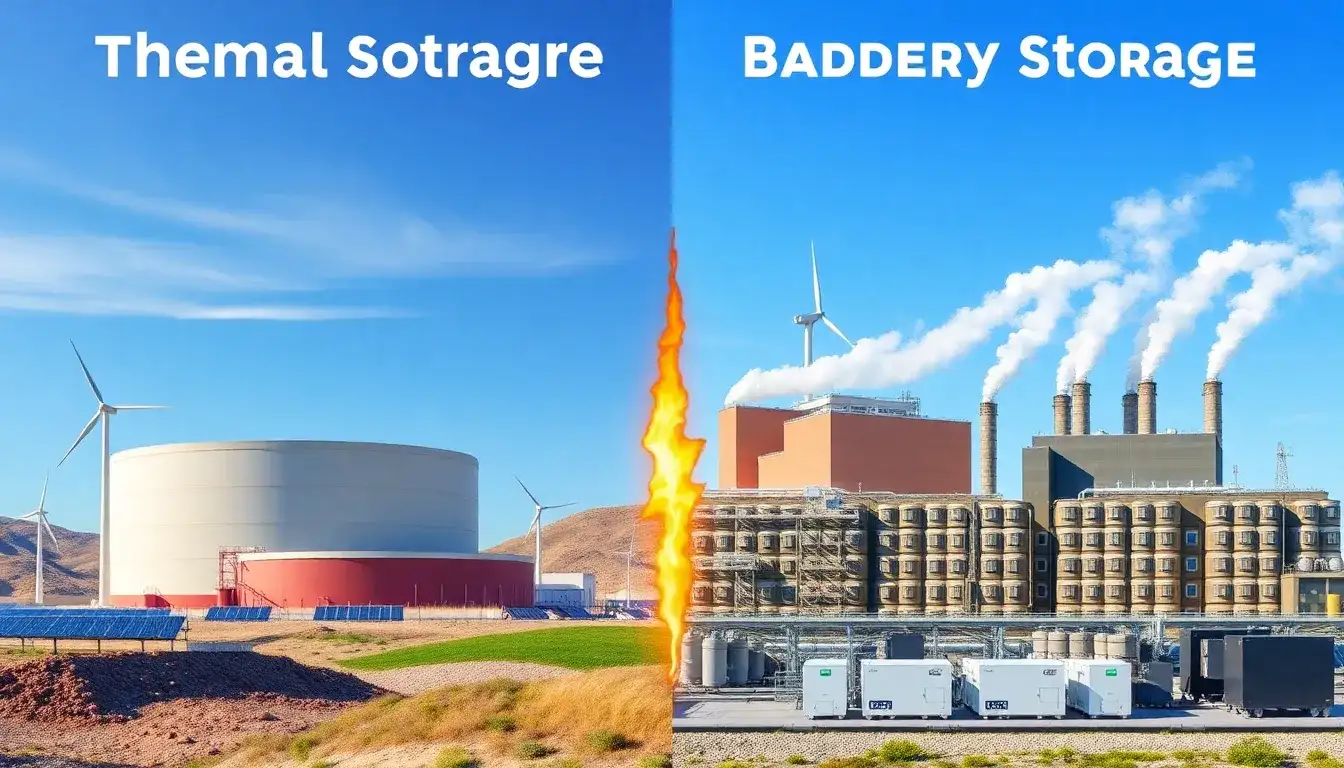
Thermal Energy Storage (TES)
- Application and Emissions Reduction: TES is particularly effective for decarbonizing industrial heat processes, which account for a significant portion of global energy use. By leveraging renewable energy sources to generate heat, TES can help reduce emissions from industries like cement, steel, and glass. This could potentially cut up to 12 Gt of annual CO2 emissions globally, and over 513 Mt in the European Union alone.
- Materials and Cost: TES often uses readily available materials like refractory bricks or volcanic rocks, which are cost-effective and scalable. This reduces supply chain risks and operational costs, making it competitive with traditional fossil fuel-based heating systems.
- Flexibility and Integration: TES systems can be designed to provide both heat and power, integrating well with existing industrial processes. Their modular nature allows for easy on-site installation without significant downtime.
Battery Storage
- Application and Emissions Reduction: Battery storage, particularly lithium-ion, is crucial for stabilizing renewable energy sources by storing excess electricity generated during off-peak times for use during peak demand. This helps reduce reliance on fossil fuel-based power plants, which emit greenhouse gases.
- Materials and Cost: Battery storage relies heavily on materials like lithium and cobalt, which have environmental and supply chain challenges. The cost of batteries has decreased over time but can still be more expensive per kWh stored than some TES solutions, especially for large-scale industrial heat applications.
- Flexibility and Integration: Batteries are highly versatile and can be used in various sectors, including electric vehicles and grid-scale energy storage. However, they are not as effective for high-temperature industrial heat applications as TES systems.
Comparison Summary
| Aspect | Thermal Energy Storage (TES) | Battery Storage |
|---|---|---|
| Emissions Reduction | Effective for industrial heat decarbonization; potential to reduce up to 12 Gt CO2 yearly. | Supports grid integration of renewables, reducing fossil fuel reliance. |
| Materials and Cost | Uses cheap, abundant materials like refractory bricks. | Relies on materials like lithium and cobalt, with supply chain and environmental concerns. |
| Flexibility and Integration | Specialized for high-temperature industrial processes; offers both heat and power. | Highly versatile across various sectors, including transportation and grid-scale storage. |
In summary, while battery storage is essential for integrating renewable electricity into the grid, thermal energy storage is particularly well-suited for reducing emissions from industrial heat processes, potentially offering a cost-effective and scalable solution for sectors that are difficult to decarbonize.
Original article by NenPower, If reposted, please credit the source: https://nenpower.com/blog/how-does-thermal-energy-storage-compare-to-battery-storage-in-terms-of-greenhouse-gas-emissions/

