

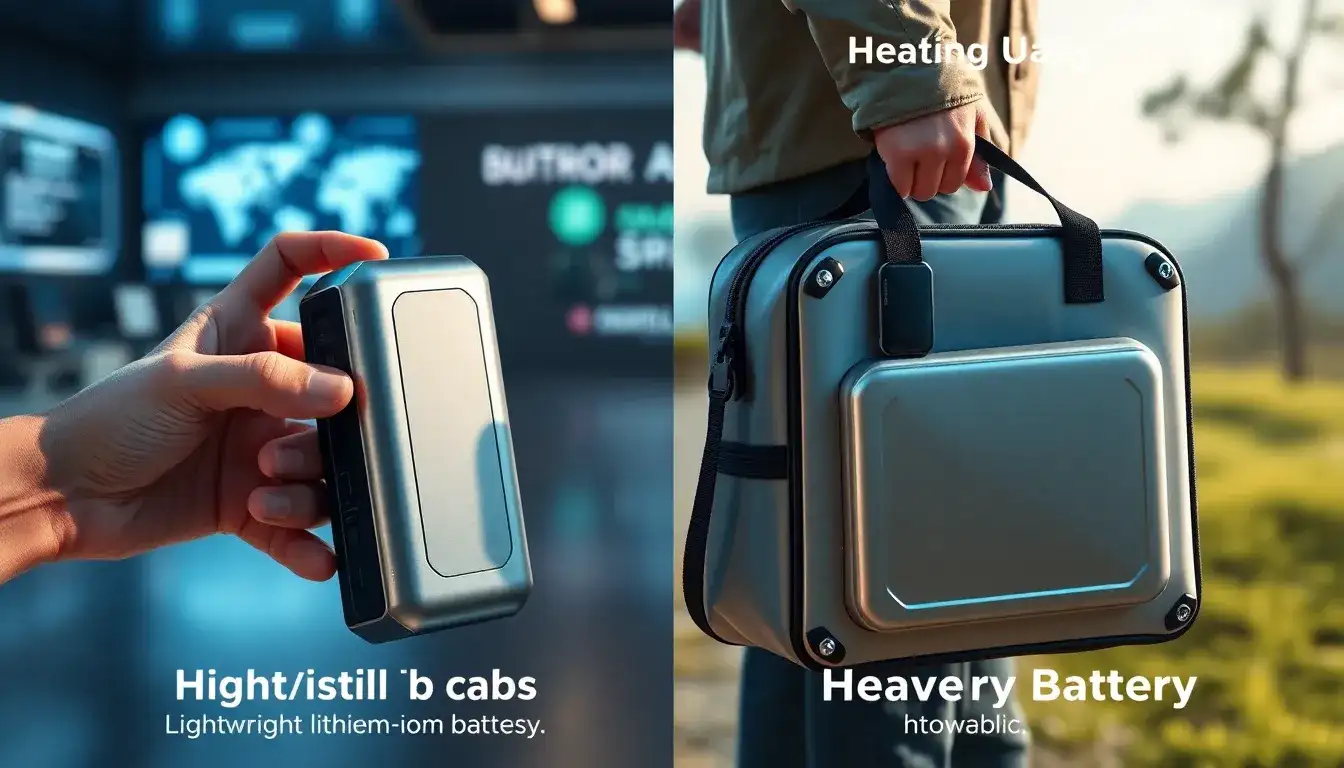
The weight of lithium-ion batteries significantly impacts their portability in several important ways:
Portability and Usability
- Lithium-ion batteries are much lighter compared to traditional alternatives like lead-acid batteries, often being about one-third the weight. This substantial weight reduction makes them easier to carry and use in portable devices and equipment.
- Lightweight lithium-ion batteries enable convenient transport and mobility, which is why they are widely used in applications requiring frequent movement, such as drones, electric bikes, medical devices, and portable power tools.
Energy Density and Weight Relationship
- Weight directly correlates with energy density in lithium-ion batteries. Higher energy density means more power can be stored in a lighter battery, enhancing portability without sacrificing performance.
- This efficiency allows lithium-ion batteries to power devices and vehicles with less bulk, facilitating the design of more compact, lightweight electronic products and vehicles.
Impact on Larger Applications
- For electric vehicles, the weight of lithium-ion batteries is a critical factor. Larger battery packs needed for longer ranges add significant weight—examples include packs weighing several hundred kilograms for high-capacity EV batteries (e.g., 385 to 544 kg for 60-100 kWh packs).
- This increased weight influences vehicle dynamics such as acceleration, braking, and overall load capacity, impacting portability in a broader sense—mobility and handling of the vehicle become more challenging with heavier battery packs.
Ease of Installation and Performance
- Lighter lithium-ion batteries simplify installation and maintenance, enhancing the usability and portability of energy storage systems both in residential and commercial settings.
- Lightweight batteries also improve the performance and durability of portable and mobile devices, making them faster and more efficient.
Summary Table: Weight Impact on Lithium-Ion Battery Portability
| Aspect | Impact of Weight on Portability |
|---|---|
| Consumer Electronics | Lightweight batteries improve ease of carrying and usage |
| Electric Vehicles | Heavier battery packs increase vehicle weight, affecting handling and load capacity |
| Medical/Portable Equipment | Lightweight batteries enable easy transport and frequent movement |
| Energy Density | Higher energy density means more power for less weight |
| Installation & Maintenance | Lighter batteries are easier to install and maintain |
In conclusion, the lighter weight of lithium-ion batteries compared to traditional types greatly enhances their portability, usability, and application flexibility, from small handheld devices to electric vehicles. However, in large-scale applications like EVs, increased battery weight for higher capacity remains a challenge affecting overall portability and performance.
Original article by NenPower, If reposted, please credit the source: https://nenpower.com/blog/how-does-the-weight-of-lithium-ion-batteries-impact-their-portability/

