

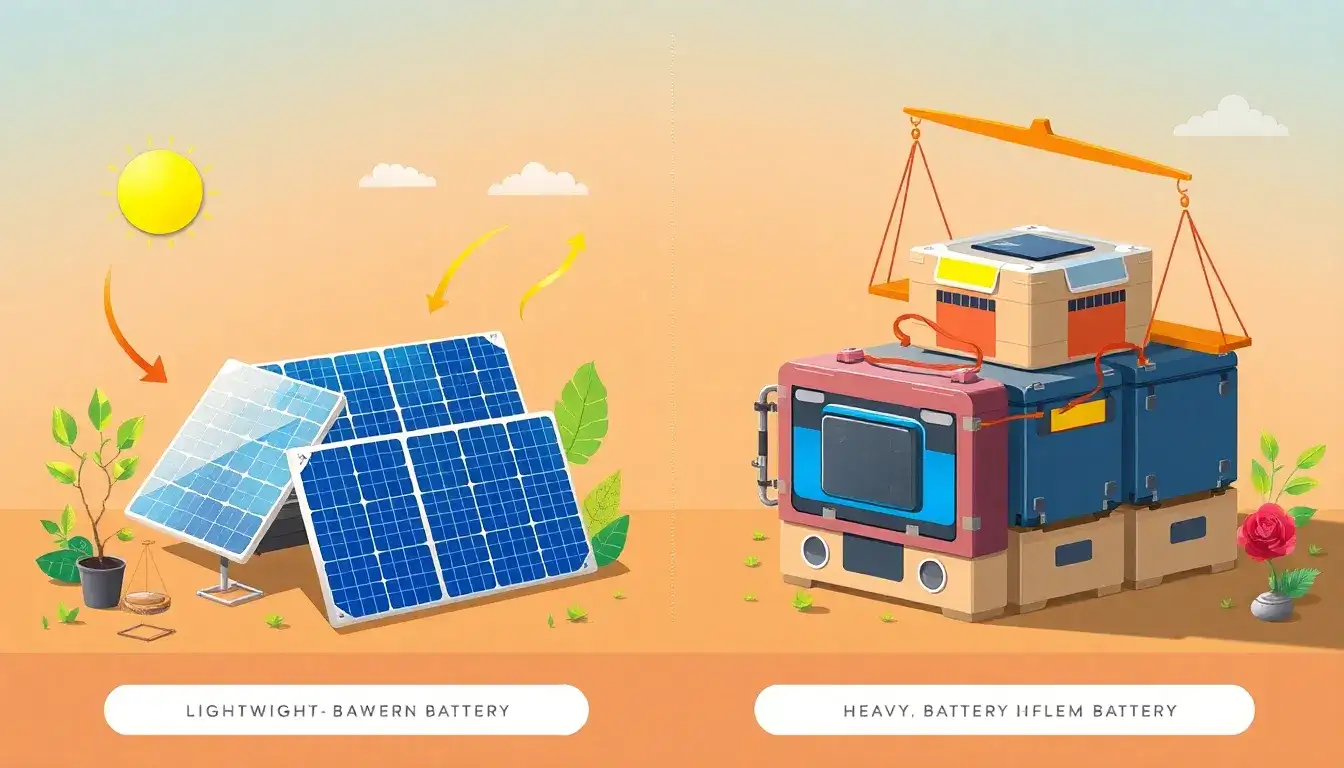
Impact of Battery Weight on Solar System Design
1. Structural Requirements
- Mounting and Support: Lighter lithium-ion batteries require less structural support compared to heavier lead-acid batteries. This simplifies the installation process and reduces the need for robust mounting systems, which can lower installation costs. Lithium-ion batteries generally weigh in the range of 20 to 120 kg, depending on their capacity, which is significantly less than lead-acid batteries that can weigh over 50 pounds (approximately 23 kg) each.
- Space Efficiency: Given their lighter weight and more compact size, lithium-ion batteries can be easily integrated into smaller spaces or wall-mounted configurations, making them ideal for both residential and commercial applications.
2. Energy Density and Efficiency
- Efficiency and Performance: Lithium-ion batteries, particularly those using lithium iron phosphate (LiFePO4) technology, offer high energy density and efficiency. This high energy density means that they can provide the same or more energy storage capacity as heavier batteries while occupying less space and weighing less.
- Cycle Life: Lithium-ion batteries have a longer cycle life (often up to 6,000 cycles or more) compared to lead-acid batteries, which enhances the overall performance and cost-effectiveness of the solar system.
3. Safety and Handling
- Safety Considerations: The lighter weight of lithium-ion batteries makes them easier to handle and transport, reducing the risk of injury during installation or maintenance. However, they still require careful handling due to their electronic and chemical components.
- Transportation Costs: Lower weight reduces transportation costs, which can significantly impact the overall cost of larger solar system installations that require multiple batteries.
4. Scalability and Flexibility
- Modularity: Lithium-ion batteries often come in modular designs, allowing for easy expansion of the solar system by adding more units as needed. Their lighter weight facilitates this modularity, making it easier to scale up or down depending on the energy requirements.
In summary, the weight of lithium-ion batteries contributes to a more streamlined, efficient, and flexible solar system design by reducing structural requirements, enhancing space efficiency, improving safety and handling, and facilitating scalability and modularity.
Original article by NenPower, If reposted, please credit the source: https://nenpower.com/blog/how-does-the-weight-of-lithium-ion-batteries-impact-the-overall-design-of-solar-systems/

