

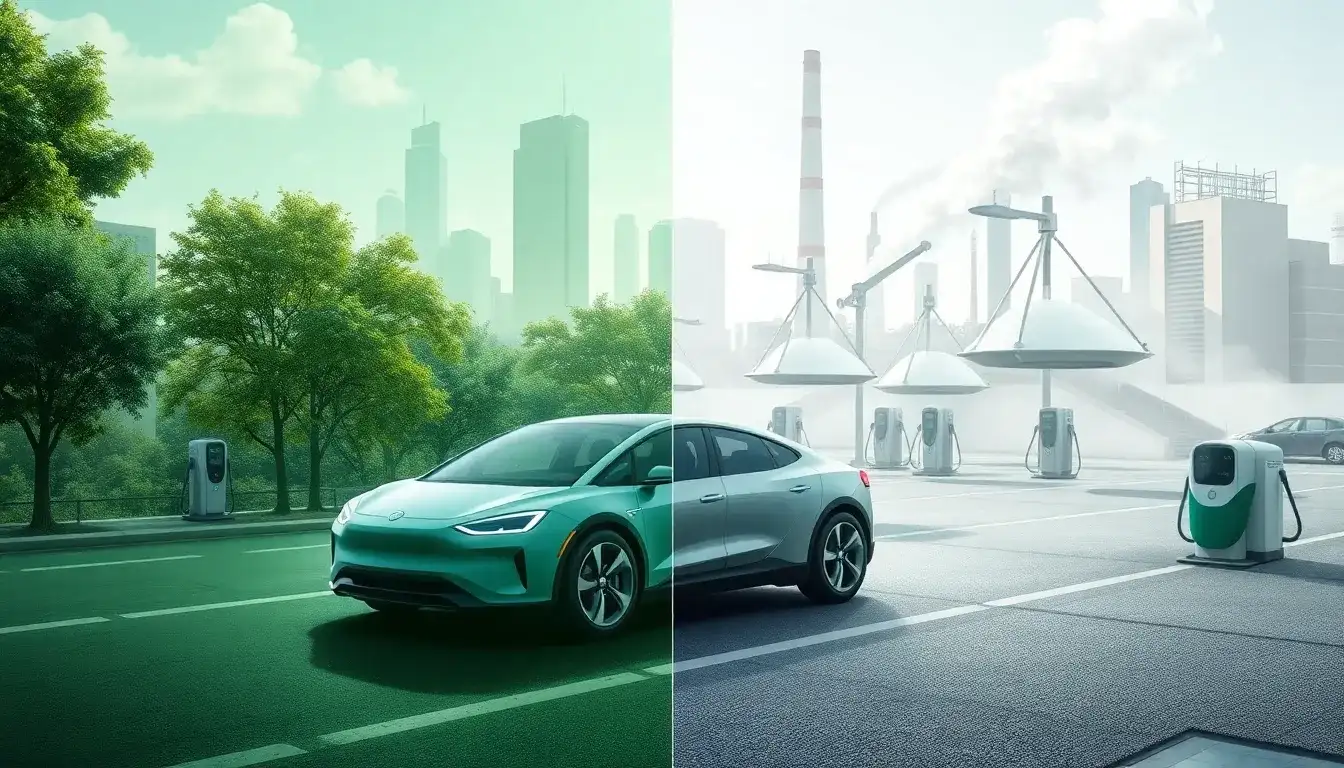
Electric vehicles (EVs) generally have a higher environmental footprint in terms of production and non-exhaust emissions due to their weight, but offer significant lifetime emissions reductions in other areas. Here’s the breakdown:
1. Production Emissions
EVs are typically 30% heavier than gas-powered equivalents due to large batteries. A 100 kg mass increase adds 500–650 kg of greenhouse gas emissions during production and raises energy demand by 1.9–2.4 MWh. Battery manufacturing accounts for much of this impact.
2. Energy Efficiency
Heavier EVs require 2% more energy per 100 kg during operation. However, their electric powertrains still achieve 40–50% lower lifetime emissions than gas vehicles due to cleaner energy use.
3. Particulate Matter from Tires
EVs generate more tire and road wear particles than gas vehicles of equivalent size due to their weight. However, regenerative braking reduces brake wear, partially offsetting this. Studies show EVs still reduce PM2.5 emissions overall compared to gas vehicles, even when accounting for their extra weight.
4. Infrastructure and Safety
While road wear is primarily caused by heavy trucks rather than EVs, the vehicles’ weight increases collision risks.
Key Trade-off
EVs reduce tailpipe emissions and lifetime GHG impact but face challenges with tire pollution and production emissions. Their environmental advantage grows with cleaner energy grids and improved battery recycling.
Original article by NenPower, If reposted, please credit the source: https://nenpower.com/blog/how-does-the-weight-of-electric-vehicles-impact-their-overall-environmental-footprint/

