

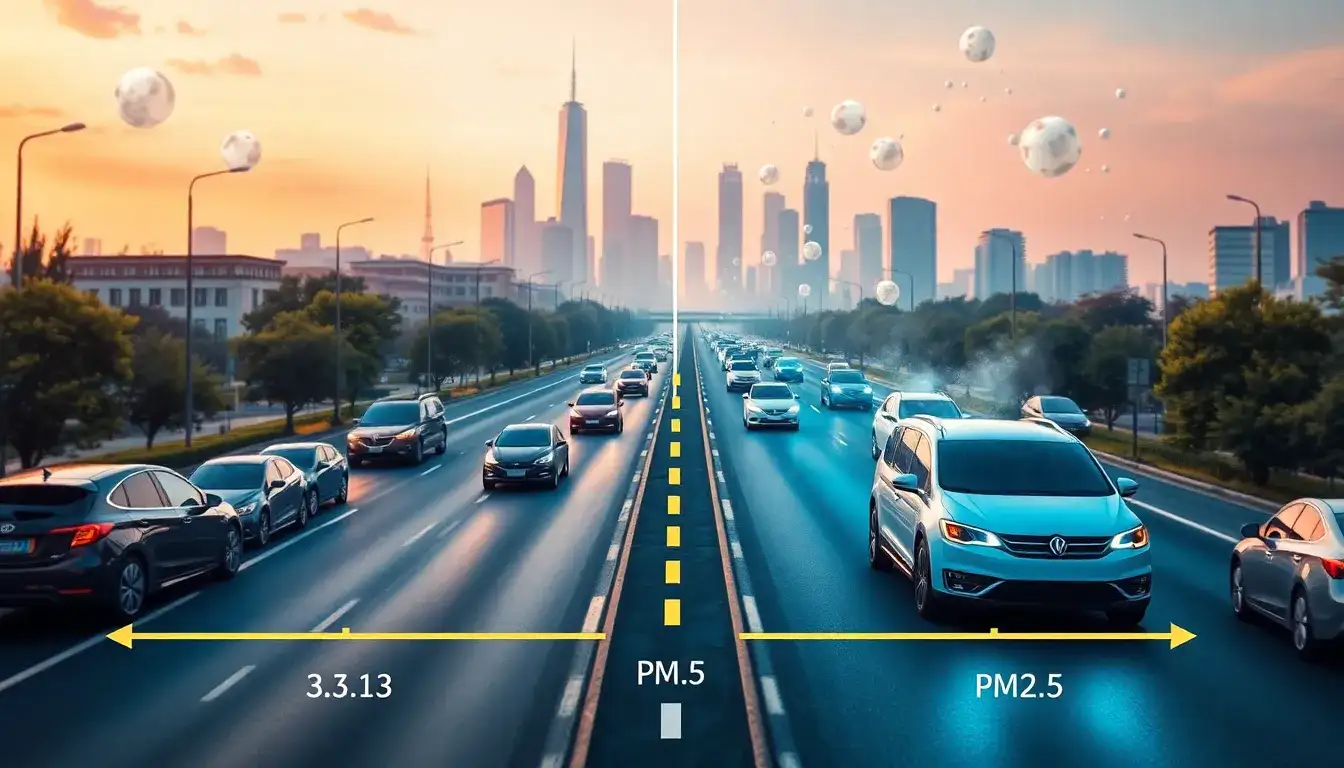
The weight of electric vehicles (EVs) can contribute to increased PM2.5 emissions through non-exhaust pathways, such as tyre and road wear. EVs are generally heavier than their internal combustion engine (ICE) counterparts due to the weight of their batteries. This increased weight results in more tyre and road wear, which releases particulate matter into the atmosphere.
However, studies have shown that despite this heavier weight, switching to EVs can still reduce overall PM2.5 emissions compared to ICE vehicles. This reduction is primarily because EVs eliminate tailpipe emissions, which are a significant source of PM2.5 pollution. The use of regenerative braking in EVs also helps reduce non-exhaust emissions by minimizing brake wear.
In summary, while the increased weight of EVs might increase tyre and road wear emissions, the overall effect of switching to EVs tends to be a reduction in PM2.5 emissions due to the elimination of combustion-related emissions.
| Factor | Impact on PM2.5 Emissions |
|---|---|
| Tyre and Road Wear | Increased emissions due to heavier weight |
| Regenerative Braking | Reduced brake emissions, contributing to lower overall non-exhaust emissions |
| Elimination of Tailpipe Emissions | Significant reduction in PM2.5 emissions from combustion sources |
Overall, the benefits to air quality from switching to EVs typically outweigh the additional emissions from increased tyre and road wear.
Original article by NenPower, If reposted, please credit the source: https://nenpower.com/blog/how-does-the-weight-of-electric-vehicles-contribute-to-increased-pm2-5-emissions/

