

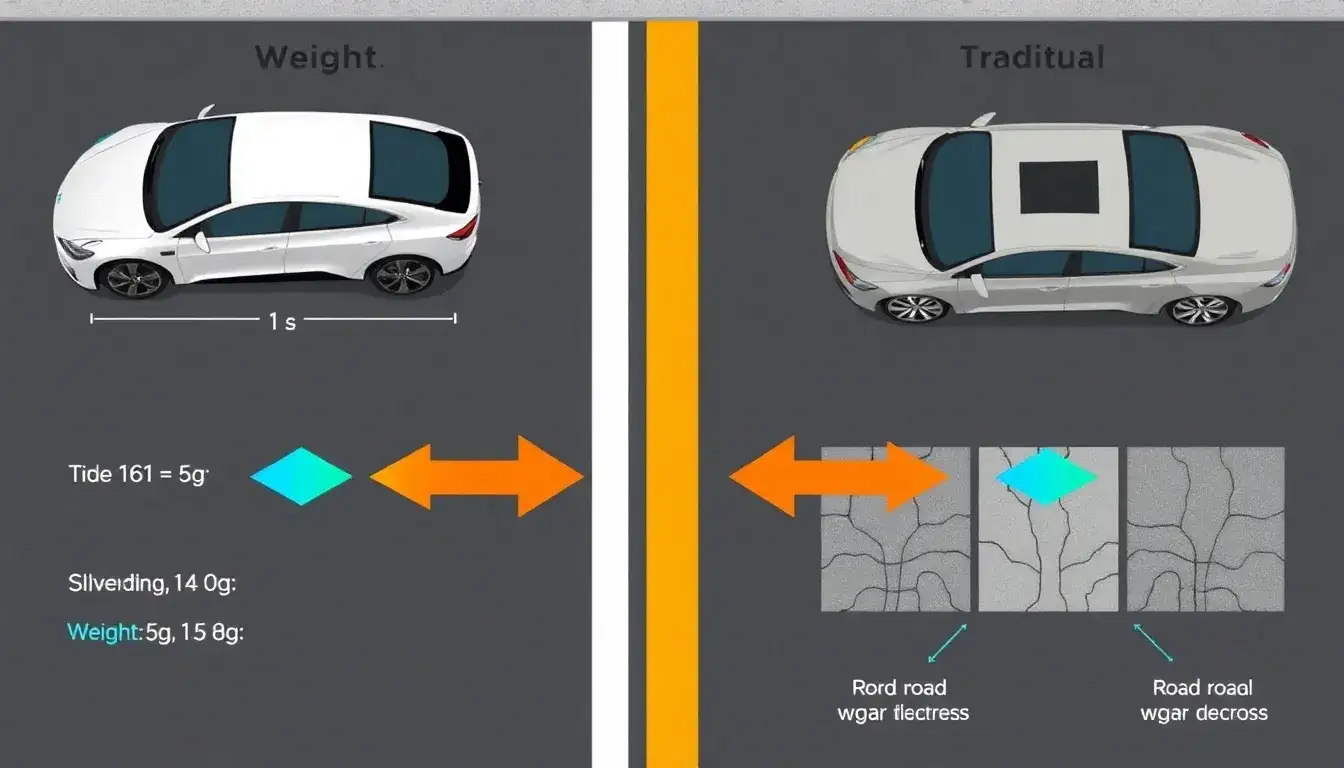
Weight Comparison of Electric Vehicles and Traditional Cars
Electric vehicles (EVs) are generally heavier than traditional gasoline-powered cars due to their large battery packs. On average, EVs weigh between 300 kg to 400 kg more than comparable petrol cars, largely because of the weight of the batteries, which can make up about 25% of the car’s total weight. This added weight is significant, with EVs often weighing 30% more than comparable gas-powered vehicles.
Impact on Road Damage
Despite their increased weight, EVs are not considered to be the primary cause of road damage. Large transport trucks pose the most significant threat to road infrastructure, as they apply a higher load per axle compared to cars, which results in more stress on the pavement. However, the weight of EVs can contribute to wear and tear on roads over time.
Road Maintenance Considerations
Some regions, like Alberta, have implemented additional taxes for EV owners to account for the perceived increased impact on infrastructure. However, experts suggest that the effect of EVs on road maintenance costs is generally not as significant as that of heavier vehicles like trucks.
Conclusion
In summary, while electric vehicles are heavier than traditional cars, their impact on road damage is less pronounced compared to heavier commercial vehicles. The increased weight of EVs may lead to slightly greater wear on roads, but it is not the primary concern for road maintenance.
Original article by NenPower, If reposted, please credit the source: https://nenpower.com/blog/how-does-the-weight-of-electric-vehicles-compare-to-traditional-cars-in-terms-of-road-damage/

