

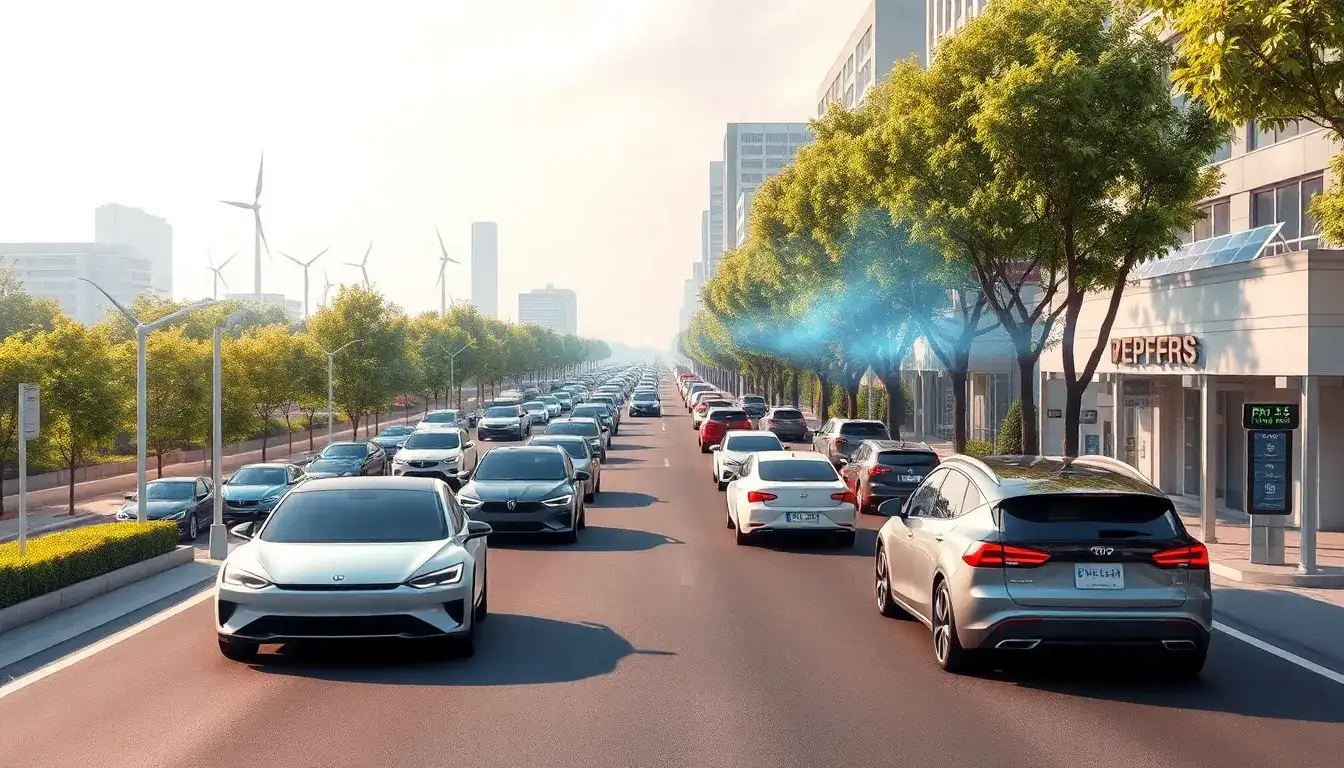
How the Weight of Electric Vehicles Affects Their PM2.5 Emissions
The weight of electric vehicles (EVs) can influence their PM2.5 emissions, primarily through non-exhaust sources such as tire, brake, and road wear. Here’s a summary of how weight affects EV emissions:
- Increased Weight and Non-Exhaust Emissions: Electric vehicles are generally heavier than their conventional counterparts due to battery weight. This increased weight can lead to more tire and road wear, which generates particulate matter. However, EVs tend to have less brake wear due to regenerative braking systems, which reduce the need for mechanical braking.
- Overall Emissions Reduction: Despite the heavier weight leading to more non-exhaust emissions from tires and road wear, EVs still contribute less to PM2.5 emissions overall compared to gasoline and diesel vehicles. The absence of tailpipe emissions from combustion engines significantly reduces the total particulate matter emitted.
- Effect of Regenerative Braking: The use of regenerative braking in EVs can further reduce PM2.5 emissions by minimizing mechanical brake wear, which is a source of particulate matter. With effective regenerative braking, the weight-related increase in non-exhaust emissions is mitigated to some extent.
In summary, while the weight of EVs can increase certain types of non-exhaust emissions, they generally result in lower PM2.5 emissions compared to fossil fuel-powered vehicles, primarily due to the elimination of combustion-related pollutants and effective use of regenerative braking.
Original article by NenPower, If reposted, please credit the source: https://nenpower.com/blog/how-does-the-weight-of-electric-vehicles-affect-their-pm2-5-emissions/

