

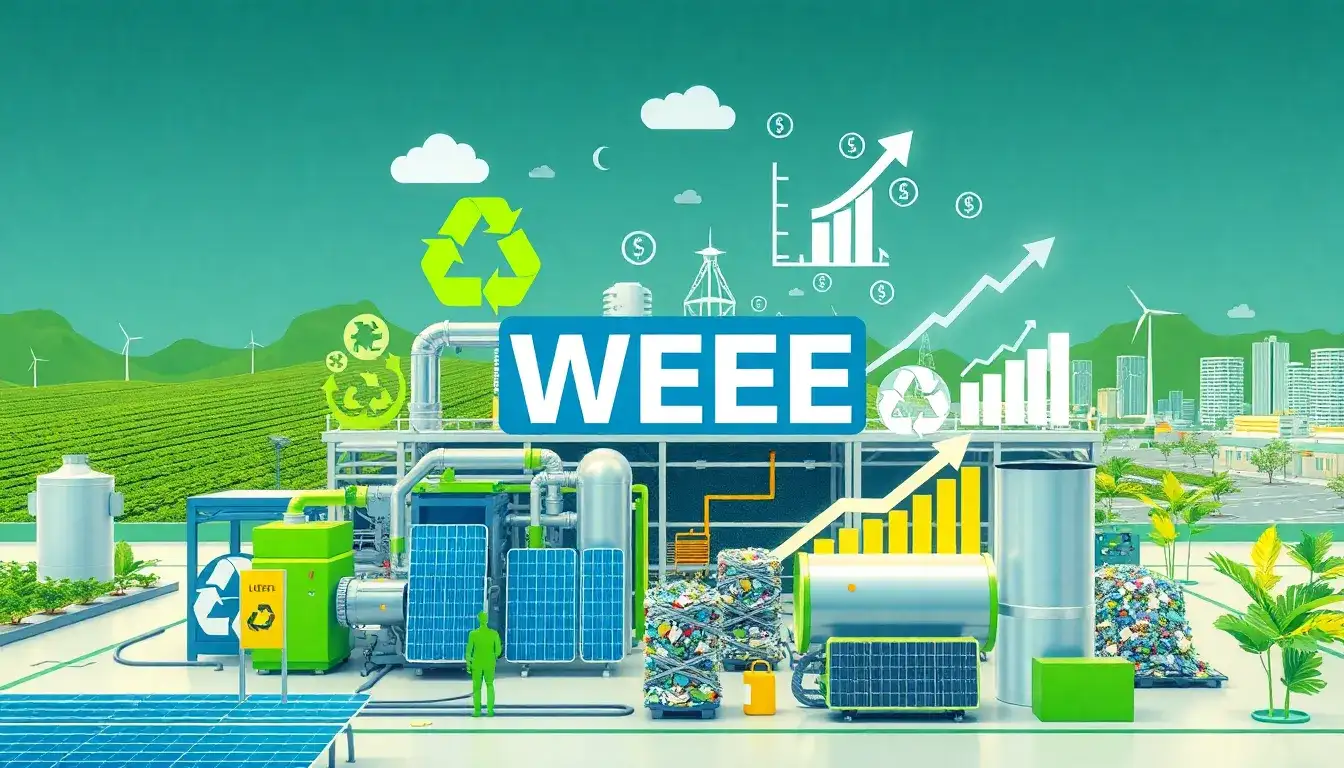
The WEEE Directive has a significant impact on the economic viability of photovoltaic (PV) recycling facilities by imposing strict collection, recovery, and recycling targets, alongside extended producer responsibility requirements.
Key Impacts of the WEEE Directive on PV Recycling Facilities
1. Mandatory High Recovery and Recycling Targets
The directive sets ambitious minimum targets for recovery and recycling rates of WEEE, including solar PV panels. For example, it mandates an 85% recovery rate for PV modules, which encompasses preparation for reuse, material recycling, and energy recovery from thermal treatments. Such stringent targets require PV recycling facilities to invest in effective technologies and processes that can meet these standards, potentially increasing operational costs.
2. Extended Producer Responsibility (EPR)
Under the WEEE Directive, producers are responsible for financing the collection, treatment, recovery, and disposal of PV waste. This shifts financial responsibility to manufacturers and importers, which encourages them to design products with recycling in mind and to support recycling infrastructure. While this can relieve recycling facilities from some financial burdens, it also requires close collaboration between producers and recyclers, affecting business models and cash flow.
3. Regulatory Compliance Costs and Operational Challenges
PV recycling facilities must comply with collection and treatment regulations, which may involve high logistical costs for collecting PV waste separately and managing different material streams. These regulations also enforce proper treatment processes that meet environmental standards, possibly increasing costs but improving environmental outcomes.
4. Economic Opportunities from Material Recovery
The directive’s push for recycling facilitates the recovery of valuable secondary raw materials such as silicon, glass, and metals from PV panels. Recovering these materials can help improve the profitability of recycling operations by generating revenue streams from recycled materials. However, fluctuations in market prices for recovered materials can impact economic viability.
Summary Table of Impacts
| Aspect | Impact on PV Recycling Facilities |
|---|---|
| Recovery & Recycling Targets | Requires advanced processes and higher operational costs |
| Producer Responsibility | Financial support from producers but necessitates collaboration |
| Compliance & Logistics | Increased collection and treatment complexity costs |
| Material Recovery Potential | Revenue generation from recycled materials improves viability |
Conclusion
The WEEE Directive improves the sustainability and environmental performance of PV recycling by setting high collection and recycling standards and shifting responsibility to producers. While this can increase operational costs and complexity for recycling facilities, the directive also enhances economic viability by enabling material recovery and ensuring producer-funded waste management. Ultimately, PV recycling facilities that can efficiently meet WEEE requirements are better positioned for long-term economic and regulatory sustainability in the growing PV waste market.
Original article by NenPower, If reposted, please credit the source: https://nenpower.com/blog/how-does-the-weee-directive-impact-the-economic-viability-of-pv-recycling-facilities/

