

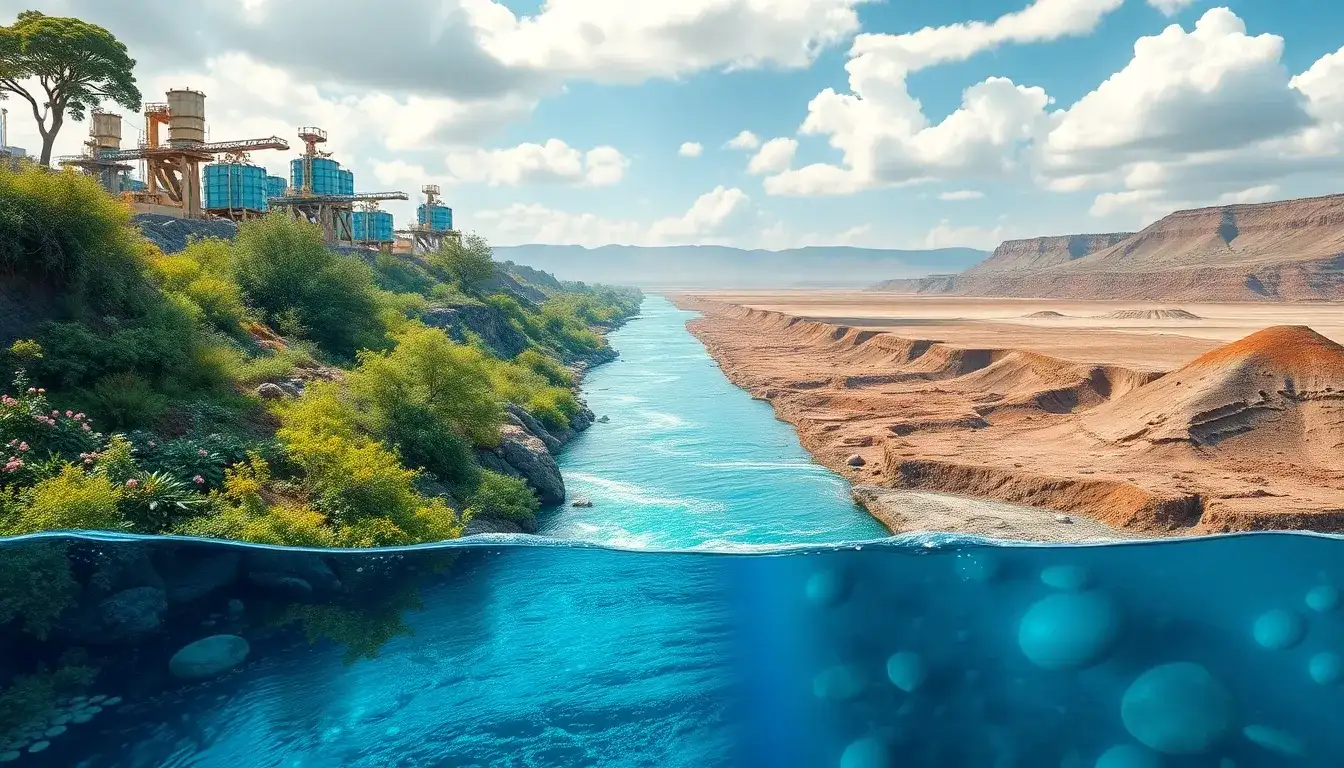
The water usage in lithium mining significantly affects local ecosystems primarily due to the enormous volumes of water required and the environmental changes that result from lithium extraction processes.
Water Consumption and Its Impact
- Lithium mining, especially from brine deposits found in salt flats of areas like South America’s “Lithium Triangle” (Argentina, Bolivia, Chile), requires immense water use. Extracting a single tonne of lithium can consume around 1.9 to 2 million liters (about 500,000 gallons) of water through evaporation-based methods.
- This high water demand can lead to severe depletion of local freshwater resources. In places like Chile’s Salar de Atacama, mining consumes up to 65% of the local water supply, causing competition with Indigenous communities who rely on water for drinking, agriculture, and livestock.
- Over-extraction causes a notable fall in the underground water table, drying up surface water bodies, and reduces the availability of freshwater resources. This leads to salinization of freshwater aquifers when brine comes into contact with them, further degrading water quality.
Ecosystem Degradation
- The drying of lakes, wetlands, and salt pans formed over thousands of years due to water diversion for lithium extraction harms wetland ecosystems that are crucial for biodiversity.
- Wetlands, which store significant amounts of carbon, lose their capacity to sequester carbon dioxide when damaged, indirectly contributing to climate change and reducing the resilience of local ecosystems and communities.
- Toxic chemicals used in some lithium processing methods, such as hydrochloric acid and other filtered waste products, can leak into water supplies, contaminating soil, surface, and groundwater. This contamination harms aquatic life as well as human health and agricultural productivity.
- In regions such as Argentina’s Salar de Hombre Muerto, local residents report stream contamination affecting humans and livestock, while landscapes in Chile have been scarred by mining waste and polluted water channels.
Broader Environmental and Social Concerns
- The disruption of water resources and wetland ecosystems threatens biodiversity and reduces ecosystem services that local populations depend on.
- Communities face heightened vulnerability to climate change and water scarcity as mining operations continue without sustainable water management.
Mitigation and Innovation
- The EU and other bodies emphasize the need for innovation and sustainable extraction methods, such as direct lithium extraction (DLE), which uses specialized filters to separate lithium from brine with less water usage and lower risk of waste leakage.
- Some mining companies have committed to reducing water usage significantly through improved practices, recycling wastewater, and setting water usage targets.
- There is a growing call for integrating respect for environmental protection and human rights into mining regulations to prevent further wetland degradation and water resource depletion.
In summary, lithium mining’s heavy water consumption leads to the depletion and salinization of freshwater resources, destruction of vital wetland ecosystems, contamination of soil and water, and significant ecological and social consequences in arid and sensitive regions. While lithium is critical for clean energy technologies, current evaporation-based lithium brine mining methods pose substantial threats to water and local ecosystems unless more sustainable practices are adopted and enforced.
Original article by NenPower, If reposted, please credit the source: https://nenpower.com/blog/how-does-the-water-usage-in-lithium-mining-affect-local-ecosystems/

