

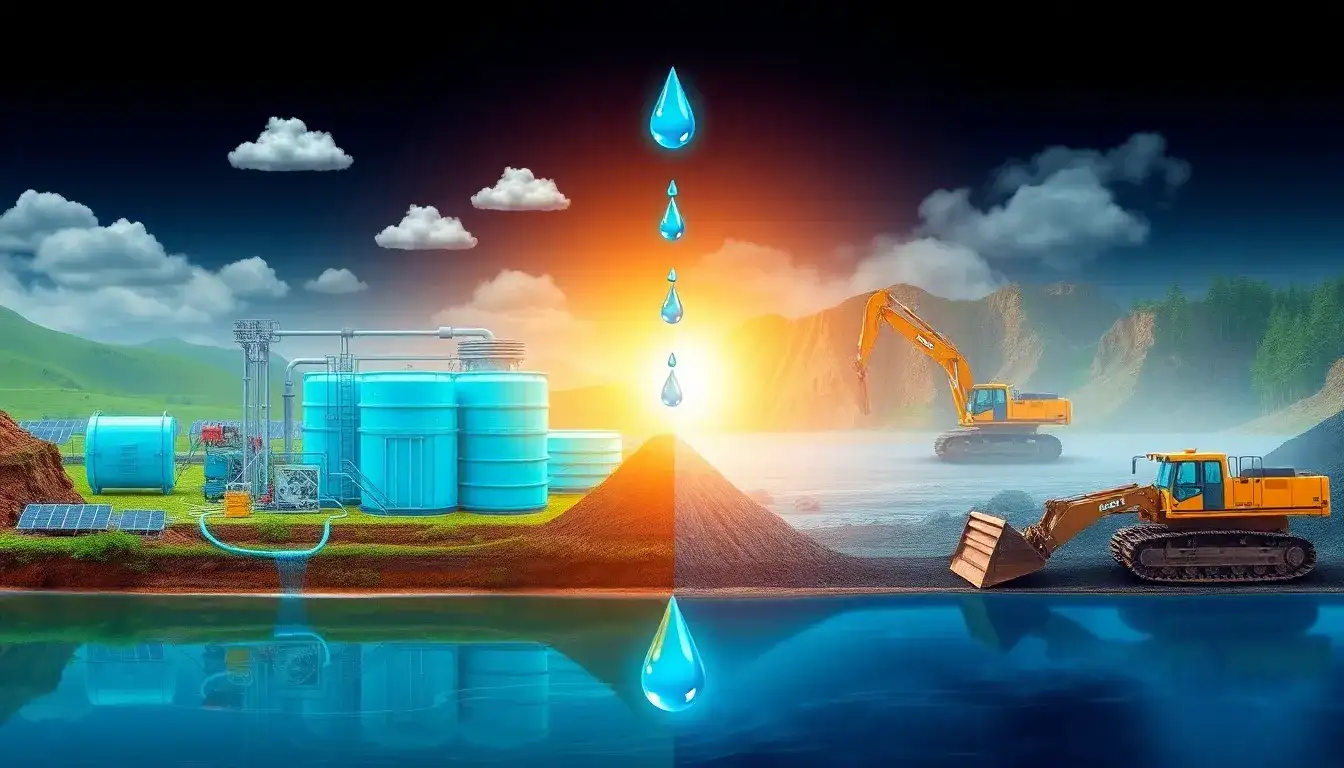
Lithium extraction is notably water-intensive compared to other mining processes. For every metric ton of lithium extracted, approximately 2 million liters (or about 1.9 million liters in some estimates) of water are required. This process, often involving evaporation of brine solutions, results in significant water loss, impacting local water tables and ecosystems.
In comparison, while many mining activities involve substantial water usage, lithium extraction is distinguished by its extreme demands due to the evaporation method used in brine extraction. For instance, gold mining requires significant water for processes like ore processing and cooling systems, but the scale is generally lower compared to lithium’s evaporative needs.
New technologies are emerging to reduce the ecological footprint of lithium extraction. For example, methods using produced water from the oil and gas industry can significantly decrease water consumption and environmental impact. These innovations might help align lithium extraction’s water usage more closely with that of other mining processes in terms of sustainability.
Here is a comparison of water usage in some mining processes:
| Mining Process | Water Usage |
|---|---|
| Lithium Extraction | Approximately 1.9 to 2 million liters per metric ton |
| Gold Mining | Varies, but generally much less per unit compared to lithium due to different extraction methods |
| Other Metals | Water usage varies widely depending on the specific extraction methods and locations |
Overall, lithium extraction is one of the most water-intensive mining processes, but new technologies are being developed to reduce its environmental impact.
Original article by NenPower, If reposted, please credit the source: https://nenpower.com/blog/how-does-the-water-usage-in-lithium-extraction-compare-to-other-mining-processes/

