

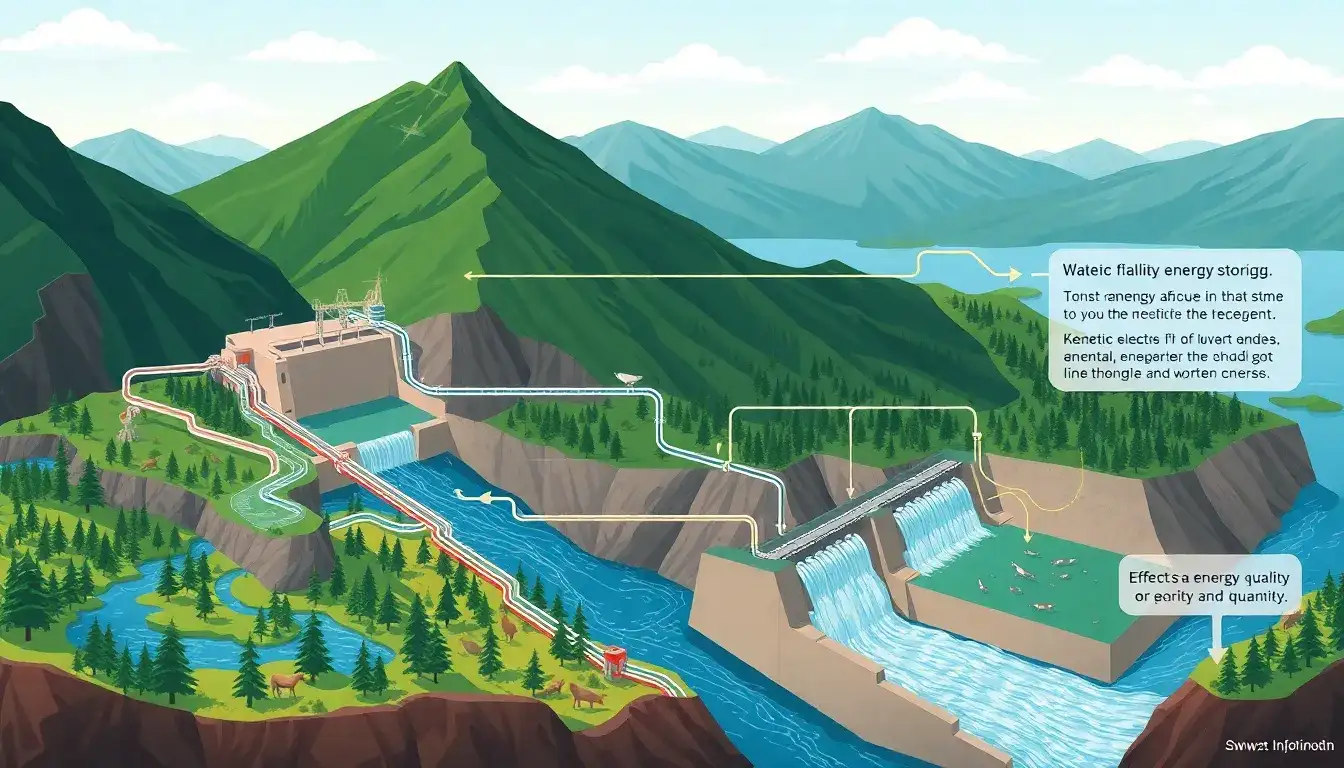
Environmental Impacts of Water Sourcing in PHES
1. Water Usage and Displacement
- Reservoir Creation: PHES facilities require the creation of two reservoirs at different elevations. This often involves flooding large areas, which can displace wildlife habitats and communities, leading to biodiversity loss and social impacts.
- Water Extraction: Depending on the system’s design, PHES might require water from external sources to maintain reservoir levels, potentially affecting nearby ecosystems by altering natural water flows.
2. Land Use Changes
- Land Submersion: The creation of reservoirs results in land submersion, affecting terrestrial ecosystems. This can lead to significant changes in ecosystems and potentially increase greenhouse gas emissions due to decomposing organic matter underwater.
3. Energy Efficiency and Emissions
- Round-Trip Efficiency: While PHES itself is a clean energy storage technology, its round-trip efficiency is typically around 80-90%. This means that more energy is needed to pump water than is generated during release. If this surplus energy comes from non-renewable sources, it can indirectly increase emissions.
- Operations and Maintenance: The overall environmental footprint also includes the impacts of manufacturing and transporting equipment, as well as ongoing operations and maintenance.
4. Impact on Local Hydrology
- Altered Hydrological Cycles: By storing and releasing water, PHES facilities can disrupt natural hydrological cycles. This can affect downstream water users, such as farmers or other communities reliant on consistent river flow.
Mitigation Strategies
- Sustainable Siting: Careful selection of sites to minimize impacts on natural habitats and communities.
- Efficient Design: Optimizing design to reduce energy loss during the pumping and generating phases.
- Integration with Renewable Energy Sources: Ensuring that surplus energy used for pumping comes from renewable sources to enhance the overall environmental benefit.
Overall, while PHES is a valuable tool for grid stability and renewable energy integration, its environmental footprint depends on how carefully its development and operation are managed to mitigate these impacts.
Original article by NenPower, If reposted, please credit the source: https://nenpower.com/blog/how-does-the-water-sourcing-process-for-pumped-hydroelectric-energy-storage-affect-its-environmental-footprint/

