

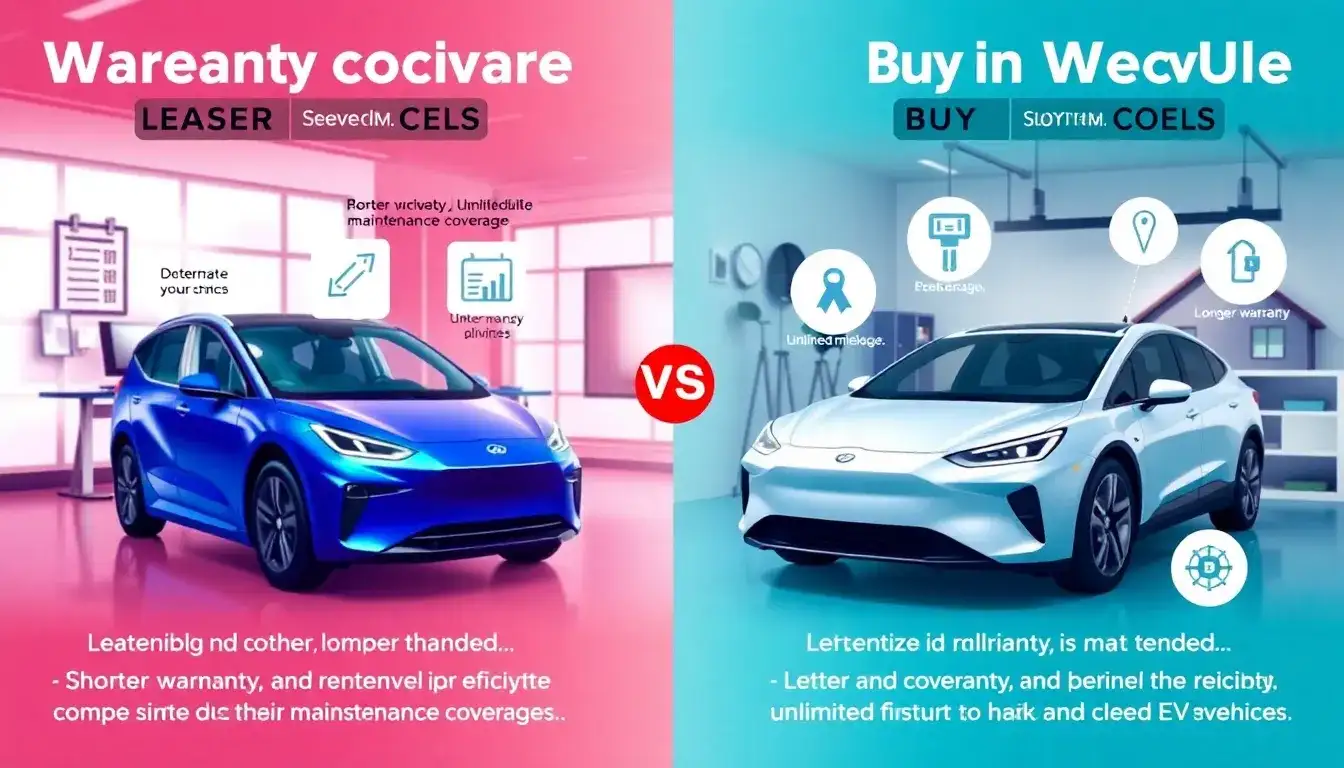
When comparing warranty coverage between leasing and buying an electric vehicle (EV):
Leasing an EV
- Full warranty coverage: Leased EVs typically remain under warranty for the entire lease term (usually 2-3 years), including the battery warranty (often 8 years/100,000 miles). Repair costs for defects are minimal since the vehicle is always within warranty.
- Short-term reliability: Warranty protection eliminates expenses for early-model reliability issues, which are common in newer EVs.
- Battery included: Specific battery coverage aligns with the manufacturer’s warranty, reducing concerns about degradation during the lease period.
Buying an EV
- Ownership duration matters: The same warranty applies initially (3-8 years for major components, 8+ years for batteries), but long-term owners eventually exit coverage and assume repair costs.
- Depreciation risk: While warranty covers early years, buyers face declining protection, especially if keeping the vehicle beyond standard warranty periods.
- Flexibility vs. cost: Ownership allows unlimited mileage and customization but requires budgeting for repairs once the warranty expires.
Key Difference
Leasing transfers long-term warranty risks to the leasing company, while buying shifts eventual repair costs to the owner after warranty expiration. Both include battery coverage for at least 8 years, but lessees avoid post-warranty expenses entirely.
Original article by NenPower, If reposted, please credit the source: https://nenpower.com/blog/how-does-the-warranty-coverage-differ-between-leasing-and-buying-an-ev/

