

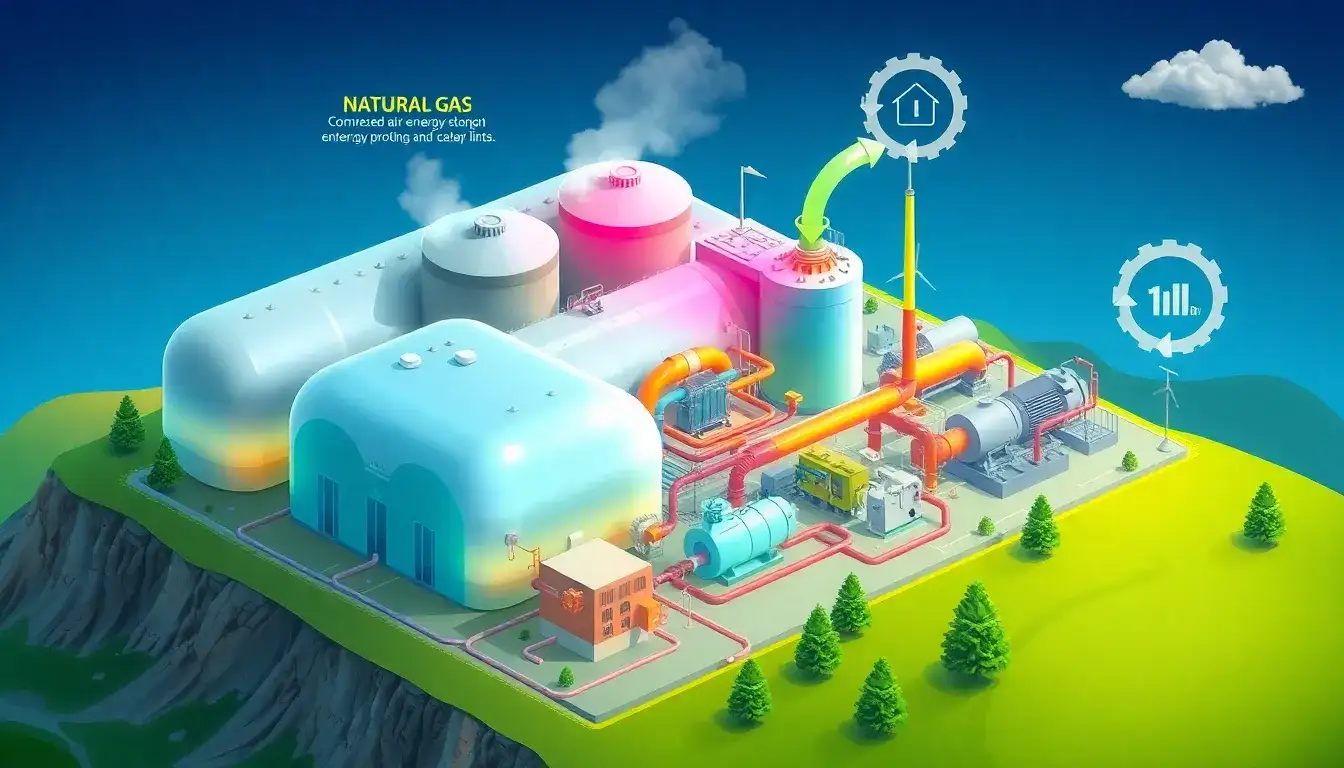
The use of natural gas in Compressed Air Energy Storage (CAES) plants affects their overall efficiency by introducing a significant energy conversion cost. Traditional diabatic CAES systems, which require natural gas to reheat the air during expansion, have relatively low efficiency, typically ranging from 40% to 50% due to heat losses during compression and gas consumption. These systems involve burning natural gas to elevate the temperature of the compressed air before it expands through a turbine, generating electricity. This process not only consumes additional energy but also results in lower efficiency compared to other energy storage technologies.
In contrast, adiabatic CAES systems aim to capture the heat generated during compression and reuse it during expansion, potentially increasing efficiency. However, these systems are still under development and not widely implemented.
The McIntosh, Alabama, CAES plant exemplifies the energy requirements of CAES, needing 2.5 MJ of electricity and 1.2 MJ of gas (in terms of lower heating value) for each MJ of output. This highlights the energy-intensive nature of using natural gas in these systems.
Overall, the reliance on natural gas in traditional CAES plants contributes to lower efficiency due to the energy required for gas combustion, making these systems less efficient than some alternative energy storage technologies. However, advancements in technology and design could potentially improve the efficiency and competitiveness of CAES in the future.
Original article by NenPower, If reposted, please credit the source: https://nenpower.com/blog/how-does-the-use-of-natural-gas-in-caes-plants-affect-their-overall-efficiency/

