

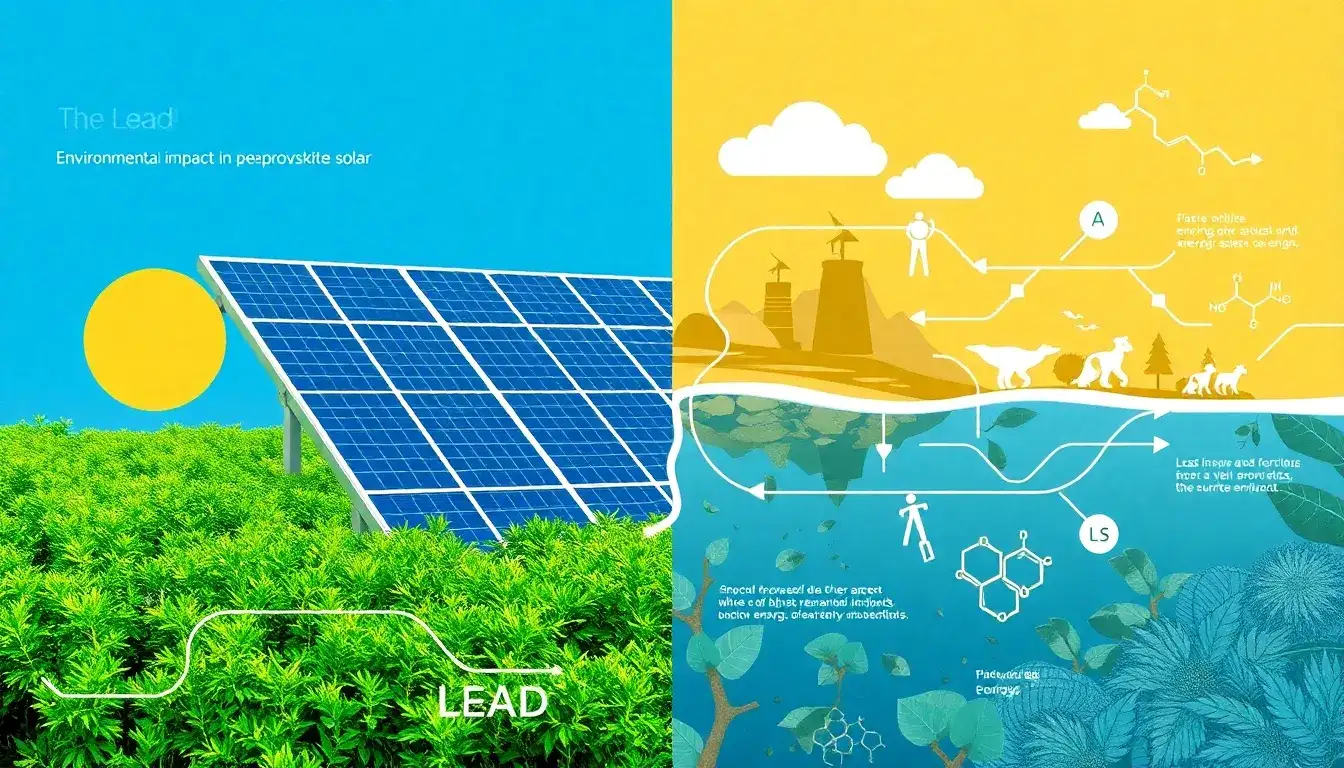
The use of lead in perovskite solar panels impacts their environmental footprint in several ways:
- Toxicity and Health Risks: Lead is highly toxic, even in small amounts, posing health and environmental risks if it leaches into the environment. While encapsulation can mitigate these risks to some extent, lead remains a significant concern, particularly when considering large-scale commercialization.
- Lead Leaching: Perovskite solar cells contain water-soluble lead, which can leach if the cells are damaged. Studies have shown that lead can exceed safe limits if not properly managed. However, techniques such as applying lead-absorbing films have been developed to minimize this risk.
- Efficiency and Performance: Lead-based perovskites currently offer higher efficiencies compared to lead-free alternatives, with efficiencies approaching 25.7% for the lead-based models. This efficiency is crucial for reducing the overall carbon footprint by generating more electricity per unit area.
- Recycling and Disposal: Developing effective recycling programs is essential to manage lead waste from perovskite solar cells. Proper recycling can significantly reduce the environmental impact by ensuring lead is safely reused or disposed of.
- Alternative Materials: Research into lead-free perovskites is ongoing, focusing on materials that are more eco-friendly and sustainable. However, these alternatives currently lack the efficiency and stability of lead-based versions, making lead-based cells more practical at present.
In summary, the use of lead in perovskite solar panels introduces environmental concerns due to its toxicity, but advancements in encapsulation and recycling can mitigate these risks. The pursuit of lead-free alternatives is underway but faces challenges in matching the efficiency of lead-based cells.
Original article by NenPower, If reposted, please credit the source: https://nenpower.com/blog/how-does-the-use-of-lead-in-perovskite-solar-panels-affect-their-overall-environmental-footprint/

