

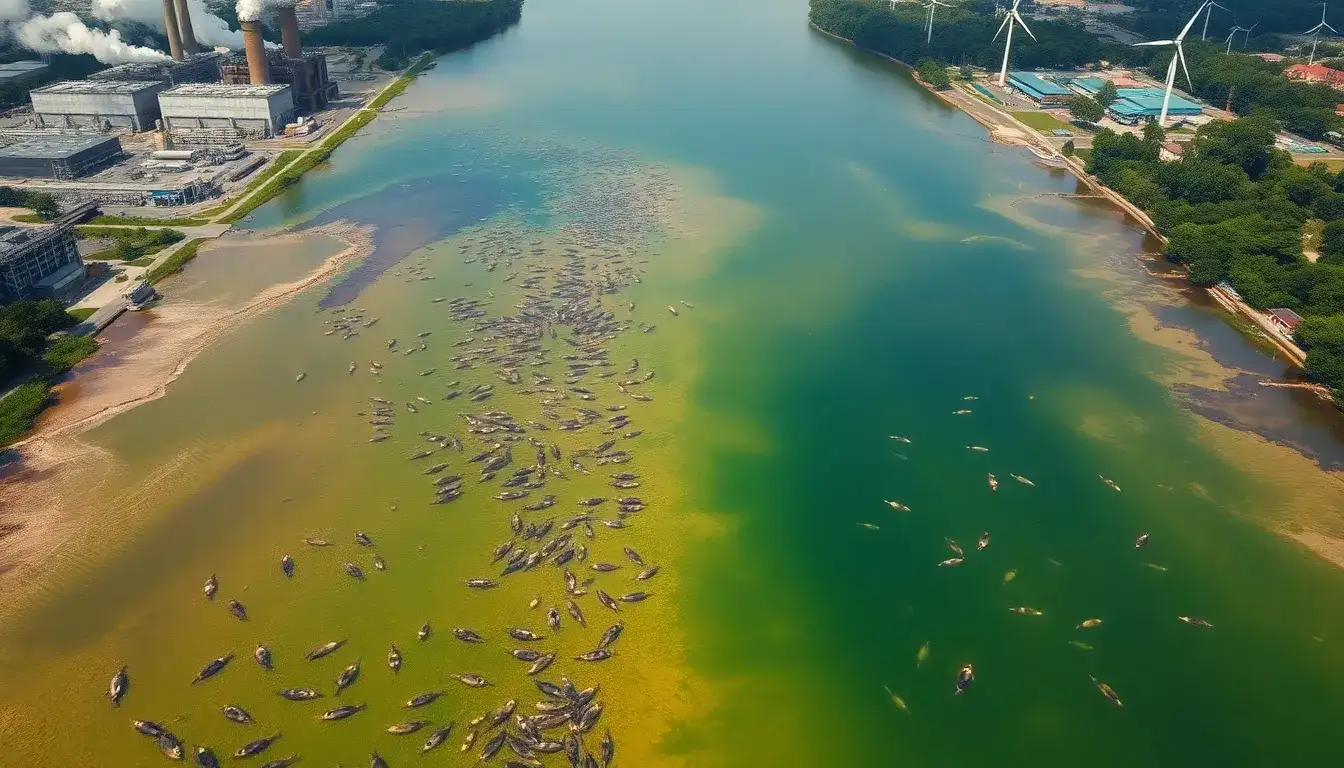
The use of external fuels, particularly fossil fuels, significantly impacts water quality through multiple pathways across their production, distribution, and use.
How External (Fossil) Fuels Affect Water Quality
1. Contamination from Extraction and Production Processes
- Hydraulic fracturing (“fracking”) used to extract natural gas has been linked to groundwater pollution, with studies showing up to 17 times more methane present in drinking water near shale gas development sites.
- The process of extracting fossil fuels such as coal, oil, and natural gas produces “produced water” that contains hydrocarbons, heavy metals, and toxic compounds, which can contaminate both surface water and groundwater.
- Coal mining generates large amounts of wastewater that often contains heavy metals and acidic compounds. Abandoned mines may lead to acid mine drainage, drastically lowering the pH of nearby streams and decimating aquatic life.
2. Spillages and Leaks During Distribution and Use
- Pipelines, tanker trucks, and vehicles transporting or using fossil fuels commonly experience leaks and spills, releasing hydrocarbons, benzene, toluene, and other toxic substances into water bodies.
- These pollutants can accumulate and persist in the environment, posing long-term risks to water quality and aquatic ecosystems.
3. Thermal and Chemical Pollution from Combustion Byproducts
- Wastewater from fossil fuel use is often hotter by 20-25°F compared to receiving water bodies, leading to thermal pollution that stresses or kills aquatic organisms.
- Combustion emissions contribute indirectly to water pollution through acid rain, which introduces acids and excessive nutrients into aquatic ecosystems, causing eutrophication and oxygen depletion.
4. Cumulative and Systemic Impacts
- Fossil fuel energy production has a much larger water footprint than previously estimated, involving substantial water use and contamination at every stage—from extraction to combustion and waste disposal.
- Despite growth in renewable energy, fossil fuels still dominate global energy consumption (~80%), meaning their water-related environmental impacts remain a major concern.
- Regulatory measures to control these impacts are often fragmented and inconsistent across regions, complicating efforts to protect water quality.
Summary Table
| Stage | Water Quality Impact | Key Pollutants / Issues |
|---|---|---|
| Extraction (e.g., fracking, mining) | Groundwater contamination; acid mine drainage | Methane, hydrocarbons, heavy metals, acid |
| Distribution and storage | Fuel leaks and spills contaminating water bodies | Hydrocarbons, benzene, toluene, toxic compounds |
| Combustion and waste | Thermal pollution; acid rain leading to eutrophication | Heated wastewater; acid rain components |
| Overall | Cumulative water contamination and high water use | Broad contamination, ecosystem disruption |
The broad range of chemical pollutants and physical changes caused by the use of fossil fuels leads to degraded water quality, threatening drinking water safety and aquatic ecosystems worldwide.
Original article by NenPower, If reposted, please credit the source: https://nenpower.com/blog/how-does-the-use-of-external-fuels-affect-water-quality/

