

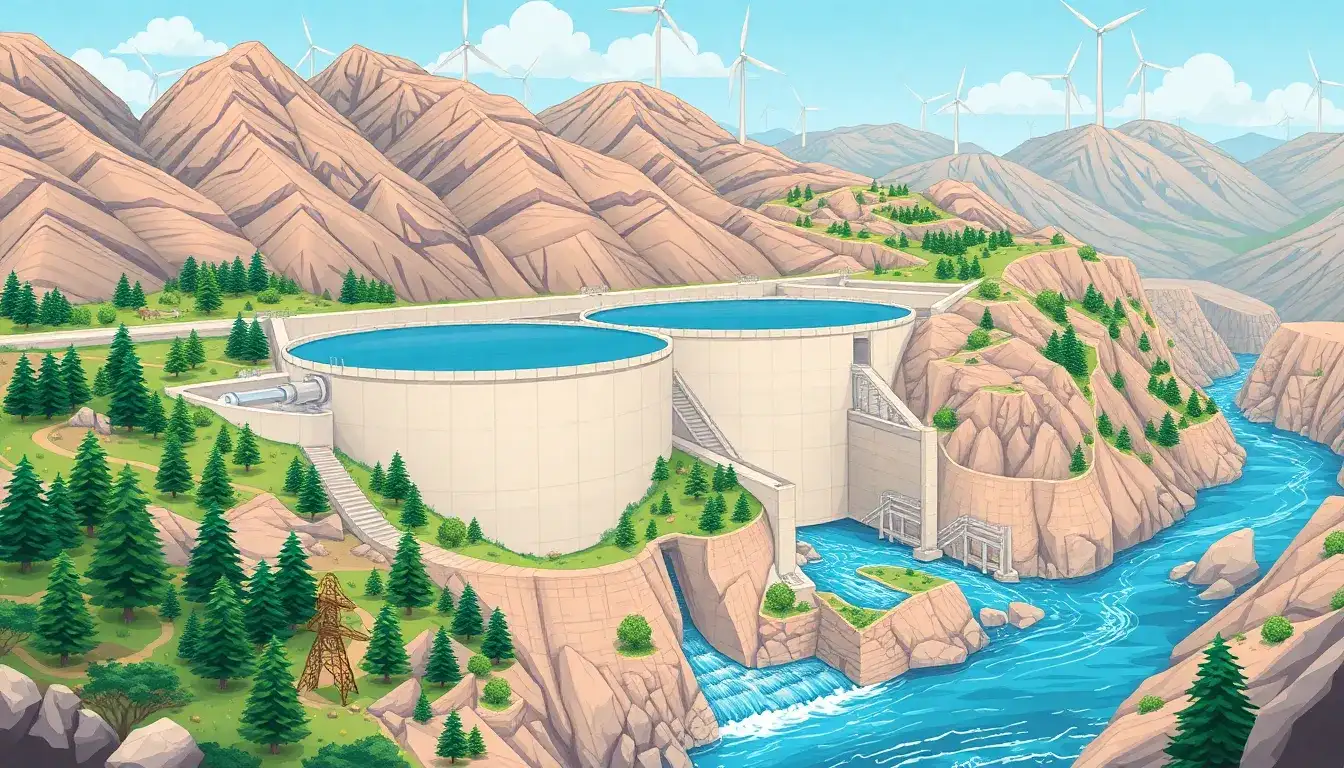
The use of concrete and other materials in pumped hydro storage (PHS) facilities contributes significantly to their environmental impact, primarily during the construction phase. Here are the key ways materials influence the environmental footprint of PHS:
Contribution of Materials to Environmental Impact
- Concrete and Steel Usage: These materials are major contributors to the environmental impact during construction. The production of concrete, in particular, is energy-intensive and generates substantial greenhouse gas emissions. Studies indicate that concrete and steel account for a significant portion of the construction-related emissions.
- Resource Extraction: The extraction and processing of raw materials like sand, gravel, and other aggregates for construction also have environmental implications, including habitat disruption and resource depletion.
- Transportation Emissions: The transportation of these heavy materials to construction sites adds to the environmental burden due to the emissions from vehicles and equipment.
Factors Affecting Environmental Impact
- Site Selection: The choice of site can affect emissions; for example, brownfield sites tend to have lower greenhouse gas emissions compared to greenfield sites.
- Duration of Use: The long lifespan of PHS facilities can help distribute the initial environmental impact over many years, potentially reducing the average annual environmental burden.
Mitigation Strategies
- Material Substitution: Using alternative materials, such as replacing concrete with timber, could reduce environmental impacts.
- Efficient Construction Practices: Implementing sustainable construction methods and reducing waste can help minimize the overall environmental footprint.
Despite these impacts, PHS remains a crucial component in renewable energy systems due to its high capacity for grid-scale energy storage and relatively low lifecycle emissions compared to other energy storage technologies.
Original article by NenPower, If reposted, please credit the source: https://nenpower.com/blog/how-does-the-use-of-concrete-and-other-materials-in-pumped-hydro-storage-facilities-contribute-to-their-environmental-impact/

