

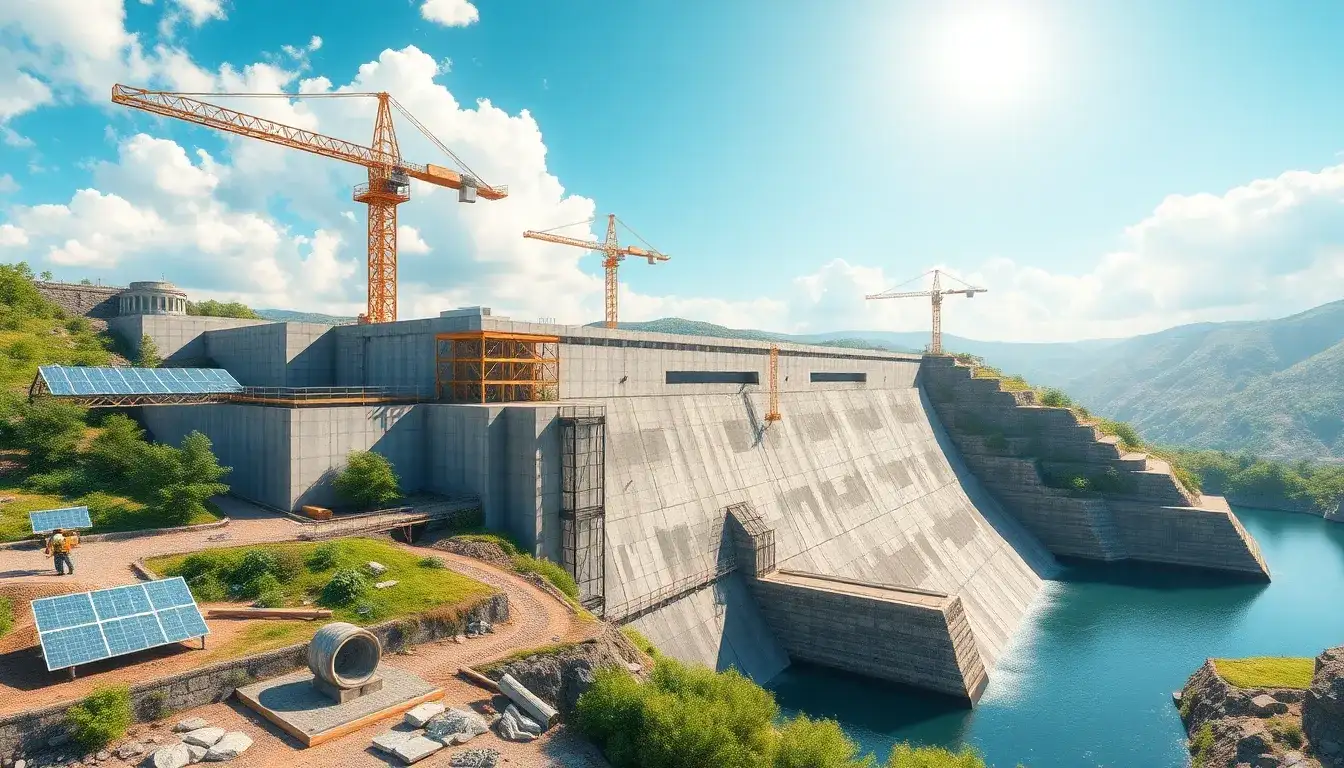
The use of alternative materials during the construction phase of pumped hydro storage (PHS) facilities can significantly impact their overall environmental footprint. Here are some key considerations and innovations:
Alternative Materials and Their Impacts
- Concrete vs. Traditional Materials: Traditional PHS facilities require substantial amounts of concrete for constructing dams and reservoirs. This involves significant environmental costs due to the high energy demands and greenhouse gas emissions associated with cement production. Alternative solutions, such as those proposed by RheEnergise, aim to reduce the scale and environmental impact by using denser fluids, which could reduce the size of required infrastructure.
- Denser-Than-Water Fluids: RheEnergise has developed R-19, a mineral-rich solution that is about 2.5 times denser than water. This allows for smaller reservoirs and pipes, reducing construction costs and environmental damage. It also opens up more potential sites by requiring less steep terrain, potentially reducing habitat disruption and other environmental impacts associated with large-scale dam construction.
- Recycled Materials: Innovations like Energy Vault’s concrete block system are exploring the use of recycled materials to minimize waste and reduce the environmental footprint. By using existing hardware and manufacturing blocks from recycled materials, such as building waste or gravel, these systems can lower environmental impacts compared to traditional PHS.
Environmental Footprint Reduction Strategies
- Reduced Land Use: Technologies that require smaller footprints, like denser fluids or block systems, reduce land acquisition needs, preserving natural habitats.
- Lower Infrastructure Costs: Smaller infrastructure can lead to lower construction costs and environmental impacts, as less material is needed and fewer resources are extracted.
- Increased Efficiency: Some alternative materials and designs can improve efficiency by generating more power from a smaller setup, further reducing the environmental footprint per unit of energy stored.
- Recyclability and Repurposing: Systems that utilize recyclable materials or can be repurposed after their operational life reduce long-term waste and environmental degradation.
Conclusion
Innovations in materials and technologies for PHS facilities are crucial for reducing their environmental footprint. By leveraging denser fluids, recycled materials, and efficient designs, these systems can become more sustainable while maintaining the advantages of long-duration energy storage.
Original article by NenPower, If reposted, please credit the source: https://nenpower.com/blog/how-does-the-use-of-alternative-materials-during-construction-phase-impact-the-overall-environmental-footprint-of-pumped-hydro-storage-facilities/

