

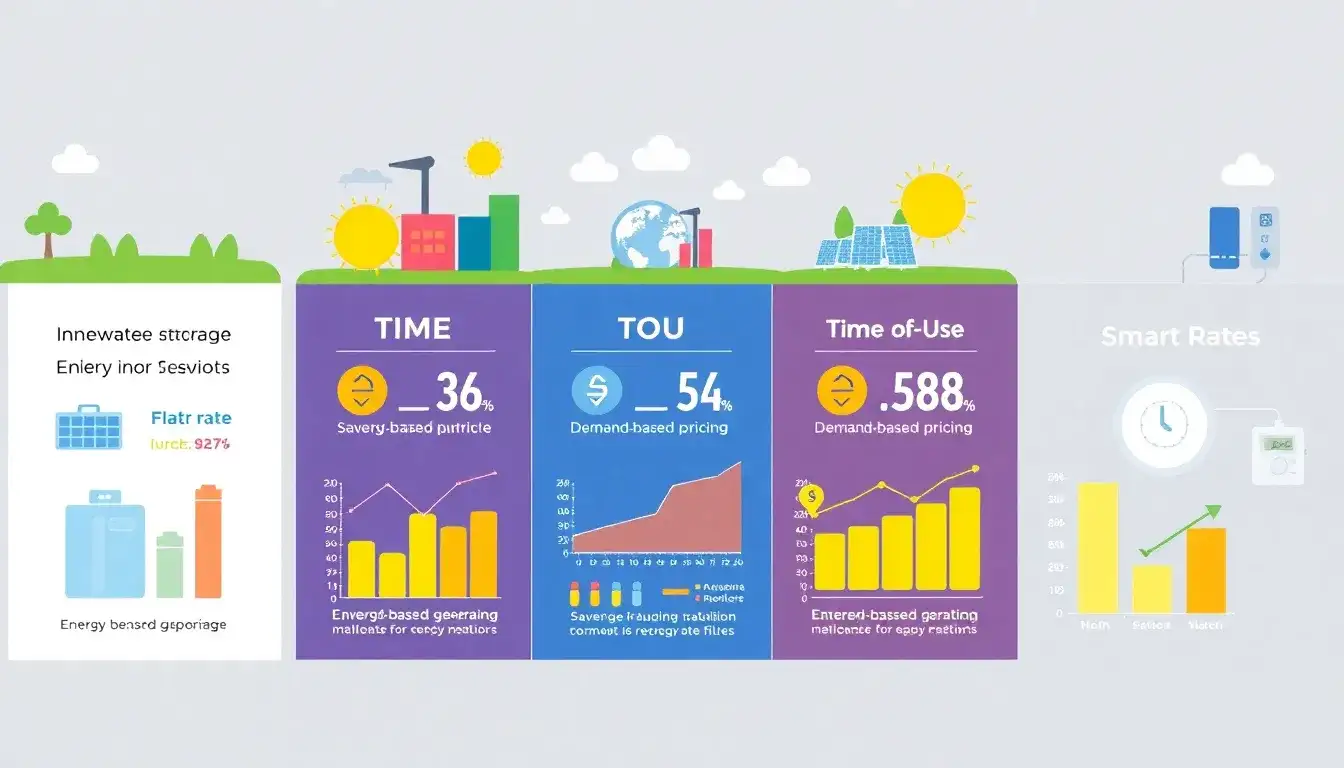
The type of utility rate plan significantly impacts the savings from energy storage, particularly for homeowners and businesses. Here’s how different plans influence energy savings:
Time-of-Use (TOU) Plans
Impact on Savings:
- TOU plans charge more for electricity during peak hours and less during off-peak hours. This creates a significant opportunity for energy storage to save money by charging batteries when rates are low and using stored power during peak times when rates are higher.
- Savings Potential: Homeowners on TOU plans can save 30% to 50% on their monthly energy bills by using energy storage systems to avoid peak rates.
Flat Rate Plans
- Impact on Savings: In flat rate plans, the cost per unit of electricity remains constant throughout the day. This reduces the advantage of energy storage in avoiding high peak rates, as the cost does not fluctuate with demand.
- Savings Potential: Although less pronounced than with TOU plans, energy storage can still offer benefits like providing backup power during outages and potentially increasing savings through demand response programs.
Demand Response Programs
- Impact on Savings: These programs incentivize consumers to reduce their use of grid electricity during peak times by offering financial rewards. Energy storage systems are ideal for such programs as they can supply power from stored energy during peak hours.
- Savings Potential: In addition to avoiding high peak rates, participants in demand response programs can receive payments for reducing demand, which can further lower their energy bills.
Solar-Integrated Systems
- Impact on Savings: Combining solar panels with energy storage amplifies savings by allowing homeowners to store free solar energy for use during peak hours or when solar generation is not available.
- Savings Potential: This approach can double the savings achieved with just energy storage, as it leverages free solar energy and avoids higher grid rates.
Conclusion
The type of utility rate plan is crucial in determining the savings potential of energy storage systems. TOU plans offer the most savings opportunities, while demand response programs and solar integration further enhance these benefits. Overall, energy storage can be an effective tool for managing energy costs across various pricing structures.
Original article by NenPower, If reposted, please credit the source: https://nenpower.com/blog/how-does-the-type-of-utility-rate-plan-impact-the-savings-from-energy-storage/

