

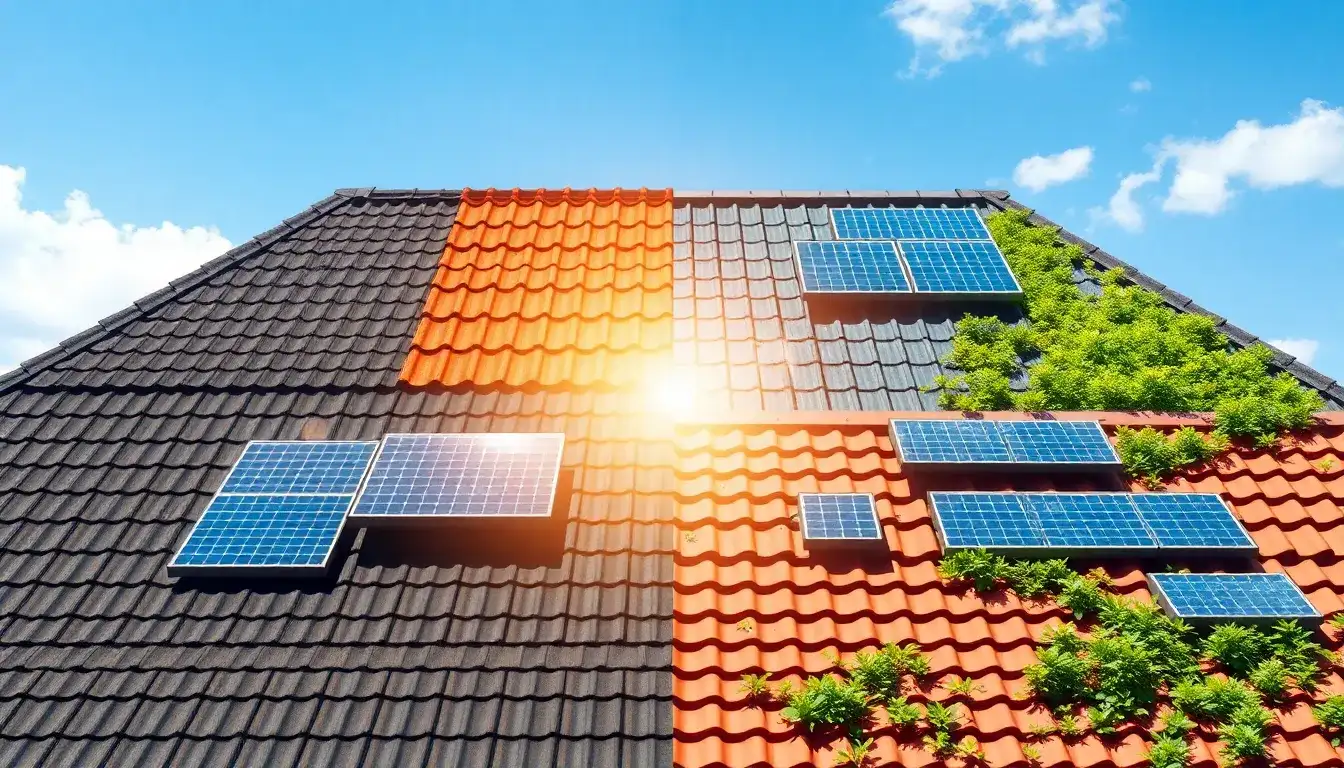
How Roofing Material Affects Solar Panel Efficiency
1. Heat Retention and Surface Temperature
Solar panels perform best at cooler temperatures; efficiency typically decreases as panel temperature rises above around 25°C (77°F). Roofing materials that absorb a lot of heat, such as dark-colored or metal roofs with low reflectivity, can increase the temperature of the panels, reducing their efficiency. Conversely, highly reflective or light-colored roofing materials reduce heat buildup by reflecting sunlight, keeping panels cooler and boosting their energy output.
A study in Uganda showed that substrates with lower thermal conductivity and higher reflectivity (albedo), such as grass and bare ground, maintained lower panel temperatures and consequently higher efficiencies compared to materials like iron sheets or roof tiles. In this study, roof tiles had lower efficiency (14.3%) compared to ground soil (21.1%) due to higher temperature retention.
2. Reflectivity (Albedo)
Roofs with higher reflectivity reflect more sunlight away from the roof surface, reducing the heat load on solar panels. Light-colored roofs or those with reflective coatings can improve panel performance by keeping the panels cooler.
3. Structural Compatibility and Installation Factors
Beyond thermal effects, roofing material impacts the ease and quality of solar panel installation, which indirectly affects efficiency by ensuring optimal panel positioning and minimizing shading and damage risks:
- Metal roofs, especially standing-seam metal roofs, are excellent for solar panels because panels can be clamped on without roof penetrations, reducing the risk of leaks and maintaining roof integrity. Metal roofs are also durable and long-lasting, supporting solar panels well over their lifespan.
- Asphalt shingles are common, affordable, and compatible with most installers; they provide a good mounting base but may have shorter lifespans affecting long-term solar efficiency if roof replacement is needed before the solar panels’ end of life.
- Tile roofs, while durable and heat resistant, can be more challenging to install on due to brittleness, increasing labor costs and potentially complicating optimal solar panel placement.
- Tar and gravel roofs tend to be flat and reflective but often require additional mounting structures to angle panels properly for maximum sunlight capture.
4. Roof Orientation and Angle
Though not strictly about roofing material, the roof’s orientation and pitch dramatically influence solar panel efficiency. Materials permitting easy adjustment or mounting of panels at optimal angles and orientations help maximize energy production.
Summary Table of Roofing Material Impact on Solar Panel Efficiency
| Roofing Material | Thermal Properties Affecting Efficiency | Installation Considerations | Lifespan & Durability | Effect on Solar Efficiency |
|---|---|---|---|---|
| Metal (standing seam) | Reflective, good heat dissipation | Easy clamp mounting, minimal penetrations | 40-75+ years, very durable | High efficiency, cooler panels |
| Asphalt Shingles | Moderate heat retention | Common, relatively easy installation | 12-30 years | Moderate efficiency |
| Tile Roofs | Higher heat retention, brittle | Installation more complex, costly | 50-100+ years | Slightly lower efficiency due to heat and installation challenges |
| Tar and Gravel | Reflective gravel reduces heat, flat roof needs angled mounts | Needs mounting racks for tilt | 20-30 years | Good if panels angled properly |
| Other substrates (concrete, grass, soil in study) | Lower thermal conductivity improves cooling | N/A (study context) | N/A | Substrate with lower temperature = better efficiency |
Conclusion
The roofing material affects solar panel efficiency mainly by influencing the temperature of the panels through heat retention and reflectivity. Materials that keep panels cooler—lighter-colored, reflective surfaces, or ones with lower thermal conductivity—can increase energy production. Metal roofs, especially standing-seam types, are particularly well-suited for solar panels due to their durability and installation advantages. Conversely, darker or heat-retentive materials like tiles and iron sheets may reduce panel efficiency somewhat by increasing operating temperatures. Proper roof condition, orientation, and mounting technique complement the impact of roofing material to optimize solar panel performance.
Original article by NenPower, If reposted, please credit the source: https://nenpower.com/blog/how-does-the-type-of-roofing-material-affect-solar-panel-efficiency/

