

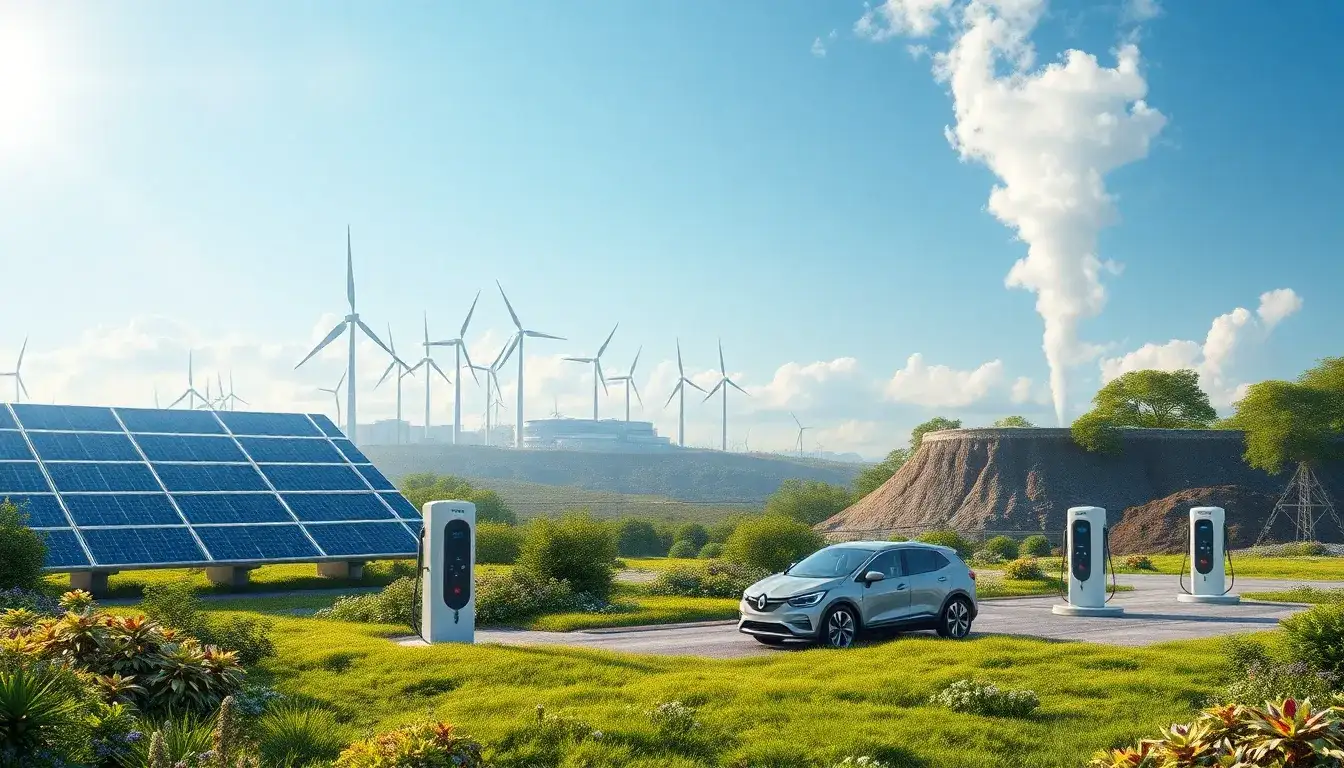
The environmental footprint of EV charging stations varies significantly depending on the renewable energy source used, with factors like lifecycle emissions, land use, and grid dependence playing key roles:
Solar Energy
- Carbon Emissions: Charging stations powered by solar energy produce minimal lifecycle emissions once operational, as sunlight generates electricity without direct emissions.
- Land Use: Large-scale solar farms may require significant land, potentially affecting ecosystems, but rooftop solar installations on existing infrastructure mitigate this impact.
- Resource Intensity: Manufacturing solar panels involves energy-intensive processes and materials like silicon, contributing to upstream emissions, though advancements in recycling and efficiency are reducing this footprint.
Wind Energy
- Emission Reduction: Wind power generates electricity with less than 0.1 lbs of CO₂ per mile for EVs, offering one of the lowest operational footprints.
- Land and Wildlife: While land use for turbines can disrupt habitats, offshore wind farms and careful siting minimize ecological damage.
- Grid Independence: Wind-powered stations often integrate battery storage, reducing reliance on fossil-fuel-heavy grid backups during low-wind periods.
Hydroelectric Power
- Zero Operational Emissions: Hydropower provides consistent, emission-free energy, ideal for high-demand charging stations.
- Ecological Disruption: Dams can alter river ecosystems and displace communities, though small-scale “run-of-the-river” systems lessen these impacts.
- Lifecycle Considerations: Construction of dams involves substantial material use and methane emissions from submerged vegetation, which may offset some benefits.
Comparative Efficiency
- Carbon Per Mile: All renewables drastically reduce CO₂ compared to gasoline (over 1.0 lbs/mile), with solar and wind often outperforming hydropower in scalability and siting flexibility.
- Complementary Use: Hybrid systems (e.g., solar + wind) balance intermittency, ensuring reliable charging while minimizing land and resource use.
In summary, wind and solar offer the lowest operational emissions, while hydropower provides reliability at potential ecological costs. System design and integration with storage or hybrid setups further refine their environmental impact.
Original article by NenPower, If reposted, please credit the source: https://nenpower.com/blog/how-does-the-type-of-renewable-energy-source-impact-the-environmental-footprint-of-charging-stations/

