

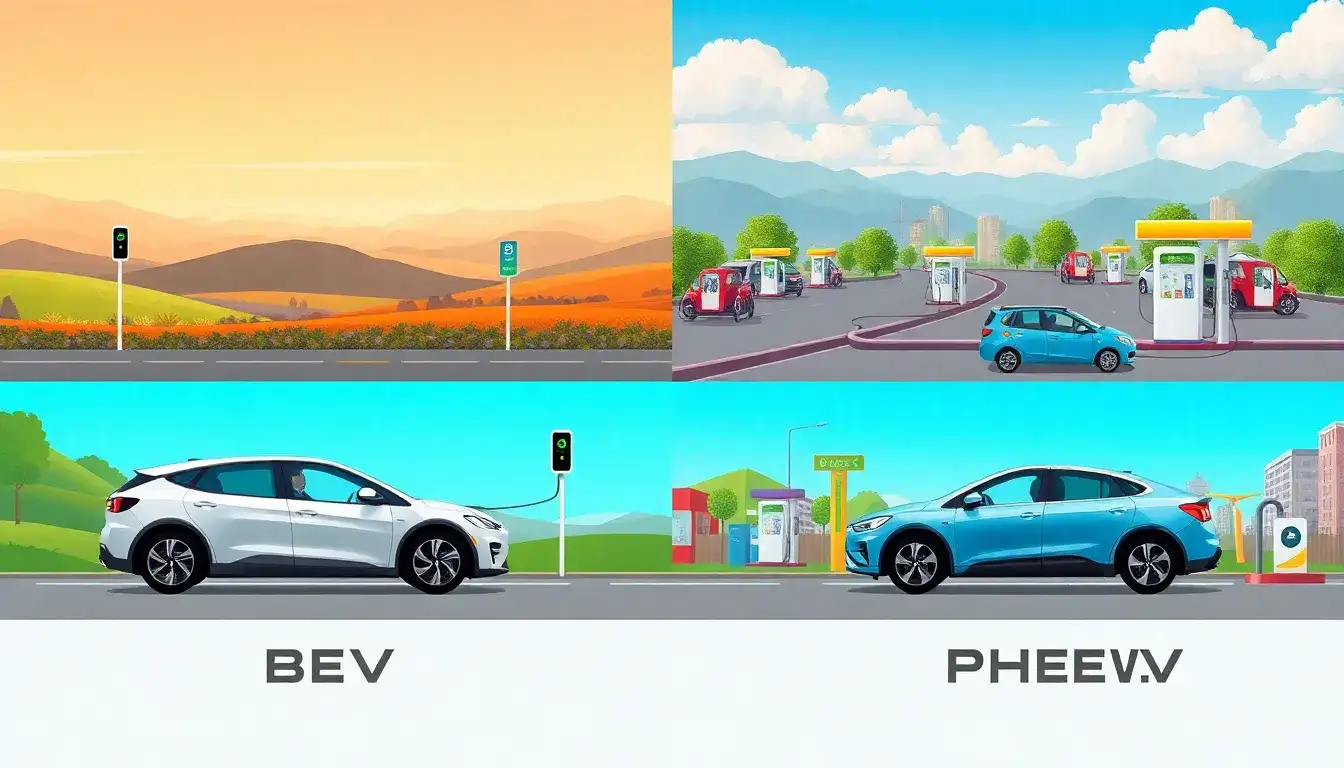
Range anxiety, the fear of an EV’s battery depleting before reaching a destination or charging point, is significantly influenced by whether a vehicle is a battery electric vehicle (BEV) or plug-in hybrid electric vehicle (PHEV):
Battery Electric Vehicles (BEVs)
- Range dependency: BEVs rely solely on battery power, typically offering 100–500 miles per charge. While modern ranges exceed most daily needs, anxiety can arise for long-distance travel or in areas with sparse charging infrastructure.
- Real-world factors: Cold weather, aggressive driving, and accessory usage (e.g., heating) can reduce range, amplifying anxiety.
Plug-In Hybrid Electric Vehicles (PHEVs)
- Hybrid flexibility: PHEVs use 15–60 miles of electric-only range, then switch to gasoline, eliminating range limitations for long trips.
- Behavioral patterns: Studies show PHEV drivers use electric mode for ~55% of annual miles (rising to 63% for work commutes), relying on gasoline only as a backup.
- Design differences:
- Series hybrids (e.g., Chevrolet Volt) prioritize electric driving, using gasoline engines solely to recharge the battery.
- Blended hybrids (e.g., Toyota Prius Plug-in) combine electric and gasoline power during operation, reducing but not eliminating range uncertainty.
Key Comparison
| Aspect | BEVs | PHEVs |
|---|---|---|
| Range Anxiety | Higher for long trips/remote areas | Minimal due to gasoline backup |
| Eco-Friendliness | Zero emissions while driving | Emissions when using gasoline |
| Charging Needs | Frequent, infrastructure-dependent | Optional, less pressure to charge |
PHEVs bridge the gap for drivers transitioning from gasoline vehicles, offering a safety net against range anxiety, while BEVs appeal to those prioritizing sustainability and accepting range-planning trade-offs.
Original article by NenPower, If reposted, please credit the source: https://nenpower.com/blog/how-does-the-type-of-ev-bev-vs-phev-impact-range-anxiety/

