

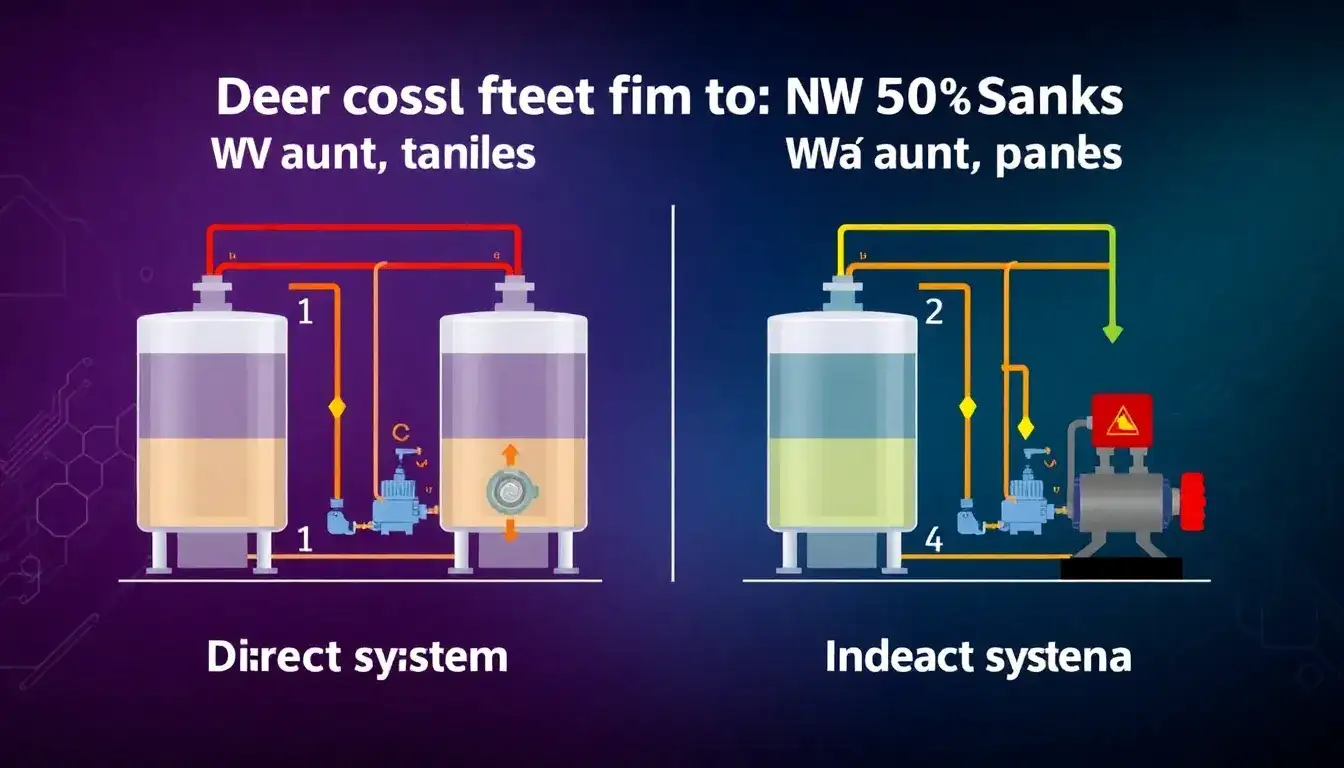
Comparing the two-tank direct and two-tank indirect thermal energy storage systems in terms of efficiency involves understanding how each system operates and their respective advantages and challenges.
Overview of Systems
- Two-Tank Direct System: This system uses molten salt directly as the heat transfer fluid and storage medium. Heat from the solar field is stored directly in the molten salt, which is pumped from one tank to another. This direct approach tends to have a simpler setup and potentially lower costs due to fewer components.
- Two-Tank Indirect System: This system involves using an intermediary heat transfer fluid to capture heat from the solar field and transfer it to a storage medium (like molten salt) in a separate tank. This indirect method can allow for more flexibility in choice of fluids but introduces additional heat transfer steps, potentially reducing efficiency due to heat losses.
Efficiency Comparison
- Heat Transfer Efficiency:
- Two-Tank Direct: Direct systems typically have less heat transfer loss because the same fluid is used for both heat transfer and storage, reducing the number of interfaces where heat can be lost.
- Two-Tank Indirect: Indirect systems involve additional heat transfer steps between the HTF and the storage medium, which can reduce overall efficiency due to increased heat transfer resistance and associated losses.
- Complexity and Cost:
- Two-Tank Direct: Generally simpler and potentially less expensive to set up because it uses the same fluid for both heat transfer and storage.
- Two-Tank Indirect: More complex due to the additional heat exchanger required for transferring heat between fluids, which can increase costs but also offer flexibility in choosing different fluids for the solar field and storage.
- Storage and Operational Flexibility:
- Two-Tank Direct: Limited flexibility in fluid choice since it must serve both heat transfer and storage functions effectively.
- Two-Tank Indirect: Offers more flexibility in selecting optimal fluids for each role (solar field and storage), potentially improving performance under different conditions.
In summary, while the two-tank direct system may offer higher efficiency due to reduced heat transfer losses and simpler design, the two-tank indirect system provides flexibility in fluid selection which can be advantageous in certain operational scenarios. However, specific efficiency differences would depend on the detailed design and implementation of each system.
Original article by NenPower, If reposted, please credit the source: https://nenpower.com/blog/how-does-the-two-tank-direct-system-compare-to-the-two-tank-indirect-system-in-terms-of-efficiency/

