

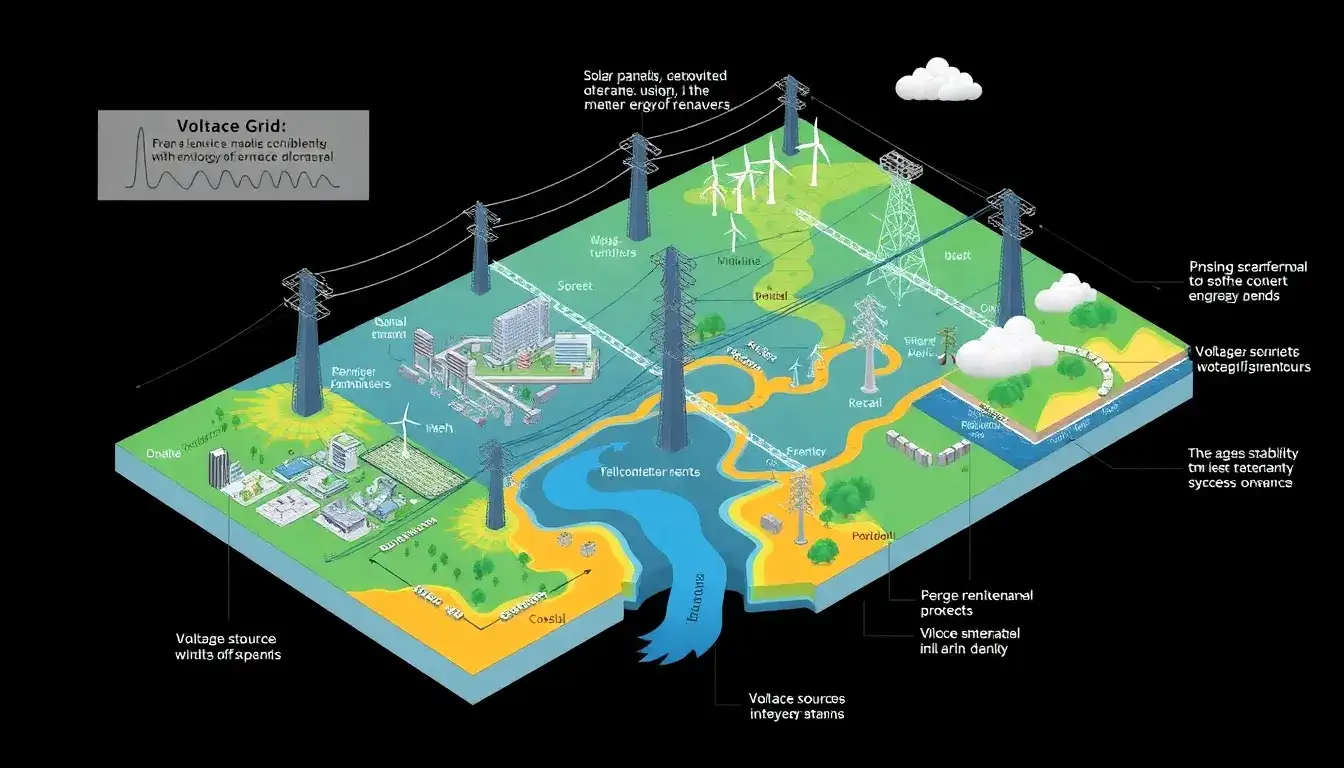
Introduction to Renewable Energy Integration
Renewable energy sources like solar and wind are increasingly integrated into the grid, transforming its topology. This integration involves connecting diverse energy sources across different locations, which can introduce new challenges for maintaining voltage stability.
Challenges in Voltage Stability
- Variable Generation: Solar and wind power are inherently variable, leading to fluctuations in power output. This variability can cause voltage fluctuations in the grid, impacting stability.
- Grid Infrastructure: Limited transmission capacity and inadequate infrastructure can prevent the efficient distribution of renewable energy, affecting voltage stability.
- Converter-Connected Resources: Renewable energy sources often use power electronic converters to connect to the grid. While these converters can offer more control over electrical parameters, their interaction with the grid can also introduce instability if not properly managed.
Impact of Topological Changes
- Distributed Generation: The distributed nature of renewable sources can lead to a more decentralized grid topology. This decentralization requires advanced control and coordination systems to maintain voltage stability across the network.
- Power Flow and Congestion: Changes in power flow due to renewable integration can lead to congestion in certain parts of the grid, affecting voltage stability by altering normal power flow patterns.
- Scalability and Flexibility: As the share of renewables increases, grid topology needs to adapt by incorporating more flexible and scalable solutions to manage variability and maintain stability.
Solutions for Enhancing Voltage Stability
- Advanced Control Technologies: Implementing advanced grid-forming inverters and control systems can help stabilize voltage during fluctuations from renewable sources.
- Energy Storage Systems: Integrating energy storage (like batteries) into the grid can mitigate variability by providing a buffer for excess energy and stabilizing power supply.
- Grid Modernization: Upgrading grid infrastructure to accommodate renewable energy requires investment in smart grid technologies and advanced transmission systems to ensure efficient and stable operation.
In summary, the topology of renewable energy integration affects voltage stability significantly by introducing variability and altering traditional grid dynamics. Addressing these challenges requires innovative technologies and flexible grid operations to ensure a stable and reliable energy supply.
Original article by NenPower, If reposted, please credit the source: https://nenpower.com/blog/how-does-the-topology-of-renewable-energy-integration-affect-voltage-stability/

