

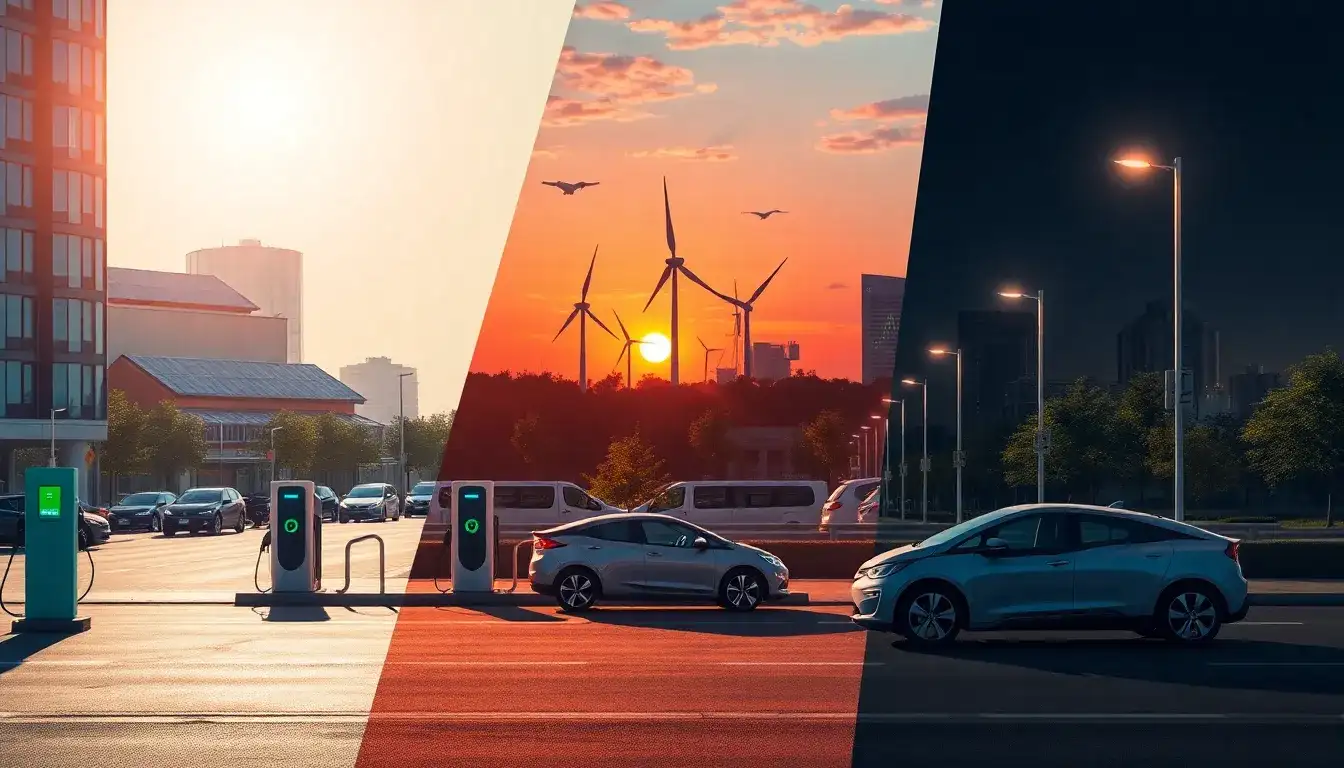
The timing of electric vehicle (EV) charging significantly influences its environmental impact, primarily through the carbon emissions associated with the electricity generation mix at different times of day.
Impact of Charging Timing on Carbon Emissions
- Daytime Charging (During Solar Production Hours)
When EVs are charged during daylight hours, especially at peak solar production times, the grid often has a higher share of renewable energy such as solar power. In some regions, solar can contribute up to 30% or more of the grid electricity during these hours, leading to much cleaner energy availability. Charging EVs during these times lowers the overall carbon footprint of charging because the electricity is generated with fewer fossil fuels. - Nighttime Charging (When Fossil Fuels Dominate)
Charging EVs at night tends to result in higher carbon emissions. This is because the electric grid often relies more heavily on fossil fuel power plants during nighttime hours, when renewable sources like solar are not available. Consequently, the carbon intensity of the electricity used for charging EVs is higher, increasing their environmental impact.
Smart Charging and Emissions Reduction
- Smart or Emissions-Optimized Charging
Smart charging strategies, which schedule EV charging during periods of low grid emissions (when renewable generation is high, or fossil fuel plants are ramped down), can reduce life cycle carbon emissions by around 6% on average compared to passive or “dumb” charging that simply starts when the vehicle is plugged in. This reduction can vary seasonally and depends on the duration of the vehicle’s connection to the charger, with longer plug-in times providing more opportunity to shift charging to cleaner periods. - Marginal Emissions Factor (MEF) Considerations
Evaluating the impact of charging by marginal emissions rates (which measure the emissions caused by the additional load of EV charging at a specific time) shows that charging when surplus zero-emission energy is available (such as during periods of solar energy curtailment) can result in near-zero emissions associated with charging. Conversely, charging at times when less efficient fossil fuel plants would ramp up can increase emissions beyond what average grid emissions suggest. - Practical Smart Charging
Emissions-optimized smart charging waits to charge EVs during cleaner electricity periods while still fully charging the battery within the needed time window. This approach can reduce the EV’s carbon footprint without sacrificing convenience or range.
Summary
| Charging Time | Grid Energy Mix | Environmental Impact |
|---|---|---|
| Daytime (solar peak) | High renewable share (solar) | Lower emissions, cleaner EV charging |
| Nighttime | Higher fossil fuel share | Higher emissions, greater carbon footprint |
| Smart charging | Charges during low-emission periods | Reduces lifecycle emissions by ~6% or more |
In conclusion, charging EVs during periods when the electric grid is powered by renewable energy sources, typically during the day and especially in peak solar hours, results in significantly lower carbon emissions compared to charging at night. Utilizing smart charging techniques that optimize charging times to coincide with low-emission grid periods further enhances the environmental benefits of electric vehicles.
Original article by NenPower, If reposted, please credit the source: https://nenpower.com/blog/how-does-the-timing-of-ev-charging-affect-its-environmental-impact/

