

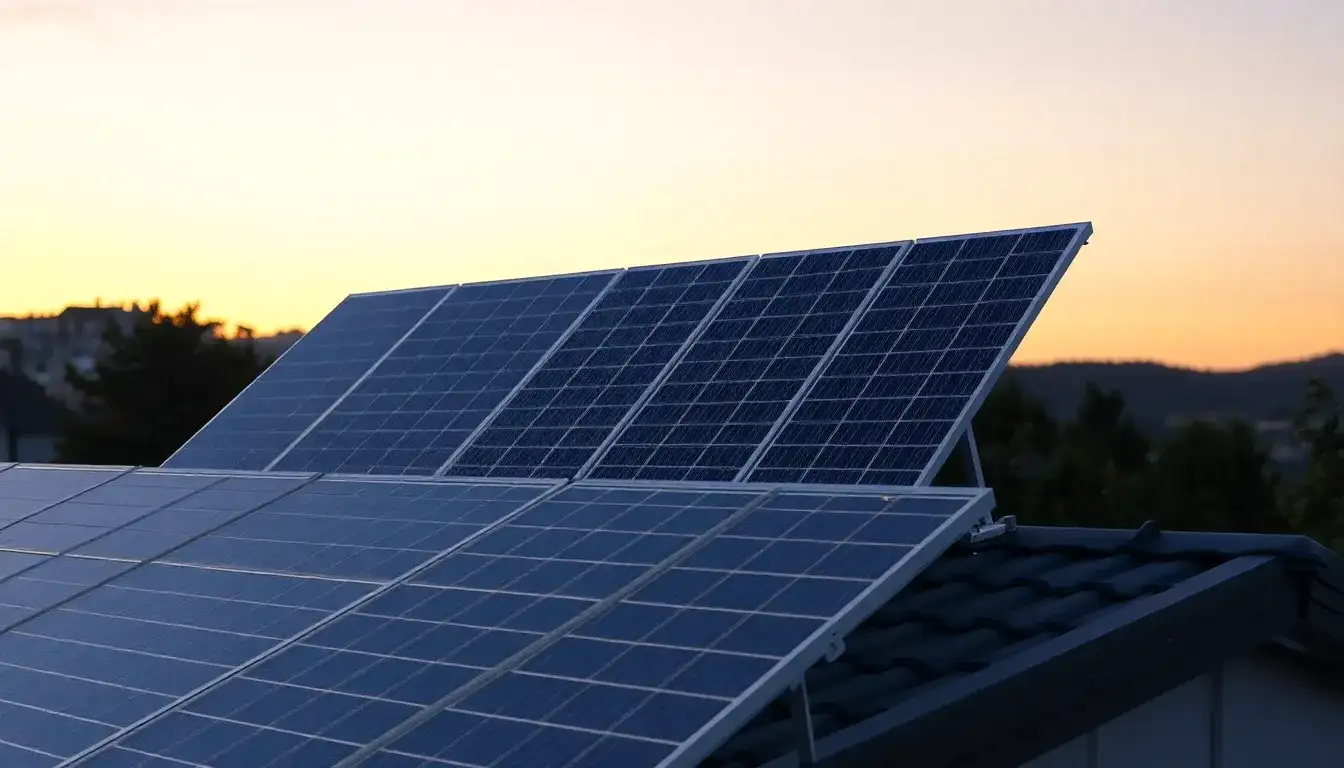
The tilt angle of bifacial solar panels significantly impacts their performance in low-light conditions by influencing both front-side and rear-side light capture. Here’s a breakdown of the effects:
Key Mechanisms
- Front-side Irradiance: Lower tilt angles (closer to horizontal) reduce direct exposure to diffuse sunlight (common in low-light conditions), diminishing front-side energy generation. However, they may improve rear-side reflection capture if ground reflectivity is maintained.
- Rear-side Irradiance: Higher tilt angles increase rear-side exposure to reflected light (e.g., from white surfaces or clouds), which becomes critical in low-light scenarios where diffuse light dominates. The rear side can compensate for reduced front-side performance if tilt angles optimize reflected-light capture.
Findings from Research
- Optimal Tilt Range: Studies show 30° tilt maximizes power output under normal conditions by balancing front and rear irradiance, but low-light performance depends on reflectivity. For example, a 30° tilt on white-painted ground achieved a bifacial irradiation ratio (rear/front) of 0.20–0.40, with minimal performance loss between 13°–45° when accounting for measurement uncertainty.
- High Tilt Trade-off: At 90° tilt, rear-side irradiation can reach up to 96% of front-side levels, but total power output drops dramatically (to ~148 W in one study) due to reduced front-side exposure. In low-light conditions, this trade-off may worsen unless reflective surfaces significantly boost rear-side gains.
- Geographic and Surface Adjustments:
- Low reflectivity: Lower tilts (20°–30°) prioritize front-side capture, which is crucial if ground reflection is poor.
- High reflectivity: Higher tilts (up to 35°–45°) leverage rear-side gains from surfaces like snow or white membranes, mitigating low-light losses.
Practical Recommendations
- Prioritize Reflectivity: In low-light environments, pair elevated mounting (to reduce shading) with highly reflective surfaces (e.g., white roofing) to maximize rear-side gains at moderate tilts (25°–35°).
- Avoid Extreme Tilts: Angles beyond 45° risk excessive front-side losses unless rear-side reflection is exceptionally strong.
- Seasonal Adjustments: In regions with prolonged overcast conditions, slightly higher tilts (e.g., latitude +10°) may improve diffuse light capture on both sides.
Summary: While 20°–35° tilts are standard, optimal performance in low light depends on balancing front-side exposure with rear-side reflection. High-reflectivity setups benefit from tilts near 30°, whereas low-reflectivity systems require lower angles to prioritize front-side irradiance.
Original article by NenPower, If reposted, please credit the source: https://nenpower.com/blog/how-does-the-tilt-angle-affect-the-performance-of-bifacial-panels-in-low-light-conditions/

