

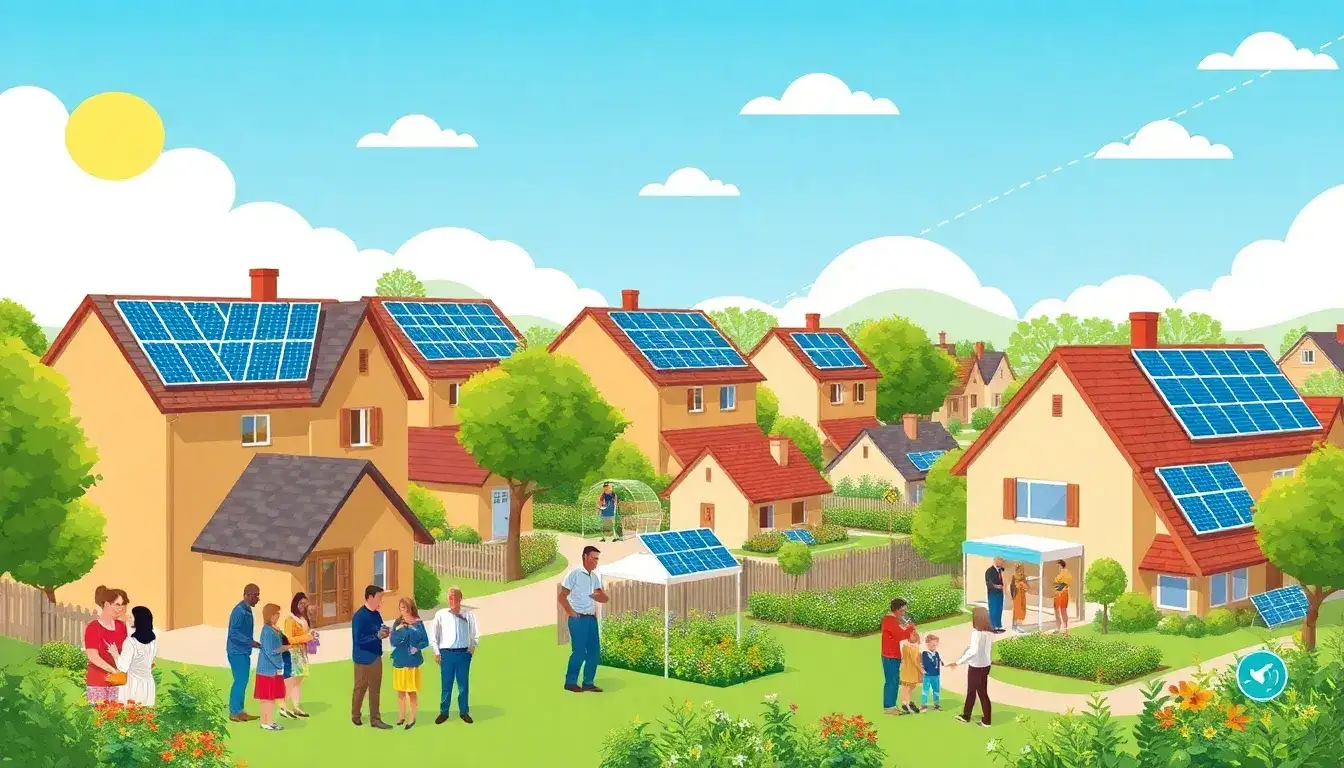
Advantages of the Third-Party-Owned Model for Scalability
- Financial Backing: Third-party developers typically have substantial financial resources, which enable them to invest in larger-scale projects and expand their operations more rapidly than other ownership models. This financial muscle is crucial for scaling community solar initiatives.
- Expertise and Experience: These entities often employ seasoned professionals with extensive experience in managing and executing solar projects. This expertise helps in efficiently managing a large portfolio of projects, thereby contributing to scalability.
- Adaptability: The third-party-owned model is highly adaptable to changing market conditions, allowing it to pivot more easily than other models. This adaptability is essential for scaling community solar projects in a rapidly evolving energy landscape.
- Diverse Revenue Streams: By generating revenue from both power sales to subscribers and tax credits, third-party entities can sustain themselves financially over the long term, supporting the growth of community solar projects.
Scalability Outcomes
- Rapid Expansion: The combination of financial resources, expertise, and adaptability enables third-party-owned models to scale up community solar projects much faster than other ownership models.
- Broader Access: By expanding the scale of community solar projects, more people can access clean energy, particularly low-to-moderate-income groups that might otherwise not have the opportunity to participate in solar initiatives.
- Market Penetration: The scalability of this model enhances its market penetration, allowing it to reach a wider audience and contribute significantly to the overall growth of the community solar sector.
However, it is worth noting that third-party ownership might initially provide limited economic benefits to local communities compared to community-owned models, as most benefits accrue to the third-party investors during the initial years of the project. Despite this, the scalability aspect alone makes the third-party-owned model a significant driver in the expansion of community solar initiatives.
Original article by NenPower, If reposted, please credit the source: https://nenpower.com/blog/how-does-the-third-party-owned-model-impact-the-scalability-of-community-solar-initiatives/

