

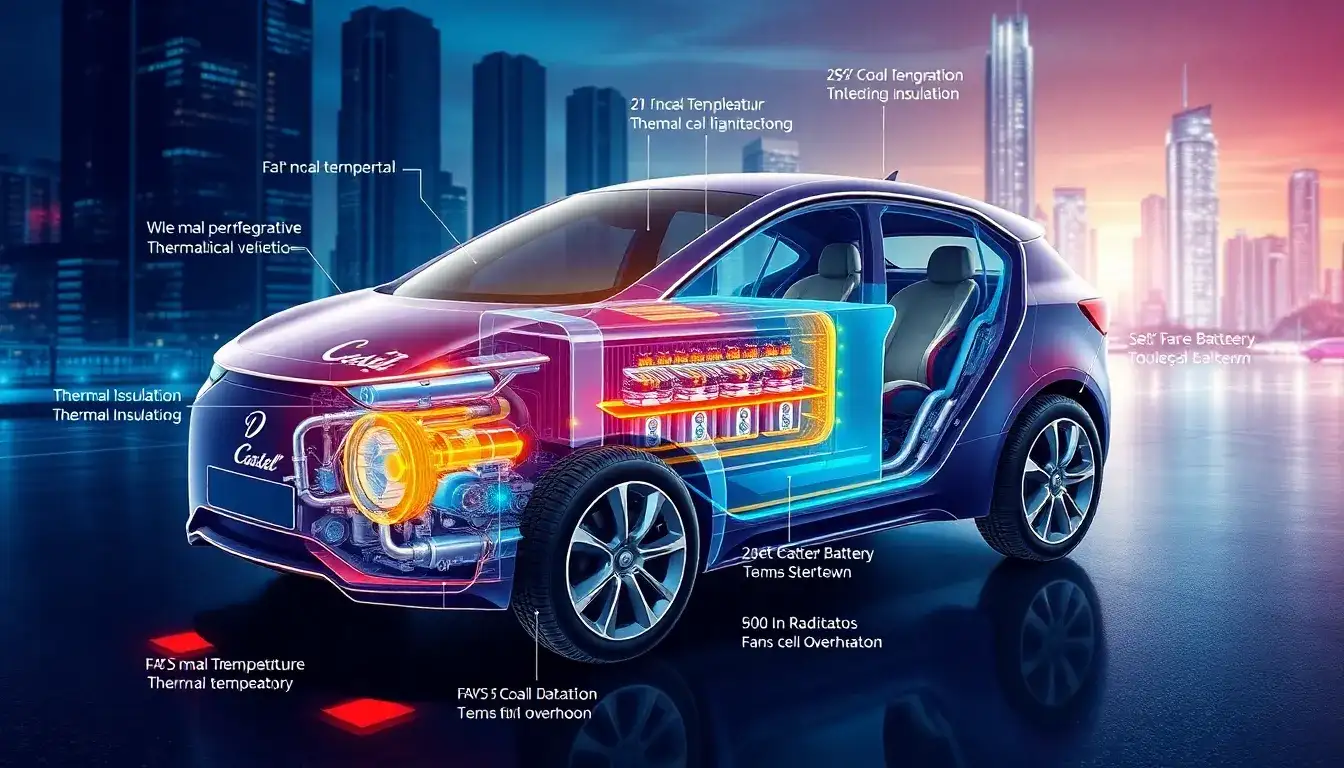
Battery thermal management systems (BTMS) in electric vehicles (EVs) significantly influence battery longevity by maintaining optimal operating temperatures and reducing stress factors. Here’s how they work:
Temperature Regulation
The BTMS keeps battery packs within the ideal range of 20°C to 45°C to prevent performance degradation.
- Cold temperatures (below 0°C) slow chemical reactions, reducing charge/discharge capacity and increasing internal resistance. Prolonged exposure to extreme cold (e.g., below -20°C) can cause irreversible damage.
- High temperatures (above 45°C) accelerate capacity loss due to lithium depletion and material breakdown. Above 60°C, risks include thermal runaway, self-ignition, or irreversible damage.
Uniformity and Stress Reduction
By minimizing cell-to-cell temperature variations, the system ensures balanced performance across the battery pack, preventing localized overheating or undercooling that strains individual cells.
Cycle Life Preservation
A well-regulated BTMS reduces energy loss during charging/discharging and maintains stable internal resistance, directly extending the battery’s cycle life and delaying capacity fade.
Advanced Design Considerations
Modern BTMS designs (e.g., phase-change materials, liquid cooling) optimize efficiency while minimizing energy consumption, cost, and environmental impact. These systems are tailored to battery chemistry and operating conditions for maximum longevity.
In summary, effective thermal management prevents extreme temperature exposure, ensures uniformity, and reduces chemical degradation, all of which collectively enhance EV battery lifespan.
Original article by NenPower, If reposted, please credit the source: https://nenpower.com/blog/how-does-the-thermal-management-system-affect-battery-longevity-in-evs/

