

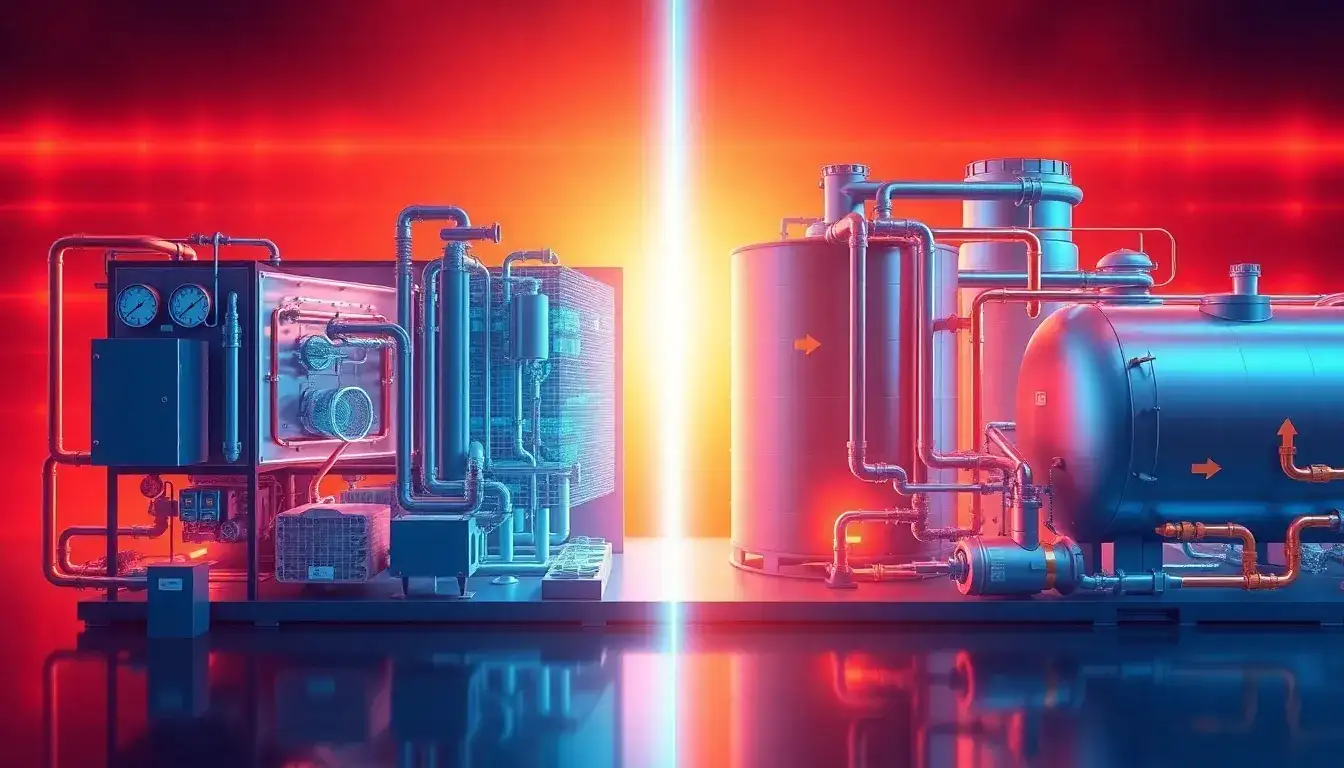
Thermal management is a critical factor affecting the efficiency of Compressed Air Energy Storage (CAES) systems due to the thermodynamic behavior of air during compression and expansion.
How Thermal Management Impacts CAES Efficiency
- Heat Generation During Compression: Compressing air increases its temperature significantly. In traditional CAES systems (diabatic type), this heat is lost to the environment, meaning the compressed air stored is cooled down before storage. This loss of thermal energy reduces overall system efficiency because energy must later be added to reheat the air before expansion to produce electricity effectively.
- Cooling During Expansion: When compressed air is expanded to generate electricity, it cools substantially. Colder air reduces turbine efficiency since lower temperature air has less energy to convert into mechanical work. Therefore, if the heat generated during compression is not recovered and reused, extra fuel (often natural gas) is burned to heat the air, generating CO2 emissions and decreasing environmental and energy efficiency.
- Thermal Energy Storage (TES) Integration: Advanced CAES designs aim to capture and store the heat produced during compression using thermal energy storage media (e.g., hot oil, molten salts, concrete, packed beds). This stored heat is then reused to warm the air during expansion, significantly improving round-trip efficiency. Adiabatic CAES systems, which integrate thermal storage, can achieve efficiencies exceeding 70%, much higher than diabatic systems where heat is lost.
- Potential for Near-Isothermal Operation: Some systems attempt near-isothermal compression and expansion to minimize temperature changes and associated energy losses, further improving efficiency by reducing the need for extensive thermal management.
Summary Table
| Thermal Aspect | Effect on CAES Efficiency | Mitigation Strategy |
|---|---|---|
| Heat generated during compression | Loss of thermal energy if not stored lowers efficiency | Capture and store heat (adiabatic TES) |
| Cooling during expansion | Cold air reduces turbine output and requires reheating fuel | Reuse stored heat to warm air |
| Thermal energy loss | Requires additional fuel, lowers sustainability and increases costs | High-efficiency thermal storage systems |
Conclusion
Thermal management is a key driver of the efficiency of CAES systems. Capturing and reusing the compression heat through thermal energy storage enhances round-trip efficiencies significantly (up to around 70%). Without efficient thermal management, CAES systems suffer from energy losses and require external heating, which reduces overall efficiency and increases emissions. Therefore, advancements in thermal energy storage and reuse are crucial for maximizing CAES effectiveness and sustainability.
Original article by NenPower, If reposted, please credit the source: https://nenpower.com/blog/how-does-the-thermal-management-issue-affect-the-efficiency-of-caes/

