

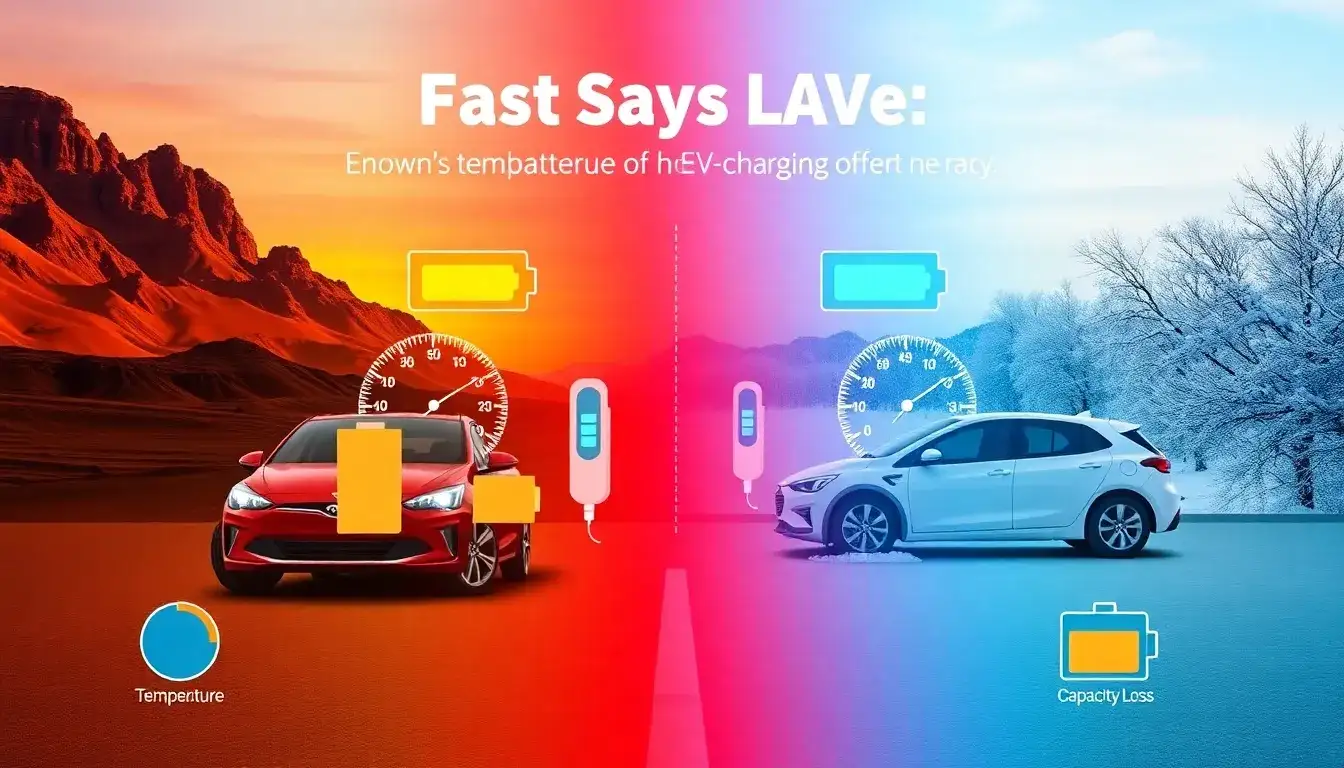
The temperature of the environment significantly affects the battery life and performance of electric vehicles (EVs) charged with fast chargers in several ways:
Effects of Cold Temperatures on EV Battery Life and Fast Charging
- Cold weather, especially below freezing (around 32°F or 0°C), can reduce the effective driving range of EVs by 16-46% as battery chemical reactions slow down and more energy is spent on heating the battery and cabin systems.
- Charging in cold weather can be less efficient because batteries are less receptive to fast charging when cold, potentially requiring pre-heating to avoid damage.
- Energy is expended to warm the battery cells, which reduces the energy available for driving and can also prolong charging time if the battery management system limits charging rate to protect battery health.
Effects of Hot Temperatures on EV Battery Life and Fast Charging
- High temperatures (around 40°C/104°F and above) accelerate chemical reactions inside the battery, which can speed up battery degradation if the battery is charged frequently at high state-of-charge levels (above 80%).
- Fast charging in hot environments especially during daytime can cause the battery to heat up more quickly, potentially causing overheating, which damages cells and reduces overall battery lifespan.
- Most modern EVs include active thermal management systems that work to cool the battery during fast charging, but cooling consumes additional energy, which in turn reduces driving range.
- Some data suggest that at temperatures above 90°F (~32°C), EV range starts to suffer slightly (3-5% loss), with some vehicles losing as much as 31% of range at temperatures exceeding 100°F (~38°C).
Summary
- Cold temperatures reduce battery efficiency and range by requiring energy for heating and slowing battery chemistry, which also affects fast charging capability by possibly increasing charge times and reducing charge acceptance.
- Hot temperatures speed up battery degradation and can cause battery overheating during fast charging, stressing the importance of thermal management systems to protect battery life, though cooling efforts reduce driving range due to increased energy consumption.
In conclusion, environmental temperature impacts both the immediate range and the long-term battery life of EVs charged with fast chargers. Charging in cold weather can reduce efficiency and increase charging time, while charging in hot weather can accelerate battery degradation if thermal management is insufficient. The optimal temperature range for battery performance and longevity is roughly between 20% and 80% state-of-charge and moderate ambient temperatures around 70°F (21.5°C).
Original article by NenPower, If reposted, please credit the source: https://nenpower.com/blog/how-does-the-temperature-of-the-environment-affect-the-battery-life-of-evs-charged-with-fast-chargers/

