

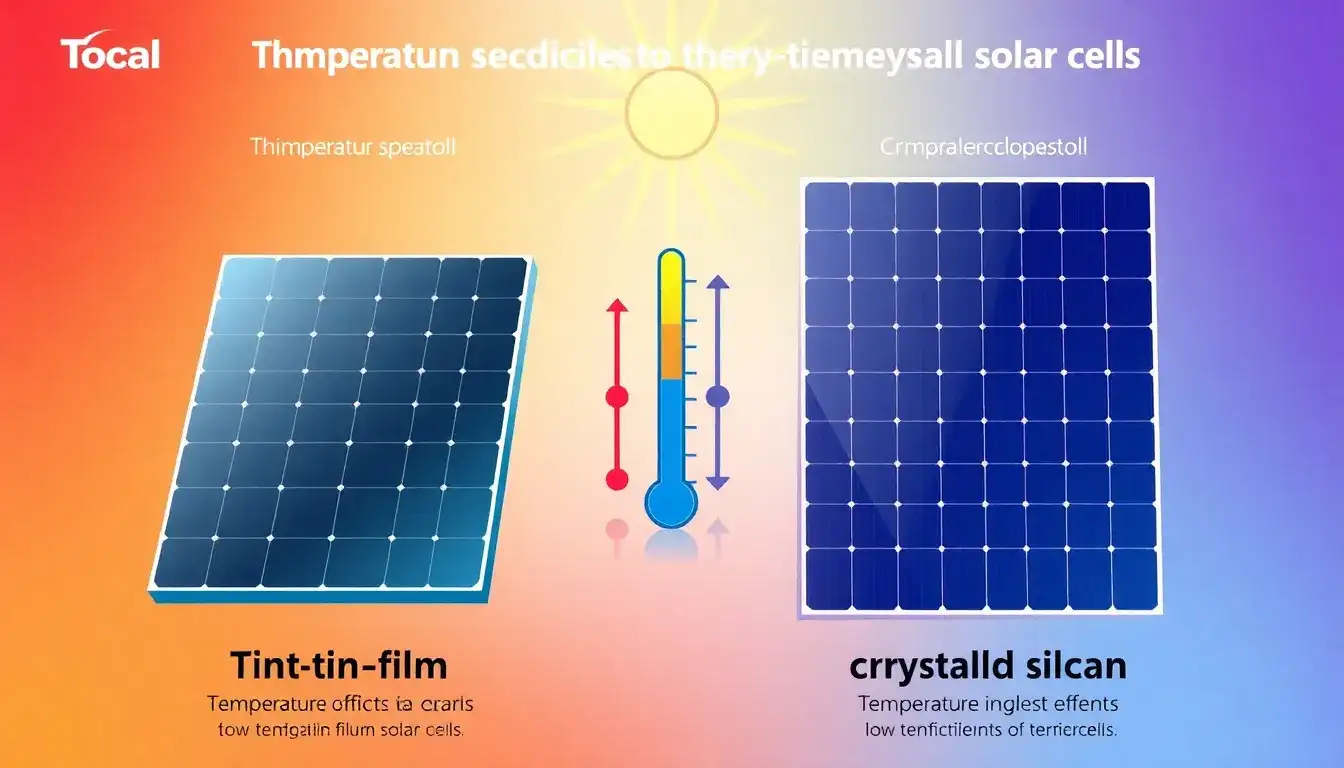
The temperature coefficient of solar panels is a measure of how much the efficiency of the panel decreases with an increase in temperature. Generally, crystalline silicon solar panels, which include both monocrystalline and polycrystalline types, have a temperature coefficient ranging from -0.4% to -0.5% per degree Celsius. This means that for every degree Celsius increase in temperature, their efficiency drops by that percentage.
Thin-film solar panels, on the other hand, tend to have a lower temperature coefficient, typically around -0.2% per degree Celsius. This lower coefficient indicates that thin-film panels maintain their efficiency better than crystalline panels under higher temperatures. However, this advantage is balanced by generally lower efficiencies for thin-film panels compared to crystalline silicon panels.
Comparison of Temperature Coefficients
| Solar Panel Type | Temperature Coefficient |
|---|---|
| Thin-Film | -0.2% per °C |
| Crystalline Silicon | -0.4% to -0.5% per °C |
Overall, thin-film solar panels are more suitable for hot climates due to their superior high-temperature performance, though they may not offer the same level of efficiency as crystalline silicon panels under standard conditions.
Original article by NenPower, If reposted, please credit the source: https://nenpower.com/blog/how-does-the-temperature-coefficient-of-thin-film-solar-panels-compare-to-crystalline-silicon-panels/

