

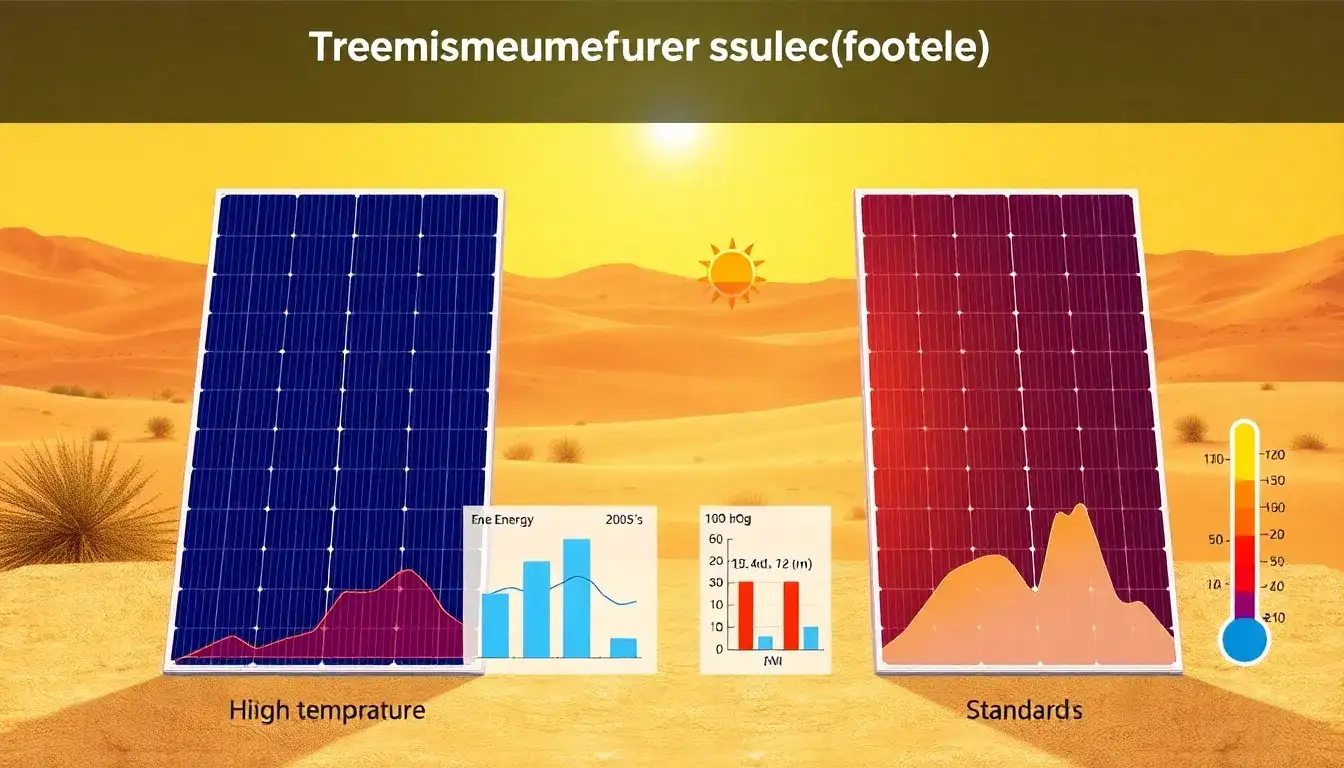
The temperature coefficient is a crucial factor when selecting solar panels for hot climates because it quantifies how much a panel’s efficiency decreases as its temperature rises above the standard test condition of 25°C (77°F). Most solar panels have a negative temperature coefficient, meaning that for each degree Celsius increase beyond 25°C, their power output drops by a certain percentage, typically ranging from about -0.3%/°C to -0.5%/°C.
How Temperature Coefficient Affects Solar Panel Performance in Hot Climates
- Efficiency Loss with Temperature Increase: Since solar panels on rooftops or ground mounts can often reach temperatures significantly higher than ambient air—sometimes exceeding 50°C (122°F) and even up to 65°C (149°F)—the accumulated efficiency loss can be substantial. For example, a panel with a -0.34%/°C coefficient operating at 51°C (124°F) would lose about 8.8% of its output compared to its rating at 25°C. This loss translates directly into less energy production during the hottest parts of the day or year.
- Material and Technology Influence: Different solar panel technologies have varying temperature coefficients. Traditional monocrystalline and polycrystalline silicon panels have coefficients between approximately -0.44% to -0.50%/°C, whereas some advanced monocrystalline panels like Maxeon’s perform better (e.g., about -0.38%/°C), and thin-film panels can have even lower coefficients near -0.2%/°C. Panels with lower temperature coefficients lose less efficiency as temperature rises.
- Real-World Implications: In hot climates such as Arizona or parts of the Middle East, solar panel surface temperatures can be much higher than air temperature due to direct sunlight and rooftop heating effects, causing significant efficiency drops if the panels have high temperature coefficients. Selecting panels with a lower temperature coefficient helps mitigate these losses.
Choosing Panels for Hot Climates
- Prioritize Low Temperature Coefficient: Panels with a lower (less negative) temperature coefficient are better suited for hot environments because they maintain higher efficiency under elevated temperatures. For instance, REC Group and Panasonic panels have temperature coefficients around -0.24%/°C, which make them more efficient in heat compared to panels with -0.4% or worse.
- Consider Nominal Module Operating Temperature (NMOT): Besides the temperature coefficient, panels with a lower NMOT tend to run cooler and thus lose less power in hot conditions. Installation methods that allow better airflow—like pole or ground mounts—can also reduce panel temperature and associated losses, making the combination of low temperature coefficient and low NMOT ideal for hot climates.
- Installation Factors Matter: Roof type and mounting style affect panel temperature. For example, rooftop panels without adequate air gaps can get 40°C hotter than ambient air, while ground-mounted panels are typically cooler. Using reflective roofing materials and ensuring ventilation beneath panels can help reduce operating temperatures.
- Active Cooling Techniques: In extremely hot regions, solar farms sometimes employ cooling technologies (such as water circulation or phase-change materials) to maintain panel temperature and efficiency, but for residential or commercial systems, passive cooling with thoughtful installation is more common.
Summary
| Aspect | Influence for Hot Climates |
|---|---|
| Temperature Coefficient | Lower is better; reduces efficiency losses at high heat |
| NMOT (Nominal Operating Temp) | Lower NMOT means cooler panels and less loss |
| Panel Technology | Thin-film and advanced monocrystalline panels perform better |
| Installation Type | Pole/ground mounts cooler than rooftop; ventilation helps |
| Roof Material | Lighter, reflective materials reduce panel temperature |
| Cooling Solutions | Rarely used in residential; used in large-scale farms |
In conclusion, when selecting solar panels for hot climates, the temperature coefficient is a key technical specification to consider because it directly affects how much power loss occurs as the panel heats up above 25°C. Choosing panels with low temperature coefficients, combined with good installation practices that minimize panel temperature, ensures better efficiency and energy yield under hot conditions.
Original article by NenPower, If reposted, please credit the source: https://nenpower.com/blog/how-does-the-temperature-coefficient-influence-the-choice-of-solar-panels-for-hot-climates/

