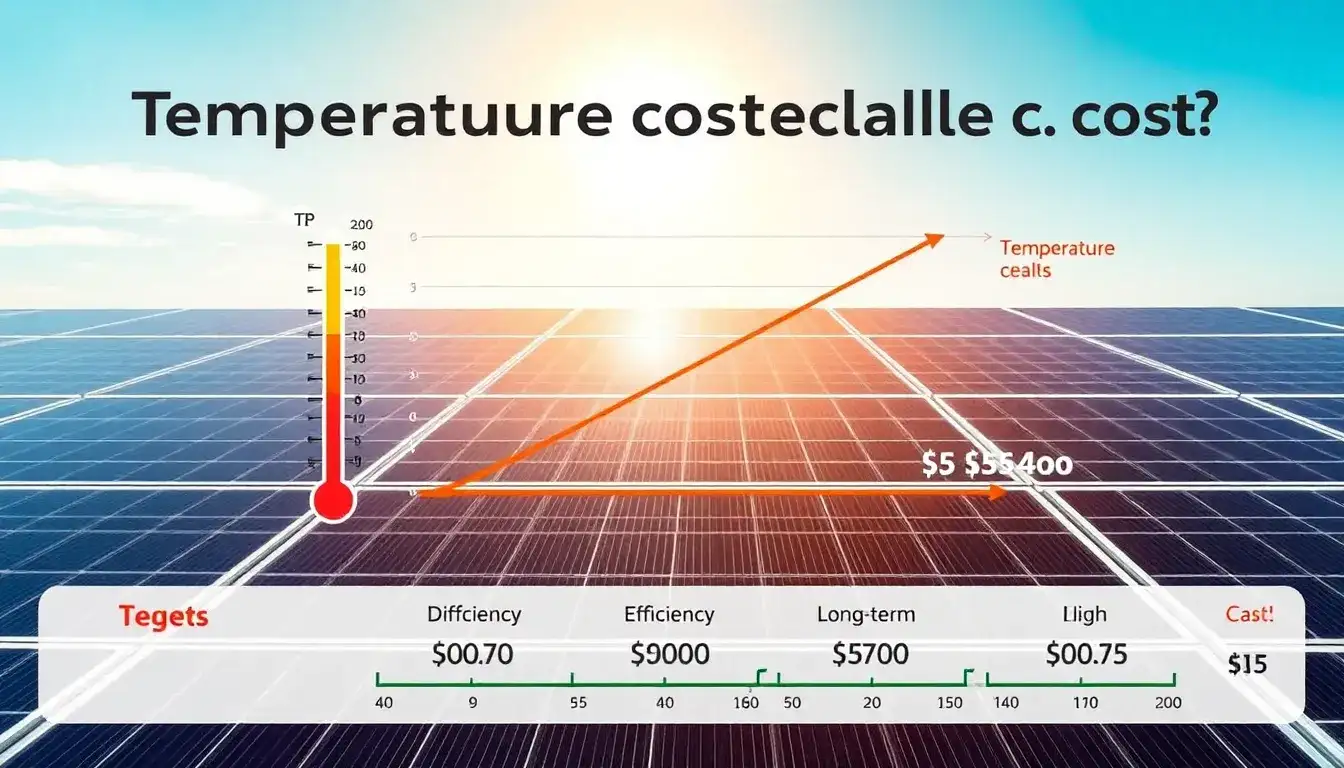
Understanding the Temperature Coefficient
- Definition: The temperature coefficient is a measure of how much solar panel efficiency decreases with rising temperatures. Most solar panels have a negative temperature coefficient, meaning their efficiency drops as temperature increases.
- Range: Typical temperature coefficients range from -0.29% to -0.5% per degree Celsius. This indicates that for every degree above the standard test conditions (25°C or 77°F), the panel’s efficiency decreases by this percentage.
Impact on Long-Term Cost
- Efficiency and Output:
- Higher Temperatures, Lower Efficiency: In hotter regions or during intense heatwaves, solar panels can reach temperatures above 50°C, leading to a significant decrease in power output. This means less energy is generated, affecting the overall cost savings from solar power.
- Long-term Production: While the decrease might seem minimal, over years of operation, these losses can accumulate, impacting the cost-effectiveness of solar energy systems.
- Increased Maintenance or Upgrades: In hotter environments, solar panels may need more frequent maintenance or additional cooling systems to mitigate temperature effects. These extra costs can affect the long-term financial viability of solar installations.
- Choice of Solar Panels:
- Better Coefficients: Panels with lower temperature coefficients (e.g., -0.29% to -0.38%) perform better in hot conditions. Investing in these panels can lead to better energy production over time, potentially offsetting higher upfront costs.
- Location-Specific Considerations: In regions with extremely high temperatures, the choice of panel and installation practices (like tilted installations to improve airflow) become crucial to minimize efficiency losses. This local optimization can influence long-term costs and savings.
Conclusion
While the temperature coefficient might seem like a minor factor in the grand scheme of solar energy costs, its impact can be significant over the long term, especially in hot climates. By choosing panels with favorable temperature coefficients and optimizing installation strategies, homeowners and businesses can mitigate efficiency losses and ensure the long-term cost-effectiveness of solar energy solutions.
Original article by NenPower, If reposted, please credit the source: https://nenpower.com/blog/how-does-the-temperature-coefficient-impact-the-long-term-cost-of-solar-energy/