

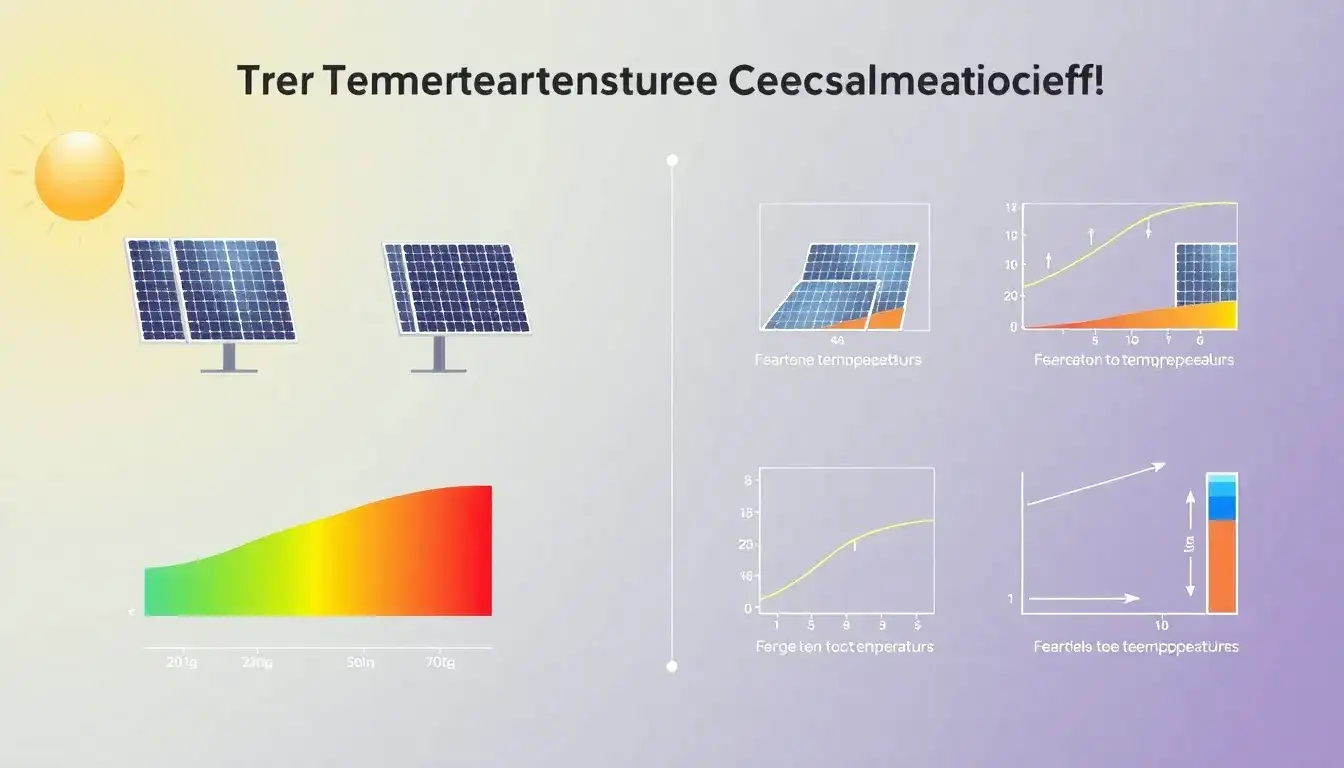
The temperature coefficient of a solar panel is a critical factor that affects its overall energy output. This coefficient represents the rate at which a solar panel’s efficiency decreases as its temperature rises. Most solar panels have a temperature coefficient ranging from -0.29% to -0.50% per degree Celsius, meaning that for every degree the panel’s temperature increases above the standard test temperature of 25°C (77°F), its energy output decreases by the corresponding percentage.
Impact on Energy Output
- Efficiency Reduction: As the temperature rises, the voltage produced by the solar cells decreases, leading to an overall decrease in power output. Although the current may increase slightly, it does not compensate for the voltage drop, resulting in reduced efficiency.
- Cumulative Loss: While a small percentage decrease per degree might seem insignificant, it can add up substantially over large temperature ranges. Solar panels can get as hot as 65°C (149°F), leading to noticeable efficiency drops.
- Regional Variability: In regions with high summer temperatures, such as Arizona or India, the temperature coefficient becomes more crucial for maintaining energy output. A lower temperature coefficient means less energy loss, which is beneficial in these climates.
Factors to Consider
- Panel Types: Monocrystalline and polycrystalline solar panels generally have higher temperature coefficients than thin-film panels, which are more resistant to heat.
- Roofing Material: The type of roofing material can influence the temperature of solar panels. Light-colored roofs that reflect sunlight can help mitigate temperature increases.
- Installation Design: Mounting solar panels with adequate space for airflow can help reduce their operating temperature.
Conclusion
While the temperature coefficient is just one of several factors affecting solar panel performance, understanding its impact is essential for optimizing energy production, especially in hot climates. Choosing panels with low temperature coefficients can enhance overall efficiency and long-term durability.
Original article by NenPower, If reposted, please credit the source: https://nenpower.com/blog/how-does-the-temperature-coefficient-affect-the-overall-energy-output-of-solar-panels/

